Birds
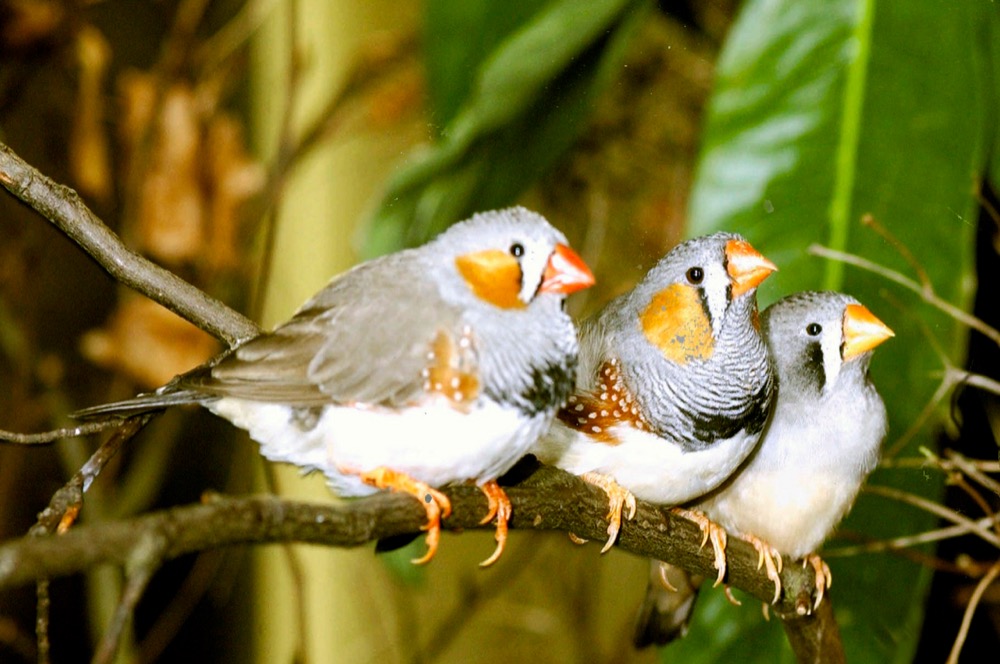
Zebra Finch
Taeniopygia guttata
Care level
Beginner
Lifespan
5 to 10 years, occasionally up to 12 to 15
Adult size
About 10 cm, one of the smallest common pet birds
Zebra finches are tiny, active, endlessly entertaining Australian finches best kept in pairs or small groups. They are watch-and-enjoy birds that do not want to be handled, communicating with a constant soft beeping chatter and buzzing song. Sociable and hardy, they are ideal for owners who want lively little birds to observe rather than a hands-on companion.
Housing & setup
Zebra finches are horizontal flyers, so a long flight cage matters far more than height: a single pair needs at least 75 x 30 x 45 cm, and more length is always better. Bar spacing should be very narrow, around 0.6 to 1 cm (a quarter to three-eighths of an inch), because these tiny birds can slip through or trap their heads in wider bars. Provide perches at each end and keep the central flight path clear. They must be kept in at least a pair, as a lone zebra finch is stressed and lonely.
Diet & feeding
Base the diet on a quality finch seed mix or finch pellets, with daily fresh greens (spinach, dandelion, broccoli, seeding grasses) and finely chopped vegetables. Offer a cuttlebone and mineral grit for calcium and digestion, plus egg food during moult and breeding for protein. Fresh water daily and a shallow bath dish are important, as finches bathe enthusiastically. Avocado, chocolate, caffeine and alcohol are toxic and must be avoided.
Temperature, light & environment
Keep at a steady room temperature of around 18 to 28 C, out of draughts and direct sun, and away from all kitchen and non-stick cookware fumes. Provide natural daylight and 10 to 12 hours of quiet dark sleep. They do not need out-of-cage time and are very difficult to catch if loose, so their wellbeing depends on a generously long cage. Good ventilation without chilling helps prevent respiratory disease.
Company & handling
Zebra finches are highly social flock birds that must be kept with at least one companion, ideally a same-species pair or small group, and they form lasting pair bonds reinforced by mutual preening. They are not tame handling birds and interact with each other rather than with people. Their constant chatter is soft and cheerful, and their noise level is low, making them well suited to apartments. A finch kept entirely alone will suffer from loneliness and stress.
Enrichment & exercise
Enrichment is mainly space, flight and the company of other finches. Provide seeding grass heads, millet sprays for foraging, a swing, safe greenery to explore and a bathing dish they can splash in. Offer nesting material like coconut fibre for natural behaviour, but withhold actual nest boxes if you do not want breeding. Rearranging perches and adding fresh browse keeps them busy.
Common health problems
Air sac mites (Sternostoma tracheacolum)
Signs: Clicking or wheezing breathing, tail bobbing, open-mouth breathing, gasping and loss of song, worsening with stress.
Prevention: Quarantine new birds, keep housing clean and stress low, and treat under avian veterinary guidance; finches are highly susceptible.
Scaly leg and face mite (Knemidokoptes)
Signs: Crusty, thickened scales on the legs and feet (tassel foot) and around the beak, with lameness or discomfort.
Prevention: Quarantine new birds, maintain cage hygiene, and have an avian vet treat with ivermectin-type medication.
Egg binding
Signs: A hen sitting fluffed on the floor, straining, weakness and a swollen abdomen, common in over-breeding or calcium-deficient hens.
Prevention: Provide cuttlebone and calcium, limit the number of clutches, keep the bird warm, and seek urgent avian care for a stuck egg.
Obesity and fatty tumours (lipomas)
Signs: Weight gain, soft lumps, lethargy and reduced flight, usually from a millet-only diet and too little exercise.
Prevention: Feed a varied diet rather than fatty seed alone, provide a long flight cage for exercise, and limit high-fat treats.
See a vet urgently if...
- !Fluffed and sitting on the cage floor, tail bobbing at rest
- !Open-mouth breathing, gasping or audible clicking sounds
- !A finch sitting alone and puffed while the others are active
- !Not eating, rapid weight loss or a sunken, still posture
- !A hen straining with a swollen abdomen, or any bleeding
In Macau
In Macau's humid subtropical climate keep the cage dry and well ventilated to prevent fungal and respiratory disease, and avoid overheating in summer. Their soft chatter is very neighbour-friendly for apartment living. As with all birds, keep them away from non-stick (PTFE) cookware and appliance fumes, which are rapidly lethal. Buy a bonded pair or small group from a reputable source and quarantine new birds, since air sac mites spread easily.
Zebra finches are a leading scientific model for how the brain learns song: young males memorise their father's song and practise for weeks to copy it, much as human infants babble their way toward speech.
Questions about your exotic pet?
Our team sees small mammals, birds, reptiles and fish. Book a wellness check or a species consult.
Book an exotic consultRelated care sheets
General guidance reviewed by the Royal Veterinary Center team. Not a substitute for a veterinary examination. Always confirm species-specific and legal requirements for Macau.