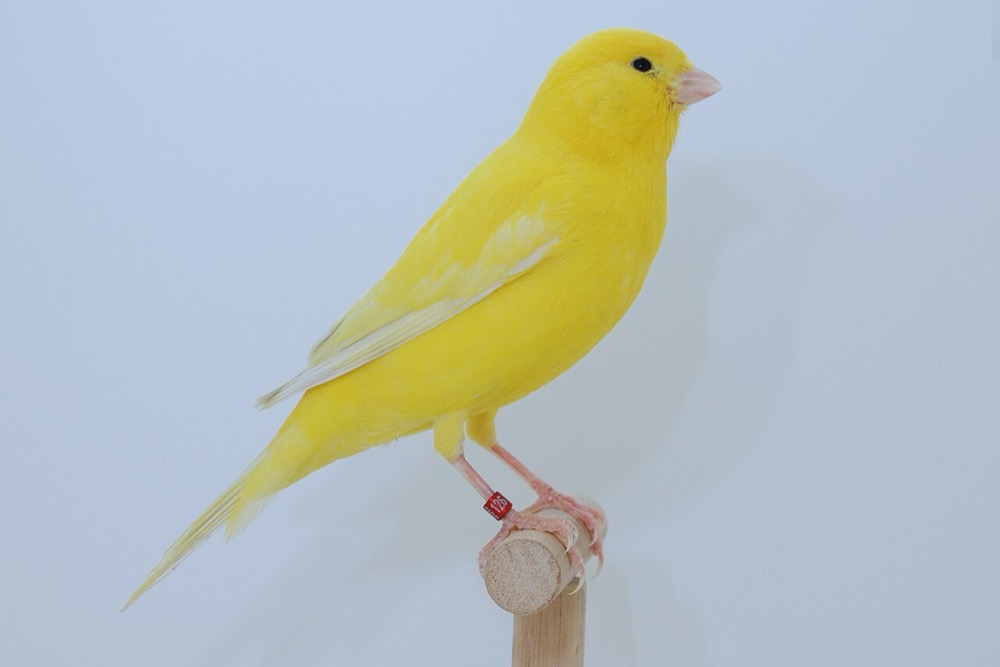
Birds
Canary
Serinus canaria domestica
Care level
Beginner
Lifespan
8 to 12 years, and some past 15 years
Adult size
12 to 20 cm depending on breed (most around 12 to 13 cm)
The canary is a small domesticated finch prized for centuries for the male's beautiful song and its cheerful, low-maintenance nature. Canaries are watch-and-enjoy birds rather than cuddly companions; they generally prefer not to be handled and are happiest observing from a spacious cage. They are an excellent choice for a first-time owner or anyone wanting a hardy, self-contained songbird.
Housing & setup
Canaries are true fliers, not climbers, so they need a wide flight cage rather than a tall one: a minimum of about 60 x 30 x 45 cm for one bird, and longer is much better so they can fly horizontally. Bar spacing must be 1 to 1.25 cm (three-eighths to half an inch) or less to prevent head entrapment. Provide perches of varying natural diameters at each end (leaving the middle clear for flight) and avoid overcrowding the cage with toys. Males kept for song are usually housed alone, as they sing best when not competing.
Diet & feeding
Offer a formulated pellet or a good-quality canary seed mix as the base, along with daily fresh greens such as dandelion, kale, broccoli and grated vegetables, plus occasional fruit. Provide a cuttlebone and grit-free mineral source for calcium, and egg food during moult or breeding for extra protein. Fresh clean water daily is essential, and a shallow bath dish is appreciated. Avocado, chocolate, caffeine and alcohol are toxic and must never be offered.
Temperature, light & environment
Keep at a stable room temperature of roughly 15 to 28 C, out of draughts and direct sun. Canaries are sensitive to fumes, so keep them well away from kitchens and non-stick cookware. Provide natural daylight and a consistent 10 to 12 hours of dark, quiet sleep, as light cycle strongly drives the moult and song. Good ventilation without draughts is important, and they generally do not need or want out-of-cage handling but enjoy a large cage to fly in.
Company & handling
Canaries are largely independent and do not need a companion bird; in fact, males often sing more when housed alone. They should not be handled much and communicate through song rather than interaction, so they suit owners who want a beautiful voice in the room rather than a hands-on pet. Males sing, females mostly chirp, and the song is melodious rather than loud, making them very apartment-friendly. Keeping two males within earshot can encourage singing competition, but housing them in the same cage often causes squabbling.
Enrichment & exercise
Enrichment centres on space to fly, so prioritise a long flight cage and clear flight paths. Add a swing, a few simple toys, fresh browse and a bathing dish, which canaries love. Rotating the position of perches and offering foraging greens keeps them active. Exposure to varied natural sounds and other canary song can enrich a male's own repertoire.
Common health problems
Air sac mites (Sternostoma tracheacolum)
Signs: Clicking or wheezing breathing, tail bobbing, open-mouth breathing, loss of song and gasping, worse during stress, moult or breeding.
Prevention: Quarantine new birds, keep stress low and housing clean, and see an avian vet for ivermectin-type treatment; canaries are especially prone.
Feather cysts (lumps)
Signs: A firm swelling under the skin where an ingrown feather cannot emerge, sometimes cheesy in content, more common in soft-feathered show breeds.
Prevention: Avoid breeding from affected lines and have an avian vet examine and, if needed, surgically remove persistent cysts.
Canary pox (avian poxvirus)
Signs: Wart-like nodules on unfeathered skin, or a severe wet form with breathing difficulty and high mortality; spread by mosquitoes.
Prevention: Control mosquitoes with screening, avoid exposure to wild birds, use vaccination where available, and quarantine new arrivals.
Egg binding
Signs: A hen straining, sitting fluffed on the floor, tail bobbing, weakness and a swollen abdomen; a stuck egg is an emergency.
Prevention: Provide adequate calcium via cuttlebone, keep the bird warm, avoid over-breeding, and seek prompt avian veterinary care.
See a vet urgently if...
- !Fluffed up and sitting on the cage floor instead of perching
- !Open-mouth breathing, tail bobbing at rest or audible clicking
- !Sudden and lasting loss of song in a healthy male (an early illness sign)
- !Not eating, rapid weight loss or a sunken, quiet posture
- !A hen straining with a swollen abdomen, or any bleeding
In Macau
Macau's humidity can encourage mould and respiratory problems, so keep the cage dry and airy; the warm climate and standing water also raise mosquito numbers, so screen windows to reduce canary pox and mite exposure. Their song is gentle and neighbour-friendly for apartment living. Keep them away from non-stick (PTFE) cookware fumes, which are fatal to birds. Buy from a reputable breeder and quarantine any new canary, as air sac mites are easily introduced.
Canaries were once carried into coal mines as living gas detectors because their fast metabolism made them collapse from carbon monoxide before miners were affected, giving rise to the phrase a canary in the coal mine.
Questions about your exotic pet?
Our team sees small mammals, birds, reptiles and fish. Book a wellness check or a species consult.
Book an exotic consultRelated care sheets
General guidance reviewed by the Royal Veterinary Center team. Not a substitute for a veterinary examination. Always confirm species-specific and legal requirements for Macau.