Birds
Cockatiel
Nymphicus hollandicus
Care level
Beginner
Lifespan
15 to 20 years, and up to 25 years with good care
Adult size
30 to 33 cm including the crest and long tail
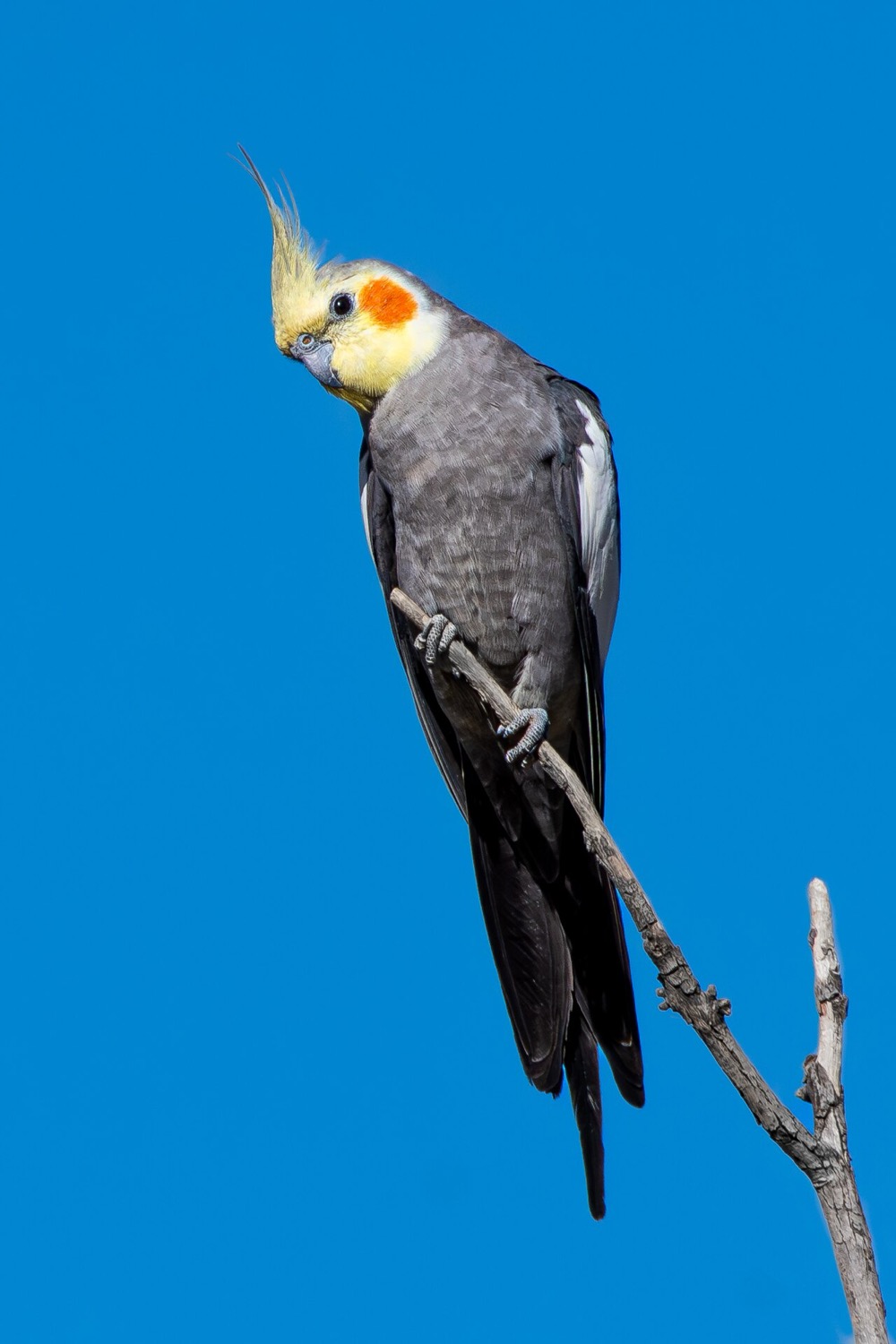
The cockatiel is a small Australian parrot (the smallest of the cockatoo family) known for its expressive crest, orange cheek patches and gentle nature. Males are famous whistlers and can learn tunes, while both sexes are affectionate and easy to tame, making them one of the best companion birds for beginners. They are calmer and quieter than most parrots but still need daily attention and out-of-cage time.
Housing & setup
Provide a roomy cage at least 60 x 60 x 75 cm for one bird, taller and wider being better because cockatiels have long tails and need room to move. Bar spacing should be 1.25 to 1.6 cm (half to five-eighths of an inch) so they cannot trap their heads. Include several natural-wood perches of different diameters at varying heights to keep feet healthy, and place perches so the tail does not drag in food or water. Keep the cage against a wall in a calm, sociable part of the home rather than in a busy thoroughfare.
Diet & feeding
Feed a base of formulated pellets (about 60 to 70 percent) with a smaller portion of quality seed mix, as cockatiels readily become overweight and develop fatty liver on seed alone. Offer daily fresh vegetables and dark leafy greens plus small amounts of fruit, and provide a cuttlebone or calcium source, which is especially important for laying females. Dark orange and green vegetables help prevent vitamin A deficiency. Avocado, chocolate, caffeine, alcohol, onion and very salty foods are toxic and must never be given.
Temperature, light & environment
Keep them in a stable room temperature (around 18 to 28 C), away from draughts, direct sun and kitchen fumes. Provide natural or full-spectrum light and 10 to 12 hours of undisturbed dark sleep, using a partial cage cover and a small night light to reduce night frights. Ensure the sleeping area is quiet and free of moving shadows. Supervised out-of-cage time every day is essential, in a room with windows and ceiling fans made safe.
Company & handling
Cockatiels are flock birds that thrive on companionship and will bond strongly with their owner, often seeking cuddles and head scratches. They can be kept singly if given plenty of daily human interaction, or in pairs for company. They are moderate in noise, with contact calls and cheerful whistling rather than harsh screaming, so they suit most apartments. Left alone and under-stimulated, they can become anxious, scream for attention or pluck feathers.
Enrichment & exercise
Offer foraging toys, shreddable materials, swings, bells and mirrors, rotating them to keep interest. Whistle training and simple trick training exercise their sharp minds and their love of music. Chewable wood and cuttlebone keep the beak in shape. Time out of the cage for climbing, flying and shoulder company each day is important for their wellbeing.
Common health problems
Night frights
Signs: Sudden violent thrashing and flapping in the dark, crashing into cage bars, broken blood feathers and injuries found in the morning.
Prevention: Use a dim night light, keep the sleeping area quiet and free of moving shadows, and partially cover the cage; check for injury and warm, calm the bird after an episode.
Chronic egg laying and egg binding
Signs: A hen straining, sitting fluffed on the cage floor, tail bobbing, a wide-legged stance and a firm swelling near the vent; egg binding is a life-threatening emergency.
Prevention: Limit daylight to about 10 to 12 hours, remove nest-like hiding spots and mirrors, keep the bird from overbonding to objects, and provide calcium and vitamin D3.
Hepatic lipidosis (fatty liver disease)
Signs: Overgrown or flaky beak, obesity, poor feather quality, lethargy and green droppings, most often in seed-fed birds.
Prevention: Feed a balanced pellet-based diet rather than all seed, encourage exercise and flight, and have weight monitored at avian vet checks.
Psittacosis (chlamydiosis)
Signs: Fluffed posture, lethargy, nasal or eye discharge, laboured breathing and lime-green droppings.
Prevention: Quarantine and vet-test new birds, maintain clean well-ventilated housing; this disease is transmissible to people.
See a vet urgently if...
- !Fluffed up and sitting on the cage floor, unable or unwilling to perch
- !Tail bobbing at rest, open-mouth breathing or wheezing
- !A hen straining or a stuck egg, with a wide stance and swollen abdomen
- !Not eating, regurgitating repeatedly or sudden weight loss
- !Injury, bleeding or dazed behaviour after a night fright
In Macau
In Macau's warm, humid climate, guard against overheating and keep housing dry and ventilated to reduce fungal respiratory disease. Cockatiels dust from their feathers, so good airflow helps sensitive apartment neighbours, and their whistling is generally tolerable in flats. Non-stick (PTFE) cookware, air fryers and scented products emit fumes that are rapidly fatal to birds, so keep the cage far from the kitchen. Source from a trusted breeder or shelter and arrange an avian vet check.
Cockatiels are accomplished whistlers rather than talkers, and males will serenade with learned tunes and made-up songs to court a mate or their favourite person; they can even whistle back a melody you teach them.
Questions about your exotic pet?
Our team sees small mammals, birds, reptiles and fish. Book a wellness check or a species consult.
Book an exotic consultRelated care sheets
General guidance reviewed by the Royal Veterinary Center team. Not a substitute for a veterinary examination. Always confirm species-specific and legal requirements for Macau.