Birds
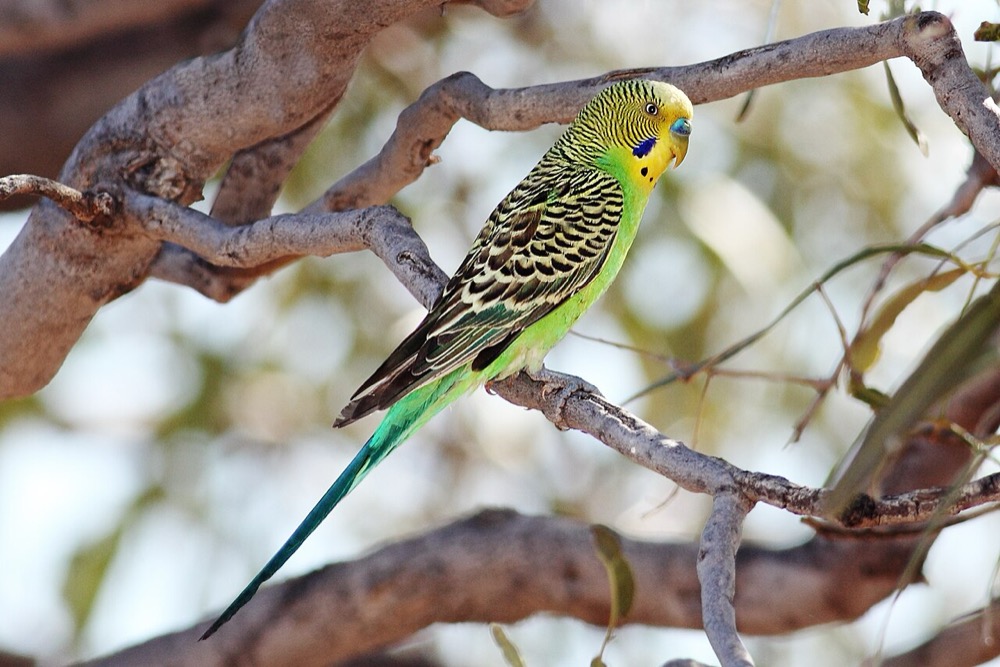
Budgerigar (Budgie)
Melopsittacus undulatus
Care level
Beginner
Lifespan
5 to 8 years typically, up to 10 to 15 with excellent care and diet
Adult size
About 18 cm from head to tail tip
The budgie is the world's most popular pet bird: small, hardy, sociable and surprisingly intelligent, with many learning to mimic words. They are an excellent first bird but are true parrots that need daily interaction, flight and a proper diet rather than a seed-only bowl. A single budgie will bond closely with people, while a pair keeps each other company.
Housing & setup
Use a wide, horizontally oriented wire cage rather than a tall narrow one, as budgies fly side to side. Minimum for one bird is roughly 45 x 45 x 45 cm, but bigger is always better and a pair needs at least 75 x 45 x 45 cm. Bar spacing must be 1.25 cm (half an inch) or less so heads cannot get trapped. Offer several perches of varying natural-wood diameters placed at different heights, keep the highest perch clear for sleeping, and leave open flight space in the middle (never crowd it with toys).
Diet & feeding
Aim for a base of formulated pellets (about 60 to 70 percent) rather than an all-seed diet, which is high in fat and low in vitamins and minerals. Add a daily variety of fresh leafy greens and vegetables (kale, broccoli, grated carrot, capsicum) and small amounts of fruit. Provide a cuttlebone or mineral block for calcium and offer iodine (via pellets or a supplement) as seed-only budgies commonly develop thyroid goitre. Never offer avocado, chocolate, caffeine, alcohol, onion or salty foods, all of which are toxic.
Temperature, light & environment
Comfortable at normal room temperature (around 18 to 28 C); avoid sudden chills, draughts and direct hot sun. Keep the cage out of the kitchen and away from any non-stick cookware fumes. Provide natural daylight or full-spectrum lighting, and give 10 to 12 hours of quiet, dark, undisturbed sleep each night by covering or moving the cage. Allow supervised out-of-cage flight time daily in a bird-proofed room with windows and mirrors covered.
Company & handling
Budgies are flock birds and need company, whether from a human who interacts many times a day or from another budgie. A lone budgie left alone all day will become bored, stressed and prone to feather issues. They are among the quieter parrots, with pleasant chatter and chirping rather than loud screaming, which makes them apartment-friendly. Males in particular can become talented, gentle talkers when handled young.
Enrichment & exercise
Rotate foraging toys, shreddable paper and wood, ladders, swings and bells to prevent boredom. Chewing keeps the beak healthy, so offer soft wood and cuttlebone. Daily flight is important exercise and helps prevent obesity and fatty tumours. Simple trick training and target training provide valuable mental stimulation and strengthen the bond.
Common health problems
Scaly face mite (Knemidokoptes)
Signs: Crusty, honeycomb-like growths on the cere, beak, eyelids or legs, a misshapen beak and persistent scratching or rubbing.
Prevention: Quarantine new birds, keep the cage clean, and see an avian vet for ivermectin-type treatment; it is contagious to other birds.
Tumours and fatty lumps (lipomas)
Signs: Visible or firm lumps, weight change, lameness, laboured breathing or changed behaviour; budgies are genetically prone to internal and fatty tumours.
Prevention: Avoid a high-fat all-seed diet, encourage daily flight to prevent obesity, and have any lump checked promptly by an avian vet.
Iodine deficiency goitre
Signs: Squeaky or changed voice, regurgitation, laboured or clicking breathing from an enlarged thyroid pressing on the airway.
Prevention: Feed pellets or provide an iodine and mineral source instead of a plain seed diet; it is preventable and treatable if caught early.
Psittacosis (chlamydiosis)
Signs: Fluffed appearance, lethargy, nasal or eye discharge, lime-green droppings and difficulty breathing.
Prevention: Quarantine and vet-test new birds, keep housing clean and well ventilated; note this disease can spread to people.
See a vet urgently if...
- !Sitting fluffed and puffed on the floor of the cage instead of perching
- !Tail bobbing at rest or open-mouth, laboured breathing
- !Not eating, or vomiting and food stuck to the head feathers
- !Sudden silence, drooping wings or being unable to grip the perch
- !Bleeding, a stuck egg, or straining with a wide-legged stance
In Macau
Macau's heat and humidity raise the risk of heat stress and mould-related respiratory illness, so keep the cage cool, ventilated and dry. In a compact apartment budgies are a good choice because they are quiet, but never run non-stick (PTFE) cookware, air fryers, self-cleaning ovens or scented candles near them, as the fumes kill birds within minutes. Buy from a reputable local breeder or shelter, ask an avian vet for a health check, and quarantine any new bird.
Budgies can learn remarkably large vocabularies; a budgie named Puck held the Guinness record for the largest bird vocabulary at over 1,700 words, and they process speech fast enough that human recordings of them sound sped up.
Questions about your exotic pet?
Our team sees small mammals, birds, reptiles and fish. Book a wellness check or a species consult.
Book an exotic consultRelated care sheets
General guidance reviewed by the Royal Veterinary Center team. Not a substitute for a veterinary examination. Always confirm species-specific and legal requirements for Macau.