Birds
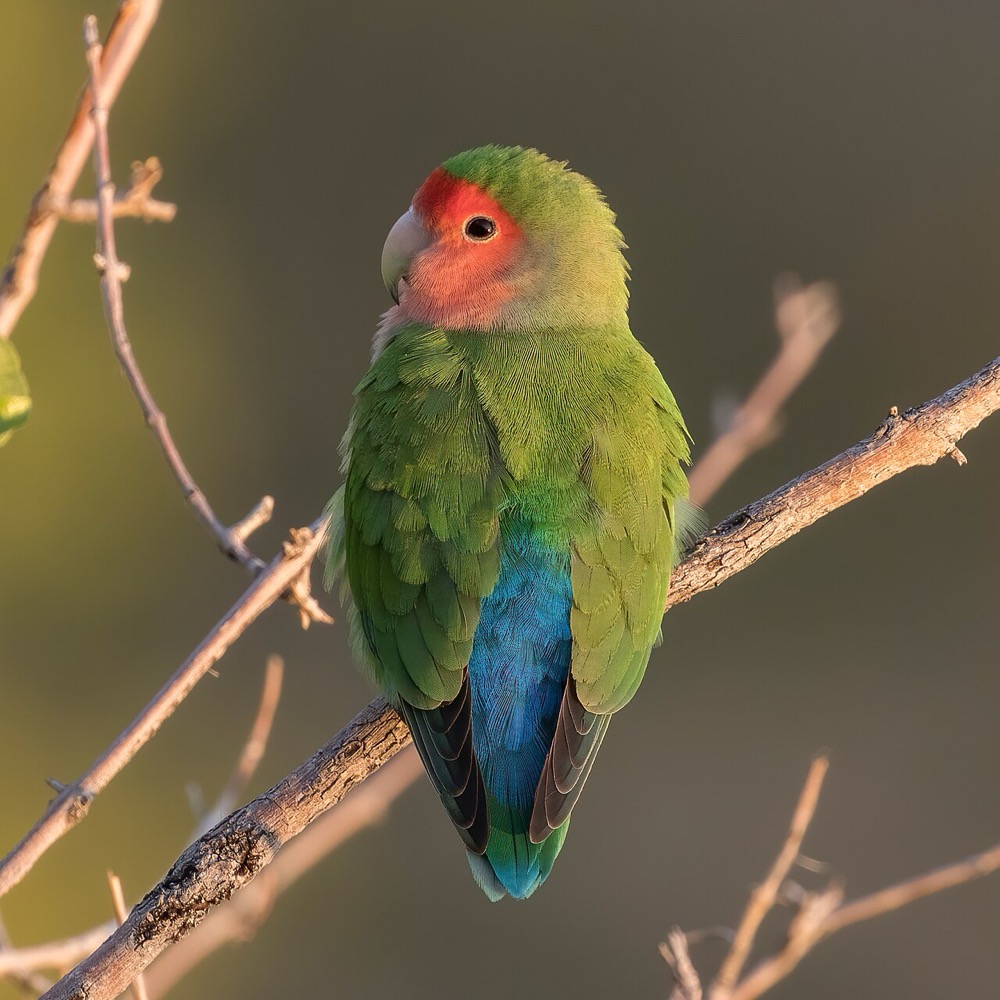
Lovebird
Agapornis roseicollis
Care level
Intermediate
Lifespan
10 to 15 years, and up to 20 with excellent care
Adult size
13 to 17 cm, stocky with a short tail
Lovebirds are small, brilliantly coloured African parrots with huge personalities packed into a tiny body. They are affectionate, playful and busy, and while the name suggests they must be kept in pairs, a single well-socialised lovebird will bond deeply with its owner. They are bolder and more nippy than budgies or cockatiels, so they suit an owner ready to handle a feisty, energetic little parrot.
Housing & setup
Give a single lovebird a cage of at least 45 x 45 x 60 cm and a pair at least 60 x 45 x 60 cm, with bigger always better as they are extremely active. Bar spacing should be around 1 to 1.25 cm (three-eighths to half an inch) so heads cannot get stuck. Provide plenty of natural-wood perches, ladders and climbing space, plus lots of chewable toys, as lovebirds are strong chewers. House lovebirds only with other lovebirds and watch even them closely, since they can be aggressive toward other birds.
Diet & feeding
Offer a pellet-based diet (about 60 to 70 percent) with a modest amount of seed, plus daily fresh vegetables, dark leafy greens and small amounts of fruit. Provide a cuttlebone or mineral block for calcium, which matters especially for laying hens. Dark orange and green vegetables supply vitamin A. Avocado, chocolate, caffeine, alcohol, onion and salty foods are toxic and must be strictly avoided.
Temperature, light & environment
Keep them warm and stable at around 18 to 28 C, away from draughts, direct sun and kitchen fumes. Provide natural or full-spectrum light and 10 to 12 hours of quiet, dark sleep nightly. Because they are so active, generous supervised out-of-cage time daily is important in a bird-proofed room. Avoid providing nest boxes and cosy dark hiding spots for lone hens, as these trigger hormonal egg laying.
Company & handling
Lovebirds are intensely social and need either a strongly bonded human who interacts throughout the day or a compatible lovebird partner. They can be loud for their size, with persistent chirping and screeching, which may challenge close apartment neighbours. They form fierce bonds and can become jealous or territorial, and a bored or lonely lovebird is very prone to screaming and feather plucking. Early, consistent socialisation keeps them tame and reduces biting.
Enrichment & exercise
Provide abundant foraging toys, shreddable paper, palm leaf, soft wood and puzzle feeders, as lovebirds love to tear and tuck material into their feathers. Rotate toys often to fight boredom. Daily flight and climbing are important exercise. Positive-reinforcement training channels their intelligence and helps prevent nippy, hormonal behaviour.
Common health problems
Feather plucking and self-mutilation
Signs: Bald patches on the chest, legs or under the wings, over-preening, chewed or barbered feathers and damaged skin.
Prevention: Provide rich enrichment, foraging and adequate sleep, avoid overbonding and hormonal triggers, and have an avian vet rule out mites, PBFD and other disease.
Psittacine beak and feather disease (PBFD)
Signs: Abnormal, deformed or lost feathers, beak lesions and a weakened immune system; lovebirds are among the susceptible species.
Prevention: Quarantine and PBFD-test new birds, avoid contact with birds of unknown health status, and practise strict cage hygiene.
Chronic egg laying and egg binding
Signs: A hen straining, sitting fluffed on the floor, tail bobbing, a wide stance and a swollen vent; a stuck egg is an emergency.
Prevention: Limit daylight to about 10 to 12 hours, remove nest boxes and dark hiding spots, discourage overbonding, and provide calcium and vitamin D3.
Psittacosis (chlamydiosis)
Signs: Fluffed posture, lethargy, nasal or eye discharge, laboured breathing and green droppings.
Prevention: Quarantine and vet-test new birds and keep housing clean and ventilated; the disease can spread to people.
See a vet urgently if...
- !Fluffed and sitting on the cage floor rather than perching
- !Tail bobbing at rest or open-mouth, laboured breathing
- !A hen straining or a stuck egg with a swollen, firm abdomen
- !Not eating, regurgitating or rapid weight loss
- !Sudden feather loss with bleeding skin, or an obvious wound from a bird fight
In Macau
Macau's heat and humidity increase the risk of heat stress and fungal illness, so keep housing cool, dry and airy. Lovebirds are loud for their size, which is worth considering in close apartment living, and they must be kept away from non-stick (PTFE) cookware and appliance fumes, which are lethal to birds. Buy from a reputable breeder, ask about PBFD and polyomavirus testing, and quarantine before introducing to any existing bird.
Peach-faced lovebirds tuck strips of chewed paper and bark into their rump feathers to carry nesting material back to the nest, one of the few birds that transport material this way rather than in the beak.
Questions about your exotic pet?
Our team sees small mammals, birds, reptiles and fish. Book a wellness check or a species consult.
Book an exotic consultRelated care sheets
General guidance reviewed by the Royal Veterinary Center team. Not a substitute for a veterinary examination. Always confirm species-specific and legal requirements for Macau.