Reptiles & Amphibians
White's Tree Frog
Litoria caerulea
Care level
Beginner
Lifespan
15 to 20 years
Adult size
7 to 11 cm, females larger than males
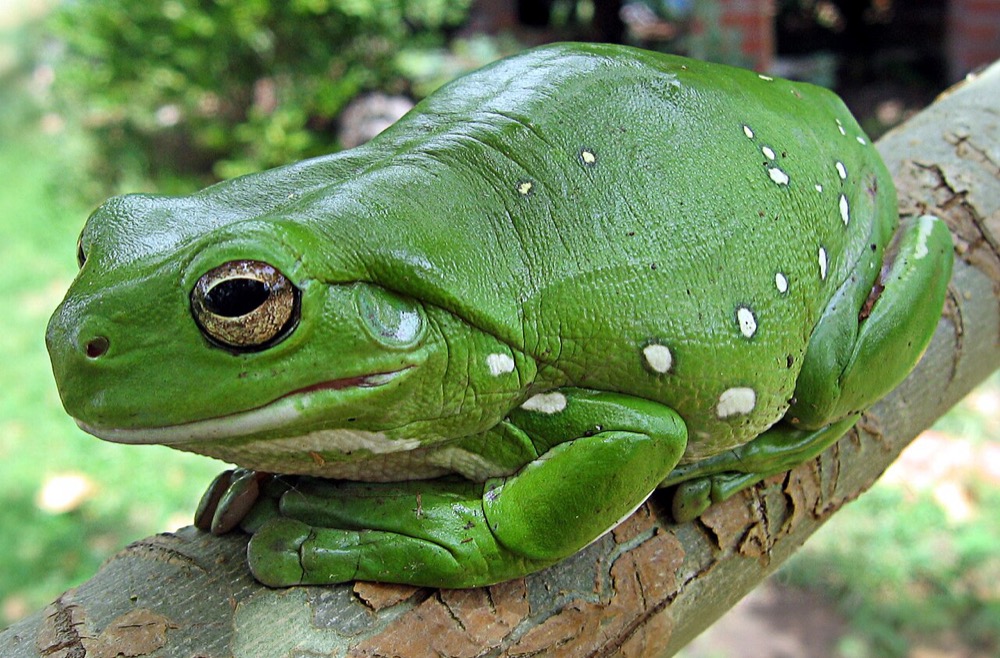
A plump, placid Australian and New Guinean tree frog also called the dumpy tree frog for its round, jowly appearance. They are hardy, long-lived and among the calmest amphibians, tolerating gentle interaction better than most. Their main husbandry pitfall is obesity from overfeeding, since they are enthusiastic, food-motivated eaters.
Housing & setup
House one to a few frogs in a tall, front- or top-opening terrarium of at least 45 x 45 x 60 cm for a small group, taller being better since they are arboreal. Furnish with sturdy branches, cork bark, vines and broad-leaved live or artificial plants for climbing and cover, over a moisture-holding bioactive soil or coco-fibre substrate; avoid small gravel or bark chunks that could be swallowed. Provide a large, shallow dish of dechlorinated water for soaking, as frogs absorb water and can be poisoned by chlorine. Good ventilation prevents stagnant, disease-promoting air.
Diet & feeding
Insectivore prone to obesity, so portion control matters. Offer gut-loaded, calcium-dusted crickets, locusts, dubia roaches and earthworms as staples, with mealworms and the occasional waxworm only as rare treats; avoid feeding pinky mice, which are far too fatty. Dust feeders with calcium at most feeds and a multivitamin weekly. Feed juveniles daily but adults only every two to three days, giving a few insects at a time and keeping them lean, as overfed frogs develop unhealthy fat build-up.
Temperature, light & environment
Provide a daytime gradient of about 24 to 29 C with a gentle basking area near the upper end, and never let night temperatures fall below about 21 C. UVB is not strictly required if the diet is well supplemented with D3, but low-level UVB (a UVI of about 2.0 to 3.0) is beneficial for long-term health. Keep humidity moderate, around 50 to 70 percent, by misting and via the water dish, and importantly avoid constant very high humidity and poor airflow, which promote bacterial skin infections in this species. Always use dechlorinated water and run a 12-hour light cycle.
Company & handling
Can be kept singly or in small groups of similar size, unlike most reptiles, provided the enclosure is large enough and all frogs are well fed to prevent one outcompeting another. Never mix different amphibian species or wildly different sizes. They tolerate brief, gentle handling with clean, wet, chemical-free hands, but skin contact should be minimal because their permeable skin absorbs oils, salts and residues.
Enrichment & exercise
Provide varied climbing branches, vines and broad leaves at different heights, plus hides and a soaking dish, and vary the layout occasionally. Evening misting encourages natural activity and drinking, and free-ranging feeder insects give them the chance to hunt as they would in the wild.
Common health problems
Obesity and lipid build-up
Signs: Bulging fat deposits over the eyes and body, an extremely round shape, sluggishness
Prevention: Feed adults only every two to three days in modest portions, avoid fatty prey like pinky mice and waxworms, and keep them active
Chytrid and bacterial skin infection
Signs: Red or discoloured skin, excess or sloughing slime, lethargy, sitting oddly, sores
Prevention: Quarantine new frogs, keep water dechlorinated and clean, avoid constant high humidity with poor airflow, and maintain hygiene
Metabolic bone disease (MBD)
Signs: Weak or bendy limbs, difficulty climbing, jaw or spine deformity, twitching
Prevention: Dust feeders with calcium and D3, offer optional low UVB, and feed a varied gut-loaded insect diet
Chemical toxicity from the skin
Signs: Sudden distress, excess mucus, spasms or death after contact with chlorine, soap or hand residues
Prevention: Use only dechlorinated water and handle rarely with clean, wet, product-free hands
See a vet urgently if...
- !Red, discoloured or sloughing skin with excess slime (skin infection)
- !Sudden distress or spasms after water changes or handling (chemical toxicity)
- !Weak or bendy limbs and trouble climbing (MBD)
- !Refusing food for one to two weeks with lethargy
- !Bloating, straining, or floating abnormally
In Macau
Macau's warm, humid climate broadly suits White's tree frogs, but hot summer days can overheat an enclosure and constant dampness raises the risk of skin infection, so keep temperatures under about 29 C and ensure good ventilation. Any UVB bulb used should be replaced every 6 to 12 months, tap water must be dechlorinated for this sensitive-skinned species, and captive-bred frogs should be chosen over wild-caught.
White's tree frogs secrete peptides in their skin that scientists have studied for antibacterial and antiviral properties, and their calm, hardy nature makes them one of the most beginner-friendly amphibians.
Questions about your exotic pet?
Our team sees small mammals, birds, reptiles and fish. Book a wellness check or a species consult.
Book an exotic consultRelated care sheets
General guidance reviewed by the Royal Veterinary Center team. Not a substitute for a veterinary examination. Always confirm species-specific and legal requirements for Macau.