Reptiles & Amphibians
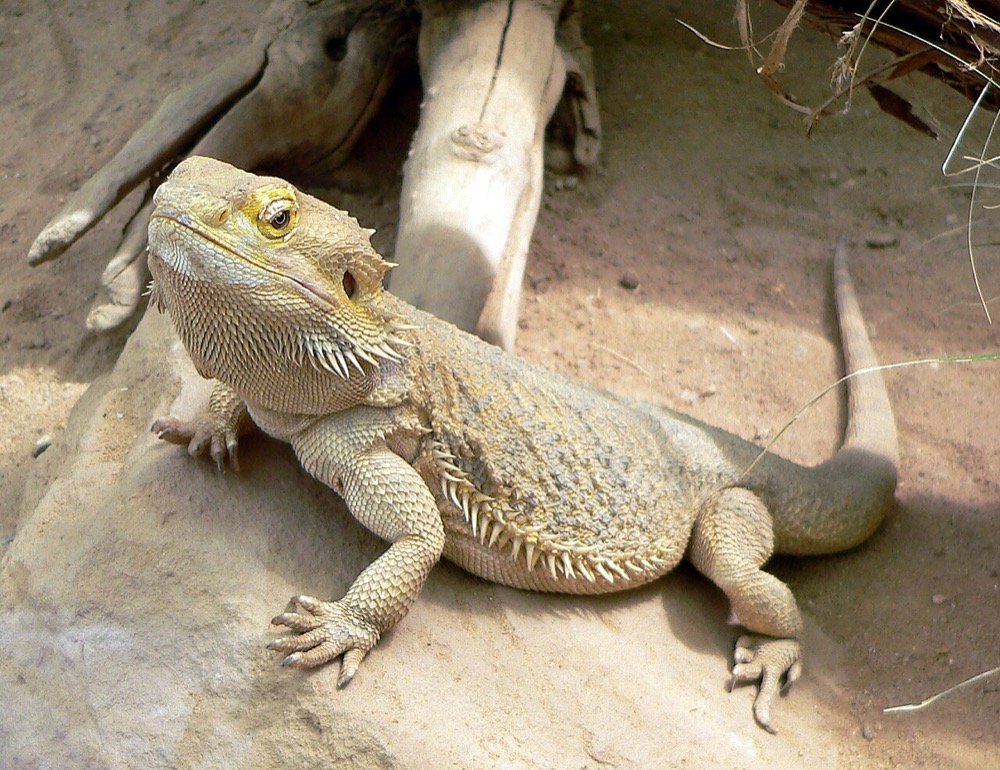
Bearded Dragon
Pogona vitticeps
Care level
Intermediate
Lifespan
8 to 12 years, sometimes up to 15
Adult size
40 to 60 cm including tail
A diurnal, sun-loving lizard from the arid interior of Australia and arguably the most personable pet reptile. They bask openly, wave and head-bob to communicate, and puff out a spiny throat 'beard' when displaying. They are rewarding but demanding, needing high heat, strong UVB and a large enclosure to stay healthy.
Housing & setup
An adult needs a minimum footprint of 120 x 60 x 60 cm (a 4 x 2 x 2 foot enclosure), with bigger being better; front-opening wood or PVC vivaria hold heat and UVB well. Use a naturalistic loose substrate such as a topsoil and sand mix or bioactive soil that allows digging, and avoid loose calci-sand for young dragons and slippery bare tile long term. Provide a raised basking platform or rock under the lamp, plus hides, cork bark, sturdy branches and a shallow water dish. Good airflow keeps the arid environment healthy.
Diet & feeding
Omnivore whose balance shifts with age. Juveniles eat roughly 70 percent insects and 30 percent greens fed one to three times daily; adults flip to about 70 to 80 percent leafy greens and vegetables with insects two to three times per week. Offer gut-loaded crickets, dubia roaches, black soldier fly larvae and occasional hornworms; dust insects with calcium at most feeds and a multivitamin once or twice weekly. Staple greens include collard, mustard and dandelion greens, rocket and squash; avoid feeding wild-caught bugs, fireflies (toxic) and excess fruit.
Temperature, light & environment
This is a high-energy basker. Provide a basking surface of 40 to 43 C for adults (juveniles tolerate the upper end), a cool end of 24 to 27 C, and a night drop to around 18 to 24 C with no coloured night lights. Strong UVB is essential: use a high-output T5 tube spanning much of the enclosure to give a basking UVI of about 4.0 to 6.0 (Ferguson Zone 3 to 4) at the dragon's back, mounted correctly for distance and mesh. Keep humidity low at around 30 to 40 percent, and run a 12 to 14 hour photoperiod; without correct UVB and heat, dragons rapidly develop metabolic bone disease.
Company & handling
Strictly solitary. Bearded dragons do not need company and cohousing leads to dominance, stress, missing toes and tails, and even loss of a weaker animal that is denied the basking spot. Keep one per enclosure. They are very tolerant of calm, supported handling and often enjoy human interaction.
Enrichment & exercise
Provide basking platforms at different heights, digging substrate, hides and branches to climb, and rotate decor to keep the environment novel. Supervised floor time or a securely planted outdoor pen for real sunlight, plus scatter-feeding insects to chase, all encourage natural foraging and basking behaviour.
Common health problems
Metabolic bone disease (MBD)
Signs: Soft or swollen jaw, bumpy or bowed limbs, tremors, weak back legs, difficulty lifting the body
Prevention: Provide correct high-output UVB replaced on schedule, a hot basking zone, and calcium-dusted feeders with balanced greens
Impaction
Signs: Straining, no droppings, bloating, dragging or weak hind legs, loss of appetite
Prevention: Keep the basking zone hot enough to digest, feed correctly sized prey, avoid loose fine sand for babies, and ensure hydration
Atadenovirus and other infections
Signs: Chronic poor growth, wasting, lethargy, recurrent illness in young dragons
Prevention: Buy captive-bred from reputable breeders, quarantine new animals, and keep strict hygiene
Respiratory infection
Signs: Open-mouth breathing, mucus or bubbles from nose or mouth, puffing, lethargy
Prevention: Maintain correct warm temperatures, avoid damp cold conditions, and keep humidity low with good ventilation
See a vet urgently if...
- !Soft, swollen or rubbery jaw and bendy limbs (MBD)
- !Open-mouth breathing with mucus (respiratory infection)
- !Straining with no droppings or weak, dragging back legs (impaction)
- !Refusing food for more than one to two weeks outside of brumation
- !Sunken eyes, sticky saliva or marked lethargy (dehydration or serious illness)
In Macau
Bearded dragons cope well with Macau's warmth, but a hot summer room combined with a basking lamp can push a closed vivarium to lethal temperatures, so use thermostats and monitor the cool end. Their strong UVB requirement means bulbs must be replaced every 6 to 12 months, and captive-bred dragons are readily available and preferable to wild or poorly farmed stock.
Bearded dragons can wave one front leg in a slow circular motion, a genuine social signal thought to show submission or acknowledgement of another dragon.
Questions about your exotic pet?
Our team sees small mammals, birds, reptiles and fish. Book a wellness check or a species consult.
Book an exotic consultRelated care sheets
General guidance reviewed by the Royal Veterinary Center team. Not a substitute for a veterinary examination. Always confirm species-specific and legal requirements for Macau.