Reptiles & Amphibians
Ball Python
Python regius
Care level
Beginner
Lifespan
20 to 30 years, occasionally 40 or more
Adult size
Males 90 to 120 cm, females 120 to 150 cm
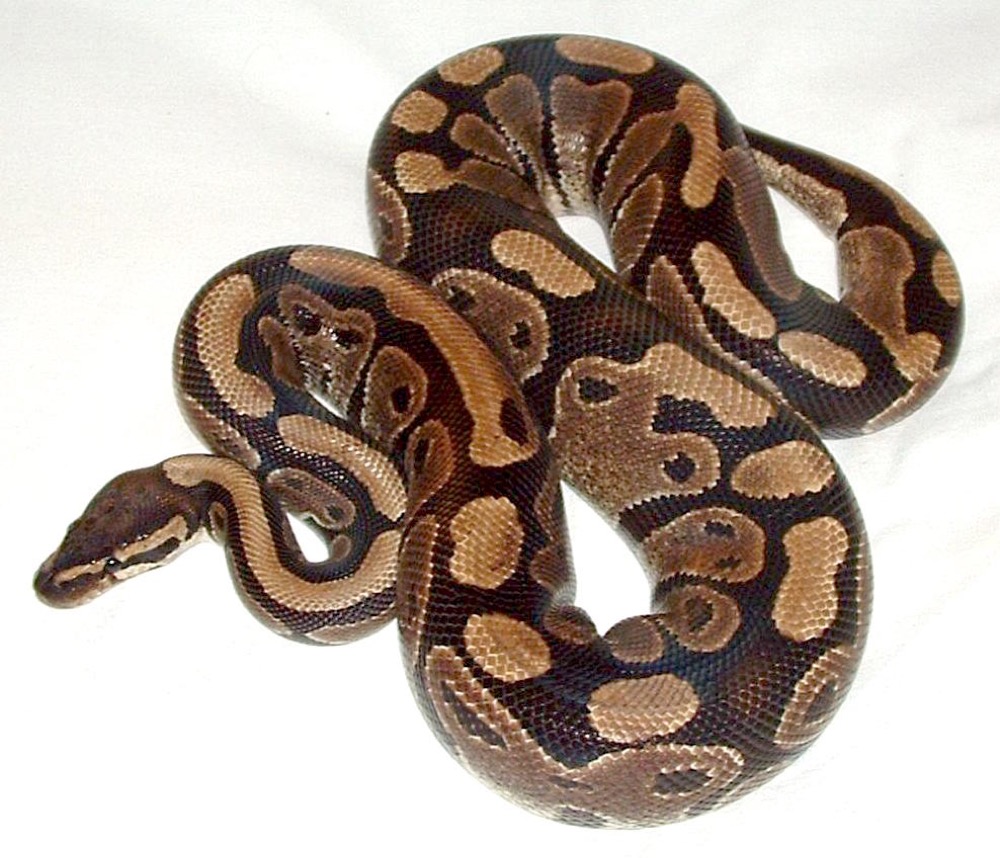
A shy, slow-moving African python named for its habit of curling into a tight ball when stressed. They are gentle, long-lived and available in an enormous range of morphs, making them very popular. Their main quirk is being sensitive fasters that may refuse food for weeks, especially in poor husbandry, so security and stable conditions matter.
Housing & setup
An adult needs a secure, front-opening enclosure of at least 120 x 60 x 60 cm (a 4 x 2 x 2 foot setup); solid-sided wood or PVC vivaria hold heat and humidity better than open-mesh tanks. Provide a moisture-retaining substrate such as coco husk, cypress mulch or bioactive soil, and at least two tight-fitting hides (warm and cool) plus plenty of clutter, cork bark and branches so the snake feels covered. Include a sturdy water bowl large enough to soak in. Ball pythons value security over open floor space, so a densely furnished enclosure lowers stress.
Diet & feeding
Carnivore fed whole rodents. Offer an appropriately sized frozen-then-thawed rat or mouse, roughly the girth of the snake's widest point, avoiding live prey which can bite and injure the snake. Feed hatchlings weekly, juveniles every 7 to 10 days, and adults every 10 to 21 days; large adults do well on a rat every two to three weeks. Seasonal or breeding-related fasts are common and usually harmless if body condition holds, but persistent refusal warrants a husbandry review and vet check.
Temperature, light & environment
Provide a warm-end basking zone of 31 to 33 C and a cool end of 25 to 27 C, never letting the enclosure fall below about 24 C, with a slight night drop; control all heat with a thermostat and avoid heat-mat-only setups for these large-bodied snakes. UVB is not required but low-level UVB (a basking UVI of about 1.0 to 3.0 with hides available for shade) is increasingly recommended as beneficial. Keep humidity around 55 to 70 percent, rising toward 70 to 80 percent during shedding, and run a 12-hour light cycle; chronically low humidity causes stuck sheds and respiratory problems.
Company & handling
Solitary. Ball pythons should be kept one per enclosure, as cohabiting causes competition, stress-related fasting, disease spread and difficulty monitoring feeding and health. They are calm and tolerate gentle, supported handling, though nervous individuals may ball up; give rest after feeding and during shedding.
Enrichment & exercise
Fill the enclosure with hides, cork tubes, branches and clutter to climb through and hide within, and offer a deep substrate for burrowing. Novel scent trails, rearranged decor and occasional larger enclosures for exploration all encourage natural behaviour in this otherwise sedentary snake.
Common health problems
Respiratory infection
Signs: Open-mouth breathing, wheezing or clicking, mucus or bubbles at the nose or mouth, holding the head raised
Prevention: Keep temperatures correct, maintain proper humidity without stagnant damp, and ensure good ventilation
Dysecdysis (retained shed)
Signs: Shed coming off in patches, retained eye caps, a stuck tail tip that can constrict
Prevention: Maintain humidity around 60 to 70 percent, raise it during shedding, and provide a humid hide and rough surfaces
Mouth rot (infectious stomatitis)
Signs: Swelling, redness or cheesy pus in the mouth, drooling, refusing food
Prevention: Keep husbandry correct, avoid mouth injuries from live prey, and treat early signs promptly with a vet
Obesity
Signs: Visible skin folds, loss of muscular body shape, sluggishness
Prevention: Feed appropriately sized prey on a sensible schedule and do not overfeed, which is common with power-feeding
See a vet urgently if...
- !Open-mouth breathing, wheezing or mucus (respiratory infection)
- !Refusing food for many weeks with genuine weight and muscle loss
- !Swollen mouth with discharge (mouth rot)
- !Regurgitating meals, especially soon after eating
- !Marked lethargy, sunken eyes or a stargazing, twisting posture
In Macau
Macau's humidity actually helps ball pythons hold the moisture they need, but summer heat can overheat a closed vivarium, so use thermostats and keep the cool end near 25 C. UVB is optional but any bulb used should be replaced every 6 to 12 months, and captive-bred animals should be chosen over wild-caught imports for both welfare and reliable feeding.
Ball pythons can go months without eating during natural fasting periods, drawing on fat reserves, which is normal survival behaviour rather than illness as long as they stay in good body condition.
Questions about your exotic pet?
Our team sees small mammals, birds, reptiles and fish. Book a wellness check or a species consult.
Book an exotic consultRelated care sheets
General guidance reviewed by the Royal Veterinary Center team. Not a substitute for a veterinary examination. Always confirm species-specific and legal requirements for Macau.