Reptiles & Amphibians
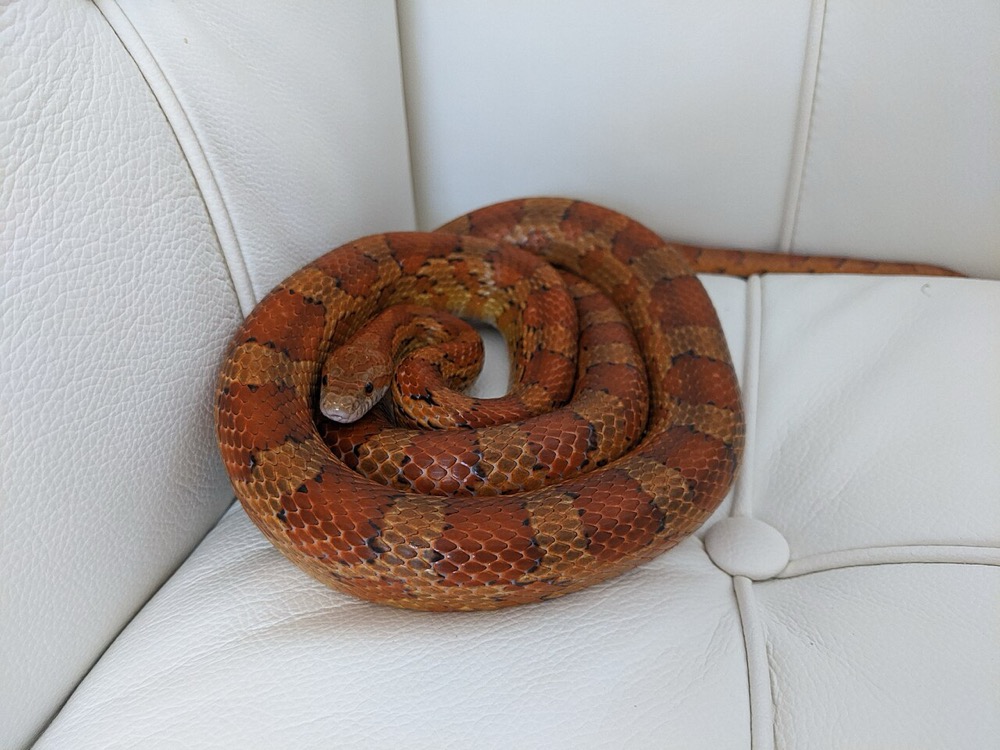
Corn Snake
Pantherophis guttatus
Care level
Beginner
Lifespan
15 to 20 years, sometimes over 23
Adult size
120 to 150 cm, occasionally up to 180 cm
A docile North American rat snake and one of the most recommended first snakes. They are hardy, reliable feeders, come in countless colour morphs, and rarely bite. As a temperate species they need a clear thermal gradient but are forgiving of ordinary household humidity.
Housing & setup
An adult needs a secure, front-opening enclosure of at least 120 x 60 x 60 cm (a 4-foot vivarium) with a tight, escape-proof lid, as corn snakes are expert escape artists. Provide a deep, burrow-friendly substrate such as aspen, coco-based bedding or bioactive soil, plus at least two snug hides (one on the warm end and one on the cool end) and a humid hide for shedding. Add sturdy branches and cork for climbing and a water bowl large enough to soak in. Clutter and cover reduce stress far more than open space.
Diet & feeding
Carnivore that eats whole rodents. Offer an appropriately sized frozen-then-thawed mouse (roughly the width of the snake's thickest part) rather than live prey, which can injure the snake. Feed hatchlings every 5 to 7 days, juveniles every 7 to 10 days, and adults every 10 to 14 days, adjusting to keep good body condition rather than overfeeding. Always thaw and warm prey thoroughly, and avoid handling for a day or two after a meal.
Temperature, light & environment
Provide a warm-end basking zone of 28 to 32 C and a cool end of 22 to 25 C, with a natural night drop of a few degrees; use an overhead heat source on a thermostat rather than heat-mat-only heating. UVB is not strictly required but a low-output tube giving a basking UVI of around 2.0 to 3.0 is increasingly recommended for D3 synthesis and welfare. Keep ambient humidity around 40 to 60 percent, raising it toward 65 to 70 percent during a shed via a humid hide, and run a 12-hour light cycle. Never leave an unregulated heat mat that can overheat and burn the belly.
Company & handling
Solitary. House corn snakes individually because cohabiting causes stress, competition at feeding and the risk of one snake eating another. They tolerate gentle, regular handling well and are among the calmest pet snakes, though give a few days rest after feeding and during shedding.
Enrichment & exercise
Provide branches to climb, multiple hides, leaf litter and clutter so the snake can explore and feel secure, and offer a deep substrate for burrowing. Rearranging decor and occasional novel scents or new climbing structures encourage natural exploratory behaviour.
Common health problems
Respiratory infection
Signs: Open-mouth breathing, wheezing or clicking, mucus or bubbles at the nose or mouth, holding the head up
Prevention: Maintain correct warm temperatures, avoid cold damp conditions, and keep the enclosure clean with proper ventilation
Dysecdysis (retained shed)
Signs: Skin coming off in patches rather than one piece, retained eye caps, stuck tail tip
Prevention: Provide a humid hide and a rough surface, ensure good hydration, and raise humidity during shed cycles
Mouth rot (infectious stomatitis)
Signs: Redness, swelling or cheesy discharge in the mouth, reluctance to eat, drooling
Prevention: Keep husbandry and temperatures correct, avoid mouth injuries from live prey, and address any early infection promptly
Thermal burns
Signs: Blistered, discoloured or raw belly scales, often on the underside
Prevention: Always control heat sources with a thermostat and never use an unregulated heat mat or hot rock
See a vet urgently if...
- !Open-mouth breathing, wheezing or mucus (respiratory infection)
- !Refusing several consecutive meals with weight loss
- !Blistered or raw belly scales (thermal burn)
- !Swollen mouth with discharge or unwillingness to eat (mouth rot)
- !Regurgitating meals repeatedly
In Macau
Macau's humidity generally suits corn snakes and shedding, but summer heat can push an enclosure too high, so keep the cool end near 24 C with a thermostat and monitoring. Replace any UVB bulb every 6 to 12 months, choose captive-bred snakes (the norm for this species), and note that a secure lid is vital in a warm climate where snakes are more active.
Corn snakes are superb climbers and burrowers, and the name may come from their habit of hunting rodents in grain stores, or from the corn-kernel-like belly pattern.
Questions about your exotic pet?
Our team sees small mammals, birds, reptiles and fish. Book a wellness check or a species consult.
Book an exotic consultRelated care sheets
General guidance reviewed by the Royal Veterinary Center team. Not a substitute for a veterinary examination. Always confirm species-specific and legal requirements for Macau.