Reptiles & Amphibians
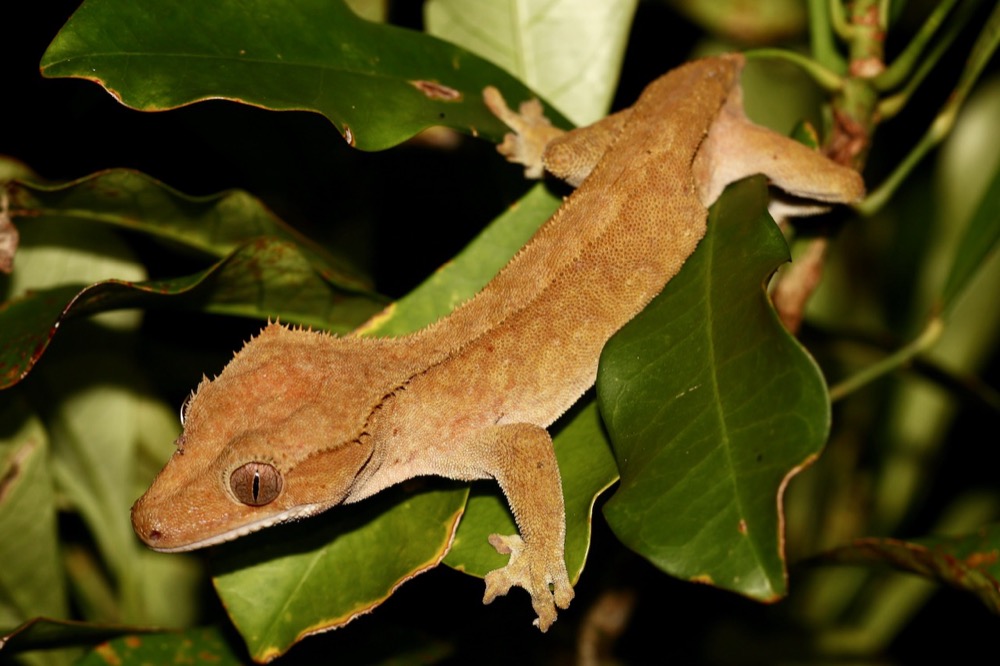
Crested Gecko
Correlophus ciliatus
Care level
Beginner
Lifespan
15 to 20 years
Adult size
20 to 25 cm including tail
An arboreal, nocturnal gecko from New Caledonia, rediscovered in 1994 and now a hugely popular beginner pet. They have soft eyelash-like crests, sticky toe pads and a prehensile tail, and thrive at cool room temperatures. A big advantage is that they eat a complete powdered diet, so no live insects are strictly required.
Housing & setup
House one adult in a tall, front- or top-opening terrarium of at least 45 x 45 x 60 cm, taller being better since they climb rather than roam the floor. Furnish densely with cork bark, branches, vines and broad-leaved live or artificial plants to create cover and climbing routes, and use a moisture-holding bioactive soil or coco-fibre substrate to buffer humidity. Provide a shallow water dish and mist surfaces so they can lap droplets. Good ventilation is essential to prevent stagnant, mouldy air.
Diet & feeding
Primarily a commercial crested gecko diet (CGD) powder mixed with water to a smooth pudding, offered in a shallow dish every other day for adults and daily for juveniles; remove uneaten food after roughly 24 to 36 hours. This diet is nutritionally complete, but you can enrich with occasional gut-loaded, calcium-dusted insects such as small crickets or black soldier fly larvae. Avoid baby food or fruit as a staple as it lacks calcium and protein balance.
Temperature, light & environment
Keep them cool: daytime 22 to 26 C with a night drop to around 18 to 22 C. Temperatures above 28 to 29 C cause serious heat stress and can be fatal, so no strong basking lamp is needed in most homes and cooling matters more than heating. UVB is not required when feeding a complete CGD, but a low-level UVB tube (Ferguson Zone 1, UVI around 1.0) is increasingly recommended as beneficial. Cycle humidity between about 50 and 80 percent by misting in the evening and letting the enclosure dry toward 50 percent before the next misting, on a 12-hour light cycle.
Company & handling
Solitary is safest. Never house two males together as they fight, and cohabiting risks bullying, tail loss, stress and unwanted breeding; keep one per enclosure. They tolerate short, gentle handling once established but are jumpy, so hand-walk them low over a soft surface.
Enrichment & exercise
Provide a dense three-dimensional maze of branches, vines and foliage at varied heights for climbing and hiding, and vary the layout periodically. Evening misting encourages natural drinking and foraging, and a bioactive setup with a clean-up crew adds naturalistic complexity.
Common health problems
Metabolic bone disease (MBD)
Signs: Kinks or floppy jaw, wavy tail, weak grip, difficulty climbing, bendy limbs
Prevention: Feed a complete calcium-balanced CGD, optionally provide low UVB, and never rely on plain fruit
Floppy tail syndrome
Signs: Tail hangs over the head or to one side when resting head-down, pelvic distortion over time
Prevention: Offer plenty of secure horizontal perches and cork flats, keep calcium adequate, and avoid glass-only resting surfaces
Dysecdysis (retained shed)
Signs: Stuck shed on toes and tail tip, constricted digits that can be lost, dull skin
Prevention: Maintain proper humidity cycling and provide rough bark and foliage to rub against while shedding
Respiratory infection
Signs: Open-mouth breathing, mucus or bubbling around the nose, lethargy, wheezing
Prevention: Avoid constant high humidity and poor ventilation, and never let the enclosure overheat or stay damp and stagnant
See a vet urgently if...
- !Open-mouth or laboured breathing with mucus (respiratory infection)
- !Soft or kinked jaw, wavy tail or weak grip (possible MBD)
- !Not eating for one to two weeks with weight loss
- !Enclosure temperature climbing above 28 C (heat stress emergency)
- !Tail permanently held over the head (floppy tail syndrome)
In Macau
Macau's hot, humid summers are the main risk for this cool-loving species, so air conditioning is often needed to keep temperatures under 28 C. The natural humidity helps, but ensure strong ventilation to prevent mould and respiratory disease, replace any UVB bulb every 6 to 12 months, and source captive-bred geckos, which are widely and ethically available.
Unlike most geckos, a crested gecko cannot regenerate its tail once it drops it, so most wild-type adults you see are naturally tailless and manage perfectly well.
Questions about your exotic pet?
Our team sees small mammals, birds, reptiles and fish. Book a wellness check or a species consult.
Book an exotic consultRelated care sheets
General guidance reviewed by the Royal Veterinary Center team. Not a substitute for a veterinary examination. Always confirm species-specific and legal requirements for Macau.