Reptiles & Amphibians
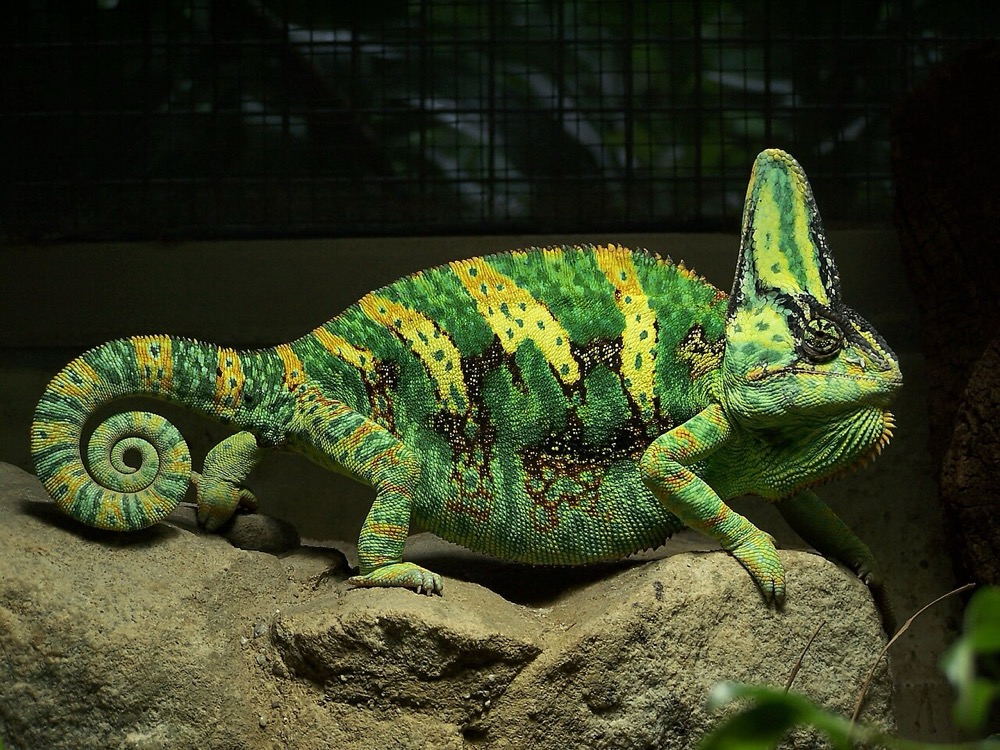
Veiled Chameleon
Chamaeleo calyptratus
Care level
Advanced
Lifespan
Males 5 to 8 years, females 3 to 5 years
Adult size
Males 35 to 60 cm, females 25 to 35 cm including tail
A striking arboreal lizard from Yemen and Saudi Arabia, named for the tall helmet-like casque on its head. They change colour with mood, temperature and health, have independently swivelling eyes and a projectile tongue, and are a rewarding but demanding species better suited to keepers with some experience. They are highly strung, dislike handling, and need precise lighting, gradients and hydration.
Housing & setup
House one adult in a tall, well-ventilated enclosure of at least 60 x 60 x 120 cm (a 2 x 2 x 4 foot cage), with males needing the larger end; screen or hybrid cages provide the airflow they require. Furnish densely with many horizontal and diagonal branches and vines at varied heights plus broad-leaved live or artificial plants (live pothos and ficus also aid humidity), creating cover, basking routes and privacy. Do not use a substrate that can be swallowed; a bioactive planted base or bare floor with drainage works best. Good drainage matters because of frequent misting.
Diet & feeding
Primarily insectivorous, taking gut-loaded crickets, dubia roaches, locusts, black soldier fly larvae, silkworms and hornworms; adults also nibble some greens and edible plants. Gut-load feeders well and dust with plain calcium at most feeds, calcium with D3 lightly if UVB is marginal, and a multivitamin every one to two weeks. Feed juveniles daily and adults every one to two days, offering a modest amount rather than overfeeding, especially females which are prone to being egg-bound if overweight.
Temperature, light & environment
The most detail-sensitive part of their care. Provide a basking spot of 29 to 35 C (lower for the smaller females), ambient of 22 to 27 C, and a beneficial night drop to around 18 to 21 C. Strong UVB is essential: fit a UVB tube giving a basking UVI of about 3.0 at the level where they perch, with shaded lower zones. Keep daytime humidity moderate at 40 to 50 percent, spiking to 80 to 100 percent at night through misting; they will not drink from a bowl, so provide moving water via a dripper and mist heavily morning and evening. Run a 12-hour light cycle.
Company & handling
Strictly solitary and territorial. Chameleons must be housed alone, as even the sight of another chameleon causes chronic stress, and cohousing leads to aggression, colour-darkening stress and injury. They do not enjoy handling and should be handled minimally, viewing hands and people as threats; observe rather than hold, and let them come to you only when necessary.
Enrichment & exercise
Provide a dense, complex network of branches, vines and foliage at many heights and thermal zones so they can choose their microclimate, plus live plants for cover and humidity. Natural sunlight when safely possible, moving water to track and drink, and free-roaming feeder insects to hunt with the tongue all enrich their day.
Common health problems
Metabolic bone disease (MBD)
Signs: Rubbery or bowed limbs, weak grip, tremors, difficulty climbing, swollen or soft jaw
Prevention: Provide correct UVB replaced on schedule, calcium supplementation, and a proper basking temperature to use calcium
Dehydration and kidney disease
Signs: Sunken eyes, orange or dark urates instead of white, lethargy, wrinkled skin
Prevention: Mist heavily twice daily, use a dripper for drinking water, and maintain correct night humidity
Egg binding (dystocia) in females
Signs: Restless digging, straining, swelling, lethargy and appetite loss in a gravid female
Prevention: Provide a deep lay-bin, avoid overfeeding and obesity, and keep husbandry optimal; even unmated females can produce eggs
Respiratory infection
Signs: Open-mouth breathing when not basking, mucus, popping or wheezing sounds, gaping
Prevention: Ensure strong ventilation, avoid constant high daytime humidity and cold, and keep temperatures correct
See a vet urgently if...
- !Sunken eyes and dark or orange urates (dehydration or kidney stress)
- !Rubbery, bowed limbs or a soft jaw (MBD)
- !Open-mouth breathing or gaping when not basking, with mucus (respiratory infection)
- !A gravid female straining, restless then suddenly weak (egg binding)
- !Refusing food with persistent dark stress colouration
In Macau
Macau's warm humid climate can help maintain night humidity, but hot summer days can overheat a screen enclosure and the constant daytime dampness raises respiratory risk, so prioritise ventilation and a moderate 40 to 50 percent daytime humidity. Their strong UVB need means bulbs must be replaced every 6 to 12 months, and captive-bred chameleons should always be chosen over stressed wild-caught imports.
A chameleon's tongue can shoot out well over one and a half times its body length in a fraction of a second, catching prey with a suction-cup tip and remarkable accuracy.
Questions about your exotic pet?
Our team sees small mammals, birds, reptiles and fish. Book a wellness check or a species consult.
Book an exotic consultRelated care sheets
General guidance reviewed by the Royal Veterinary Center team. Not a substitute for a veterinary examination. Always confirm species-specific and legal requirements for Macau.