Birds
Umbrella Cockatoo
Cacatua alba
Care level
Advanced
Lifespan
40 to 60 years, and sometimes longer with excellent care
Adult size
40 to 46 cm from head to tail tip
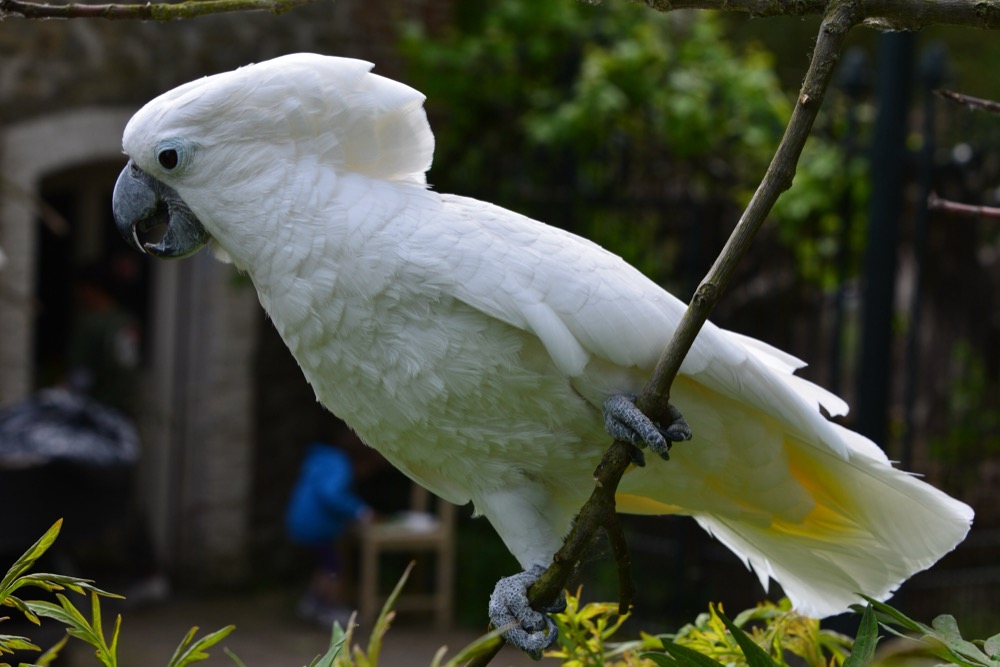
The Umbrella Cockatoo is a large, all-white parrot with a dramatic fan-shaped crest and one of the most affectionate, needy personalities of any bird. They are deeply loving and crave near-constant physical closeness, which is exactly why they are so challenging: an under-attended umbrella can become a screaming, feather-plucking, emotionally distressed bird. Extremely loud and demanding, they suit only experienced owners who can devote hours a day and tolerate high noise.
Housing & setup
Provide a very large, strong cage of at least 90 x 90 x 120 cm for one bird, ideally larger or a dedicated bird room, with heavy bars and spacing around 2.5 to 3.5 cm, plus secure, complex locks because cockatoos are expert escape artists. Use sturdy hardwood perches and large, destructible chew and foraging toys. Cockatoos need extensive time out of the cage on stands and play gyms every day, so the cage alone is never enough.
Diet & feeding
Feed a base of formulated large-parrot pellets with generous fresh vegetables, dark leafy greens and fruit, and only small, measured amounts of nuts and seeds, as cockatoos gain weight and develop fatty tumours easily. Provide vitamin A from natural vegetables and a calcium source. Never offer avocado, chocolate, caffeine, alcohol, onion or salty foods, all of which are toxic to birds.
Temperature, light & environment
Keep them at a stable 18 to 28 C, out of draughts, direct sun and kitchen fumes. Provide natural or full-spectrum light and 10 to 12 hours of quiet, dark sleep, which is especially important for curbing hormonal and screaming behaviour. Cockatoos produce heavy feather dust, so good ventilation and an air purifier help both the bird and people. Non-stick (PTFE or Teflon) cookware, air fryers, self-cleaning ovens and scented candles release fumes that are rapidly fatal, so keep the cage well away from the kitchen.
Company & handling
Umbrella Cockatoos are intensely social and form powerful, dependent bonds, and they genuinely suffer when left alone, making separation anxiety, screaming and self-plucking very common. They are among the loudest of all parrots, with piercing screams that carry across a neighbourhood. Owners must avoid over-cuddling, which triggers hormonal behaviour and overbonding, and instead build independence with foraging, training and structured attention rather than constant contact.
Enrichment & exercise
Provide abundant destructible toys, thick softwood and palm to shred, foraging puzzles and foot toys, replaced frequently because cockatoos destroy them fast. Teach independent play and foraging to reduce reliance on constant human contact. Training and trick work give a valuable mental outlet and strengthen a healthy bond. Plenty of daily physical activity and out-of-cage climbing help burn energy and reduce problem behaviour.
Common health problems
Feather plucking and self-mutilation
Signs: Bald or bloodied patches, chewed feathers, over-preening and sometimes deep self-inflicted wounds, strongly linked to stress and loneliness.
Prevention: Provide structured attention, foraging enrichment, independence training and good sleep, and involve an avian vet and behaviourist early.
Separation anxiety and chronic screaming
Signs: Persistent loud screaming when left alone, frantic behaviour, destructive chewing and overbonding to one person.
Prevention: Avoid over-cuddling, build independent play, keep a consistent routine, and never reinforce screaming with attention.
Obesity and lipomas (fatty tumours)
Signs: Excess weight, visible fatty lumps, breathlessness and poor feather quality, often in nut-and-seed-heavy birds.
Prevention: Feed a controlled low-fat pellet-and-vegetable diet, limit nuts and seeds, and ensure daily exercise.
Psittacine beak and feather disease (PBFD)
Signs: Abnormal, deformed or lost feathers, beak lesions and immune suppression; cockatoos are highly susceptible.
Prevention: Quarantine and PBFD-test new birds, avoid contact with birds of unknown status, and keep housing scrupulously clean.
See a vet urgently if...
- !Sitting fluffed on the cage floor instead of perching, an emergency
- !Tail bobbing at rest or open-mouth, laboured breathing
- !Sudden onset of self-plucking or bleeding self-inflicted wounds
- !Not eating, regurgitating or sudden weight loss
- !Sudden silence, drooping wings or inability to grip the perch
In Macau
Umbrella Cockatoos are CITES Appendix II, so a bird must have legal documentation; buy only from a reputable, papered source. Their extreme volume makes them unsuitable for typical Macau apartments and likely to cause serious neighbour complaints; they realistically need a house. Keep housing cool, dry and ventilated against the heat, use an air purifier for their heavy feather dust, never run non-stick cookware nearby, and plan for a 40-to-60-year commitment that may outlive the owner.
Umbrella Cockatoos raise their broad white crest like an opening umbrella when excited or alarmed, and they are so intelligent and dexterous that they routinely pick locks and dismantle cage fastenings, earning a reputation as feathered escape artists.
Questions about your exotic pet?
Our team sees small mammals, birds, reptiles and fish. Book a wellness check or a species consult.
Book an exotic consultRelated care sheets
General guidance reviewed by the Royal Veterinary Center team. Not a substitute for a veterinary examination. Always confirm species-specific and legal requirements for Macau.