Birds
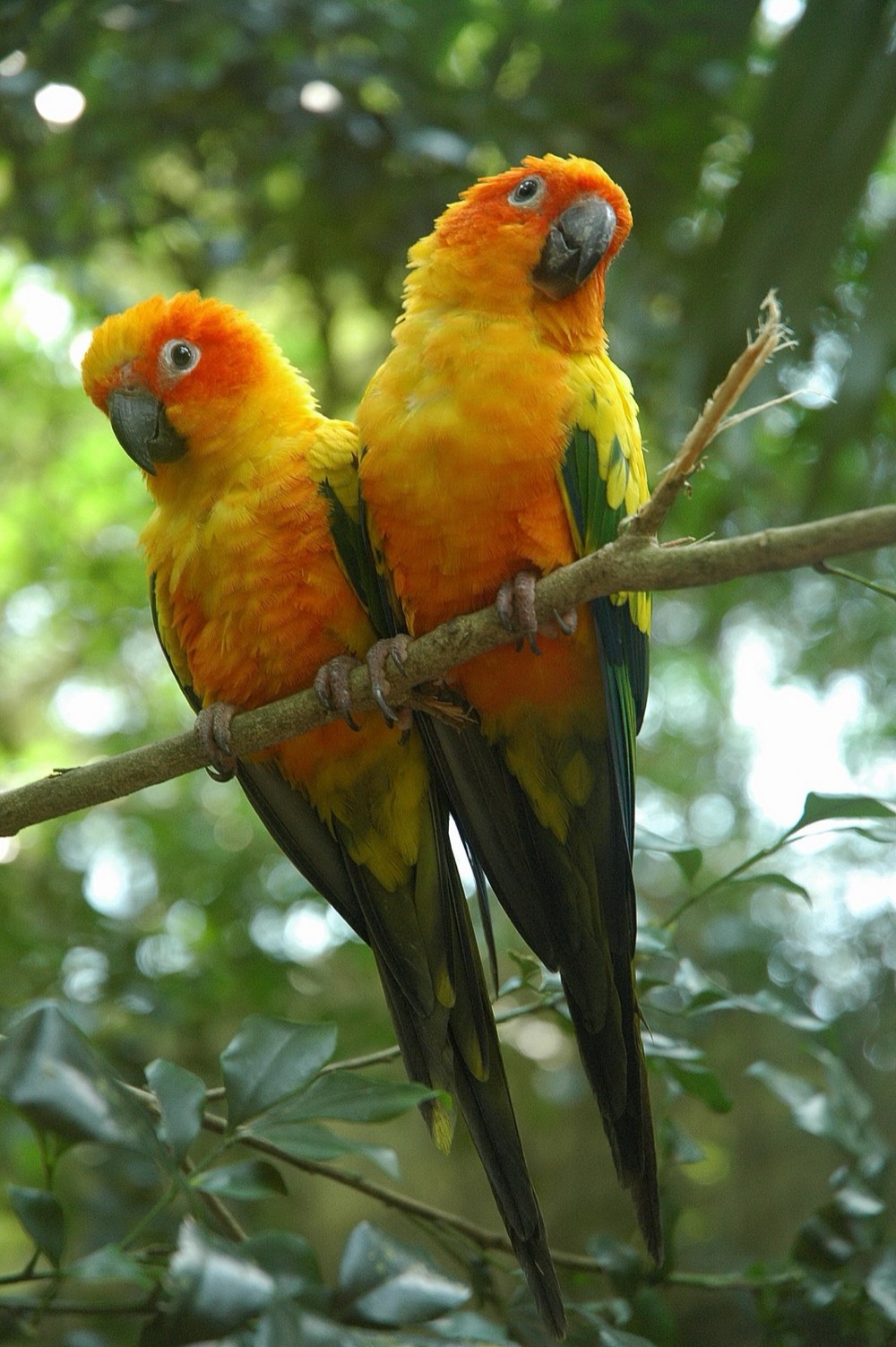
Sun Conure
Aratinga solstitialis
Care level
Advanced
Lifespan
20 to 30 years
Adult size
About 30 cm including the tail
The sun conure is a stunning medium-small parrot in blazing yellow, orange and green, with an affectionate, playful and boldly outgoing personality. Their beauty and charm come with one major caveat: they are extremely loud, capable of piercing screams that carry a long way. They suit an experienced, sociable owner in a tolerant living situation rather than a shared apartment wall, and they need a great deal of interaction.
Housing & setup
Provide a strong cage of at least 60 x 60 x 90 cm, larger being better for such an active bird, with bar spacing of about 1.6 to 2 cm (five-eighths to three-quarters of an inch) and robust bars to withstand chewing. Offer varied natural-wood perches, ropes, swings, ladders and plenty of durable toys at different heights. Position the cage in a lively family area, as sun conures want to be part of the action. Include a foraging and play area to keep their busy minds occupied.
Diet & feeding
Feed a base of formulated pellets (about 60 to 70 percent) with limited seed, plus a daily variety of fresh vegetables, dark leafy greens and some fruit. Conures are prone to vitamin A deficiency on seed diets, so include orange and red vegetables like carrot, sweet potato and capsicum, and provide a cuttlebone for calcium. Avoid all-seed feeding. Avocado, chocolate, caffeine, alcohol, onion and salty foods are toxic and must never be given.
Temperature, light & environment
Keep at 18 to 28 C, away from draughts, direct sun and kitchen fumes. Provide natural or full-spectrum light and 10 to 12 hours of quiet, dark sleep, as an overtired sun conure is louder and more irritable. They are energetic and need several hours of supervised out-of-cage time daily in a bird-proofed room. Keep housing dry and ventilated to reduce fungal respiratory disease in humid conditions.
Company & handling
Sun conures are intensely social flock birds that bond strongly and demand a lot of attention, becoming loud, destructive or feather-plucking if left isolated. They are notoriously noisy, with loud contact calls and screams that make them a poor fit for close apartment living. They can be kept singly with abundant human interaction or in pairs. Their affectionate, cuddly nature is a highlight, but prospective owners must be realistic about the volume.
Enrichment & exercise
Provide a rich rotation of foraging toys, puzzle feeders, shreddable wood and paper, bells, ropes and swings, and plan for constant replacement as they destroy toys enthusiastically. Trick and target training gives essential mental stimulation and can help manage screaming through positive reinforcement. Daily flight, climbing and social play out of the cage are important. Teaching quiet-behaviour rewards helps channel their vocal energy.
Common health problems
Proventricular dilatation disease (PDD)
Signs: Weight loss despite eating, regurgitation, undigested food in the droppings, and neurological signs such as weakness or tremors; linked to avian bornavirus.
Prevention: Quarantine and test new birds, minimise stress and avoid contact with birds of unknown status; there is no cure, so early diagnosis and supportive care matter.
Vitamin A deficiency (hypovitaminosis A)
Signs: Poor feather colour, sneezing and sinus infections, white plaques in the mouth, and blunted papillae in the throat, common in seed-fed conures.
Prevention: Feed pellets and orange or red vegetables rich in vitamin A rather than an all-seed diet, and have an avian vet monitor at check-ups.
Feather plucking
Signs: Bald patches, over-preening and chewed feathers, often from boredom, loneliness or hormonal stress in these highly social birds.
Prevention: Provide enrichment, foraging, sleep and daily interaction, and have an avian vet rule out medical and nutritional causes.
Psittacosis (chlamydiosis)
Signs: Fluffed posture, lethargy, nasal or eye discharge, laboured breathing and lime-green droppings.
Prevention: Quarantine and vet-test new birds and keep housing clean and ventilated; the disease can spread to people.
See a vet urgently if...
- !Fluffed up and sitting on the cage floor, not perching
- !Tail bobbing at rest or open-mouth, laboured breathing
- !Regurgitating repeatedly or passing whole undigested food
- !Not eating, sudden weight loss or an unsteady, wobbly gait
- !Bleeding, a broken blood feather, or sudden collapse
In Macau
The sun conure's extreme volume makes it a difficult fit for Macau's dense apartment living, where noise can seriously affect neighbours, so honestly assess your situation before choosing one. Humidity raises fungal respiratory risk, so keep housing dry and ventilated. Non-stick (PTFE) cookware and appliance fumes are lethal to birds and must be kept far from the cage. Buy only from a reputable, ethical breeder (wild sun conures are endangered), request bornavirus and PBFD information, and quarantine new birds.
Sun conures are born green and only develop their spectacular sunset plumage as they mature, so a fully coloured adult is a sign of an older bird, and no two are patterned exactly alike.
Questions about your exotic pet?
Our team sees small mammals, birds, reptiles and fish. Book a wellness check or a species consult.
Book an exotic consultRelated care sheets
General guidance reviewed by the Royal Veterinary Center team. Not a substitute for a veterinary examination. Always confirm species-specific and legal requirements for Macau.