Reptiles & Amphibians
Sulcata Tortoise (African Spurred Tortoise)
Centrochelys sulcata
Care level
Advanced
Lifespan
50 to 100 years or more
Adult size
45 to 75 cm shell, 45 to 90 kg or more
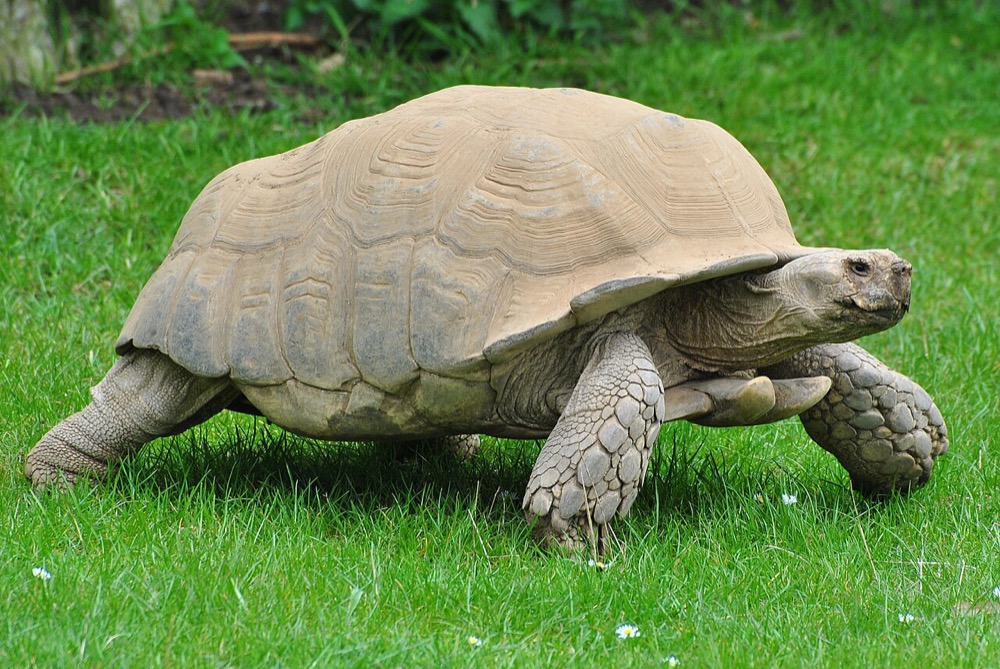
The largest mainland tortoise, native to the arid Sahel of Africa, and a species that is frequently bought as a tiny hatchling and then hugely underestimated. Adults are the size of a small coffee table, powerful diggers that can destroy fencing, and need substantial outdoor space and a lifelong commitment. Only take one on with a realistic plan for its adult size, decades of care and cost.
Housing & setup
Hatchlings can start indoors on a large tortoise table, but adults cannot be kept indoors and require a big, secure outdoor enclosure, ideally 30 square metres or much more, with escape-proof walls sunk deep because they dig extensive burrows and push through weak barriers. Provide a dry, dig-friendly substrate, grazing plants, shade, a wallow and a large water dish or shallow soak. In cooler weather they need a heated, insulated shelter or shed they can enter to stay warm. Avoid keeping large sulcatas in cramped or wet indoor spaces, which causes shell and health problems.
Diet & feeding
Grazing herbivore built for a very high-fibre, low-protein, low-sugar diet. The staple should be grasses and grass hays such as orchard grass, timothy and Bermuda, supplemented with broadleaf weeds like dandelion, clover and hibiscus, and edible leaves. Avoid fruit, high-protein foods, and rich vegetables, which cause rapid unhealthy growth and shell pyramiding. Provide a cuttlebone for calcium and constant access to clean water; healthy grazing throughout the day suits them best.
Temperature, light & environment
A diurnal desert basker needing heat and strong UVB. Provide a basking spot around 38 to 43 C, daytime ambient of 26 to 32 C, and never let sustained temperatures fall below about 15 C, as cold and damp are dangerous and below 10 C can be fatal, especially to young ones. Strong UVB is essential indoors (basking UVI about 3.0 to 4.0, Ferguson Zone 3 to 4), but outdoor natural sunlight is ideal for grazing adults. Run indoor lighting on a 12 to 14 hour cycle, and provide a heated night shelter in cool weather; keep the environment dry to prevent shell rot.
Company & handling
Best kept singly unless space is very large. Males are territorial and ram and flip rivals, and even females can compete, so cohousing needs extensive space and monitoring. They can become accustomed to their keeper and tolerate soaking and basic handling, but adults are too heavy to handle much and are not affectionate; respect their strength and grazing lifestyle.
Enrichment & exercise
Provide a large grazing area with varied terrain, digging substrate, wallows, basking and shade zones, and edible plantings to forage. Access to real sunshine, room to walk long distances, and seasonal variety all support the natural behaviour of this active, roaming tortoise.
Common health problems
Shell pyramiding and metabolic bone disease
Signs: Raised bumpy pyramided scutes, soft shell, deformed growth, weak limbs
Prevention: Provide strong UVB or sunlight, a high-fibre low-protein diet, correct hydration, and avoid overfeeding rich foods
Respiratory infection
Signs: Nasal discharge, bubbling, open-mouth breathing, wheezing, lethargy
Prevention: Keep them warm and dry with a heated shelter in cool weather, avoid cold damp housing, and ensure good ventilation
Shell rot and skin infection
Signs: Soft, foul, pitted or weeping shell areas, discoloured skin
Prevention: Keep the environment dry with a clean substrate, provide basking to dry off, and treat any injury early
Bladder stones
Signs: Straining, blood in urates, lethargy, loss of appetite, reluctance to move
Prevention: Provide constant fresh water and regular soaks to keep them hydrated, and feed a proper low-protein high-fibre diet
See a vet urgently if...
- !Nasal discharge with open-mouth breathing (respiratory infection)
- !Soft or rapidly pyramiding shell (MBD or diet error)
- !Straining to pass urates or blood in the urine (possible bladder stone)
- !Refusing food and becoming lethargic, especially when cold
- !Foul-smelling or weeping shell lesions (shell rot)
In Macau
Macau's warm weather suits outdoor grazing much of the year, but the intensely humid, wet summers pose a shell-rot and respiratory risk for this dry-climate species, so provide shade, drainage and dry retreats. Replace indoor UVB bulbs every 6 to 12 months. Space is the real limiting factor in Macau, and sulcatas are CITES Appendix II listed, so only acquire captive-bred animals and be certain you can house an adult for its lifetime.
Sulcata tortoises dig burrows that can extend several metres and reach depths of over a metre, creating cool humid refuges that also shelter many other desert animals.
Questions about your exotic pet?
Our team sees small mammals, birds, reptiles and fish. Book a wellness check or a species consult.
Book an exotic consultRelated care sheets
General guidance reviewed by the Royal Veterinary Center team. Not a substitute for a veterinary examination. Always confirm species-specific and legal requirements for Macau.