Birds
Society Finch (Bengalese Finch)
Lonchura striata domestica
Care level
Beginner
Lifespan
5 to 9 years, and sometimes up to 10 with good care
Adult size
11 to 12 cm from head to tail tip
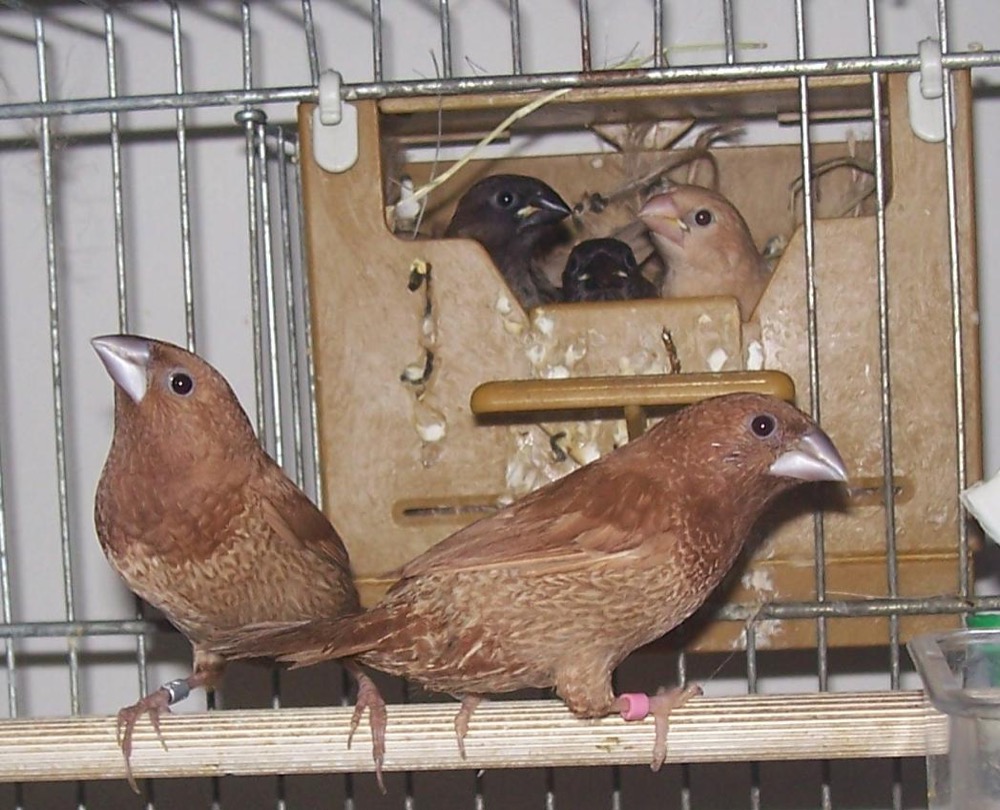
The Society Finch, also called the Bengalese Finch, is a small, hardy, fully domesticated finch that exists only in captivity, bred over centuries in fawn, white and chocolate patterns. Peaceful, sociable and undemanding, they are one of the best beginner finches and thrive in the company of their own kind. They are watch-and-listen birds rather than hand pets, and they are famous as calm, reliable foster parents for other finch species.
Housing & setup
House them in a spacious flight cage or aviary of at least 60 to 90 cm in length so they can fly, as flight is their main exercise, with bar spacing of about 1 cm or less. Keep them in groups rather than singly, as they are extremely gregarious and even huddle together to sleep. Provide fine natural perches at different heights, some cover, and a nest basket if breeding is intended. Position the cage in a calm, draught-free spot.
Diet & feeding
Feed a good-quality finch seed mix as the base, supplemented daily with fresh greens such as spinach, dandelion and chickweed, plus egg food, especially during moult and breeding, and some sprouted seed. Provide a cuttlebone, mineral grit and a calcium source. Clean, fresh water for drinking and bathing must always be available. Avocado, chocolate, caffeine and salty or sugary human foods are toxic and must never be given.
Temperature, light & environment
Keep them at a stable room temperature of around 18 to 28 C, protected from draughts, sudden chills and direct hot sun; they are hardier than Gouldians but still dislike temperature swings. Provide natural or full-spectrum light and a regular day-night cycle with quiet, dark nights. Non-stick (PTFE or Teflon) cookware and scented products emit fumes lethal to birds, so keep the cage well away from the kitchen. Keep housing clean and dry to prevent disease.
Company & handling
Society Finches are intensely social and should never be kept alone, as they rely on the company of other finches and will huddle in a group to roost. They are gentle and peaceful, mixing well with their own kind and other calm finch species, and they are not hand-tame pets but a pleasure to watch. Their soft, whispery chatter is very quiet, making them excellent for apartments and shared buildings.
Enrichment & exercise
Provide plenty of flight space, as flying is their main exercise, plus fine perches at varying heights, natural branches, millet sprays and safe greens to forage through. Offer bathing water, which they enjoy and which keeps their plumage in good condition. A calm, stable group and a naturalistic setup with some cover give security. Keeping several birds together provides the social interaction they need.
Common health problems
Air-sac mites
Signs: Open-mouth or heavy breathing, clicking or wheezing sounds, tail bobbing and loss of song.
Prevention: Quarantine new birds, keep housing clean, and have an avian vet treat with an appropriate ivermectin-type product; it spreads between birds.
Scaly leg and face mites (Knemidokoptes)
Signs: Crusty, honeycomb-like growths on the legs, feet or around the beak, thickened scales and irritation.
Prevention: Quarantine new birds, keep the cage clean, and see an avian vet for ivermectin-type treatment; it is contagious to other birds.
Egg binding in hens
Signs: A hen sitting fluffed on the cage floor, straining, tail bobbing and a firm swelling near the vent; this is a life-threatening emergency.
Prevention: Provide a calcium source and good nutrition, avoid over-breeding, and keep laying hens warm; seek urgent avian care if a hen is straining.
Nutritional deficiency and ill thrift
Signs: Poor feather quality, weakness, weight loss and frequent illness on a plain seed-only diet.
Prevention: Supplement seed with greens, egg food, sprouted seed and a calcium source, and keep housing clean and stress low.
See a vet urgently if...
- !Sitting fluffed and hunched on the cage floor, an emergency
- !Open-mouth breathing, clicking sounds or tail bobbing at rest
- !Not eating, rapid weight loss or a hen straining with a stuck egg
- !A bird kept alone and pining, refusing to eat
- !Any sudden collapse or inability to perch
In Macau
Society Finches are a fully domesticated bird with no wild population, so they are not CITES listed and are simple to source legally from local breeders. Their very quiet voice makes them ideal for a Macau apartment. Keep housing cool, dry, clean and ventilated against the heat and humidity, avoid sudden air-conditioning chills, never run non-stick cookware or scented products near them, always keep them in a group, and quarantine plus vet-check any new bird.
Society Finches do not exist in the wild at all; they were created entirely through centuries of domestication in Asia, and they are so nurturing that breeders worldwide rely on them to foster and raise the chicks of more delicate finch species.
Questions about your exotic pet?
Our team sees small mammals, birds, reptiles and fish. Book a wellness check or a species consult.
Book an exotic consultRelated care sheets
General guidance reviewed by the Royal Veterinary Center team. Not a substitute for a veterinary examination. Always confirm species-specific and legal requirements for Macau.