Reptiles & Amphibians
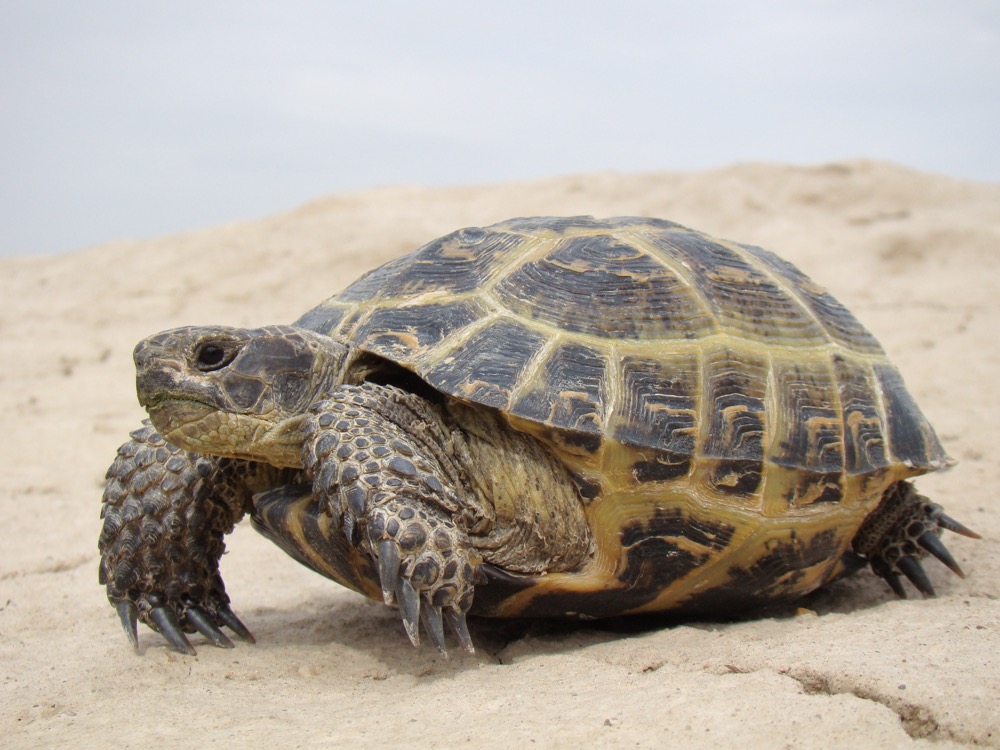
Russian Tortoise
Testudo horsfieldii
Care level
Intermediate
Lifespan
40 years or more
Adult size
13 to 20 cm, females larger than males
A small, hardy, round-shelled tortoise from the dry steppes and foothills of Central Asia, also called the Horsfield's tortoise. It is an active grazer and enthusiastic digger that spends much of the year avoiding extremes by burrowing, and it can live for decades, so it is a genuine lifelong commitment. Its modest size, personable behaviour and toughness make it one of the most popular pet tortoises.
Housing & setup
Russian tortoises are active and need far more floor space than height: an adult needs a large open enclosure, ideally a tortoise table or secure outdoor pen of at least 120 x 60 cm and much larger where possible, as they roam and dig. Provide a deep, diggable substrate such as a topsoil and sand mix so the tortoise can burrow, plus a basking area, hides, a humid hide on the cool end and a shallow water dish for soaking. They are strong burrowers and climbers, so walls must be solid and escape-proof and pens secured against digging out.
Diet & feeding
A grazing herbivore that thrives on a high-fibre, low-protein diet of leafy weeds, grasses and flowers such as dandelion, clover, plantain, sow thistle, hibiscus and a variety of dark leafy greens, offered daily. Avoid fruit, which causes digestive upset, and never feed animal protein or dog and cat food. Dust food with calcium a few times a week and provide a cuttlebone for gnawing. Fresh water must always be available, and regular shallow soaks help hydration and healthy urates.
Temperature, light & environment
Provide a basking spot of about 35 to 38 C at one end and a cooler end of 21 to 26 C, with a night drop to around 15 to 21 C; control heat with a thermostat. Strong UVB is essential for shell and bone health: use a high-output T5 tube (around 10 to 12 percent) to give a basking UVI of about 3.0 to 4.0 (Ferguson Zone 3 to 4), or provide safe natural sunlight. Keep ambient humidity moderate at around 30 to 50 percent while always offering a humid hide, and run a 12 to 14 hour photoperiod. This species naturally brumates in winter, which should only be done under veterinary guidance.
Company & handling
Can be kept singly or in carefully managed groups, but males are aggressive toward each other and persistently harass females, so never keep two males together and give any group ample space, cover and multiple feeding and basking sites. A single tortoise is perfectly content. Russian tortoises tolerate gentle, minimal handling for health checks but are not cuddly pets; they are best appreciated as active grazers observed in a spacious enclosure.
Enrichment & exercise
Provide a large, complex space with diggable substrate for burrowing, varied terrain, edible plants to graze and forage, and hides and basking spots to choose between. Scatter-feeding greens, rotating decor and access to a secure outdoor grazing pen in good weather all express natural behaviour. Room to walk and dig is the single most important enrichment for this active, wide-ranging tortoise.
Common health problems
Metabolic bone disease and shell deformity
Signs: Soft or pyramided shell, bumpy uneven growth, weak or bowed limbs, lethargy
Prevention: Provide strong UVB replaced on schedule, a calcium-rich high-fibre diet, and correct basking heat
Respiratory infection
Signs: Nasal discharge or bubbling, open-mouth breathing, wheezing, puffy eyes, lethargy
Prevention: Maintain correct warm basking temperatures, avoid cold damp conditions, and provide good ventilation
Shell rot
Signs: Soft, discoloured, pitted or foul-smelling areas of shell, discharge, flaking scutes
Prevention: Keep the enclosure clean and not chronically damp, treat injuries promptly, and provide a dry basking area
Bladder stones and dehydration
Signs: Straining, thick gritty urates, lethargy, loss of appetite, reduced urination
Prevention: Offer regular shallow soaks and fresh water, feed a high-fibre low-protein diet, and avoid excess dietary protein
See a vet urgently if...
- !Soft, pyramided or foul-smelling shell (MBD or shell rot)
- !Nasal discharge, bubbling or open-mouth breathing (respiratory infection)
- !Straining with thick gritty urates (bladder stones or dehydration)
- !Refusing food for more than one to two weeks outside of brumation
- !Sunken eyes, marked lethargy or inability to right itself
In Macau
Russian tortoises come from a dry continental climate, so Macau's humidity means good ventilation and a dry basking area are important to prevent shell rot and respiratory disease. A hot summer combined with a basking lamp can overheat an enclosure, so use thermostats and provide shade, a cool end and a humid hide. Replace the strong UVB tube every 6 to 12 months, and note that brumation is risky in a warm climate and should only be attempted with veterinary advice. Russian tortoises are listed on CITES Appendix II, so buy only legally sourced, ideally captive-bred animals with paperwork.
Russian tortoises are champion diggers that excavate burrows over a metre deep to escape both summer heat and winter cold, and one even travelled into space aboard a Soviet lunar mission, becoming among the first animals to circle the Moon.
Questions about your exotic pet?
Our team sees small mammals, birds, reptiles and fish. Book a wellness check or a species consult.
Book an exotic consultRelated care sheets
General guidance reviewed by the Royal Veterinary Center team. Not a substitute for a veterinary examination. Always confirm species-specific and legal requirements for Macau.