Reptiles & Amphibians
Rosy Boa
Lichanura trivirgata
Care level
Beginner
Lifespan
20 to 30 years
Adult size
60 to 110 cm
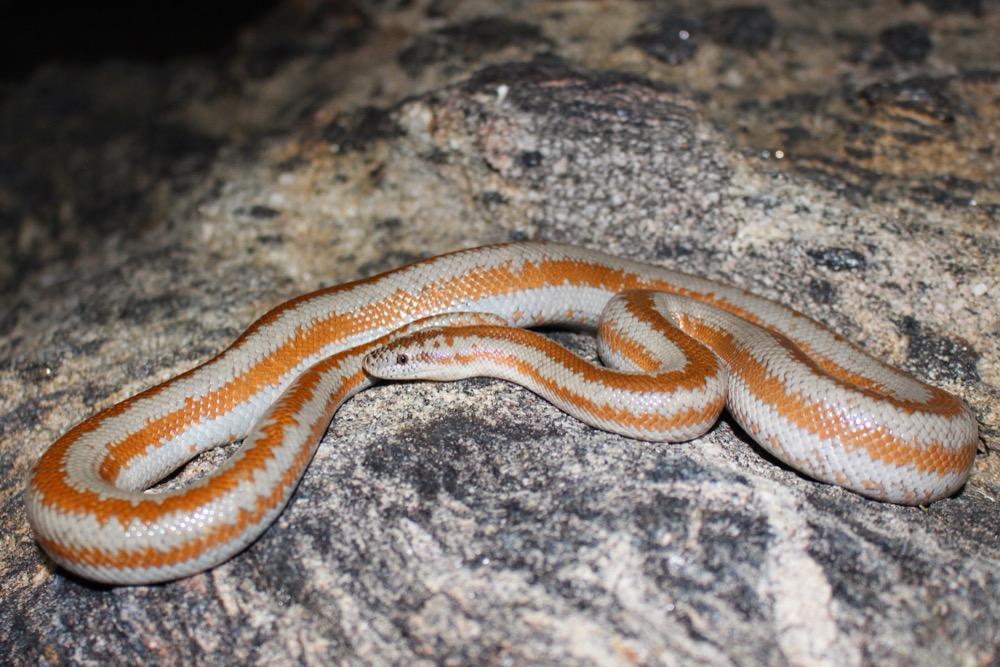
A slow, gentle, small boa from the arid rocky deserts of the southwestern United States and Mexico, usually marked with three lengthwise stripes on a pale ground. Rosy boas are among the calmest and most cold-hardy pet snakes, rarely biting and thriving on simple, dry desert husbandry. Their docility, manageable size and very long lifespan make them an excellent choice for a first snake or a lifelong companion.
Housing & setup
An adult is comfortable in a secure, front-opening enclosure of at least 90 x 45 x 30 cm with a tight lid, as rosy boas are surprising escape artists that probe for gaps. Provide a dry, burrow-friendly substrate such as aspen or a topsoil and sand mix, at least two snug hides (warm and cool), some flat rocks and low branches to move over, and a modest water bowl. As a rock-desert species they appreciate secure crevices and cover more than open space.
Diet & feeding
A carnivore fed whole rodents. Offer an appropriately sized frozen-then-thawed mouse (about the width of the snake's body) rather than live prey. Feed juveniles every 5 to 7 days and adults every 10 to 14 days, adjusting to keep good body condition, as rosy boas are prone to obesity if overfed. They naturally fast during cooler months, which is normal for a healthy adult. Always thaw and warm prey thoroughly and avoid handling for a day or two after a meal.
Temperature, light & environment
Provide a warm-end basking zone of 29 to 32 C and a cool end of 21 to 24 C, with a night drop that can fall to about 18 to 20 C; control all heat with a thermostat. UVB is not required but a low-output tube can benefit welfare. Keep this desert species dry at around 30 to 50 percent humidity with good ventilation, offering a slightly damp hide only during shedding. Run a 12-hour light cycle, and expect reduced activity and appetite if you provide a natural cool winter period.
Company & handling
Solitary. House rosy boas one per enclosure to avoid feeding competition, stress and the risk of one snake harming another. They are among the most placid snakes and tolerate gentle, regular handling very well, often moving slowly and calmly through the hands, though give rest after feeding and during shedding.
Enrichment & exercise
Offer a dry diggable substrate, flat rocks, crevice-like hides and low branches so the boa can burrow, wedge and explore its rocky-desert style habitat. Rearranging cover, adding new hides and occasional novel scents encourage natural exploring in this otherwise sedentary, deliberate snake.
Common health problems
Obesity
Signs: A rounded, bloated body, visible fat, reluctance to move, loss of muscle tone
Prevention: Feed appropriately sized prey on a sensible schedule, avoid overfeeding, and allow a natural winter slowdown
Respiratory infection
Signs: Open-mouth breathing, wheezing or clicking, mucus or bubbles at the mouth, holding the head up
Prevention: Keep the enclosure warm and dry, avoid cold damp conditions, and provide good ventilation
Scale rot (from damp substrate)
Signs: Discoloured, blistered or raw belly scales, foul smell, reddened skin
Prevention: Keep the substrate dry and well ventilated, spot-clean promptly, and confine moisture to a shedding hide
Dysecdysis (retained shed)
Signs: Shed coming off in patches, retained eye caps, a stuck tail tip
Prevention: Provide a humid hide during shedding, ensure hydration, and keep a rough surface to rub against
See a vet urgently if...
- !Open-mouth breathing, wheezing or mucus (respiratory infection)
- !Discoloured or raw belly scales (scale rot)
- !Refusing several meals with weight loss outside the normal winter slowdown
- !Marked obesity or reluctance to move
- !Regurgitating meals repeatedly
In Macau
Rosy boas come from dry deserts, so Macau's humidity is the main concern: keep the substrate dry and well ventilated and watch for scale rot in the wet season. Summer heat can overheat a closed enclosure, so keep the cool end near 22 C with a thermostat. Replace any UVB bulb every 6 to 12 months, and choose captive-bred animals, which are hardy, long-lived and available in attractive locality forms.
Rosy boas are one of only two boa species native to the United States, and they are so unhurried and even tempered that they will often stay draped calmly across a keeper's hands rather than trying to escape.
Questions about your exotic pet?
Our team sees small mammals, birds, reptiles and fish. Book a wellness check or a species consult.
Book an exotic consultRelated care sheets
General guidance reviewed by the Royal Veterinary Center team. Not a substitute for a veterinary examination. Always confirm species-specific and legal requirements for Macau.