Invertebrates
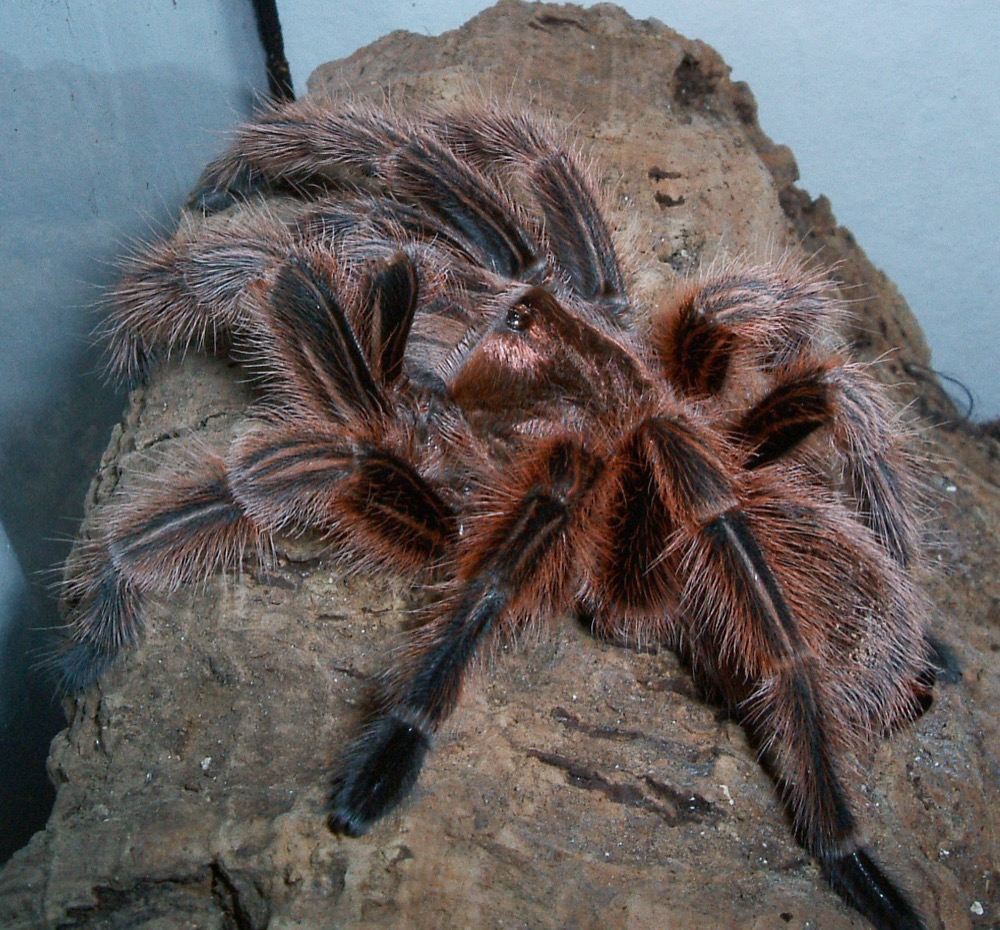
Chilean Rose Hair Tarantula
Grammostola rosea
Care level
Beginner
Lifespan
Females 15 to 20 years or more, males only 2 to 5 years
Adult size
Leg span up to about 13 cm
One of the classic first tarantulas: a slow, calm, ground-dwelling New World species from the dry scrub of Chile. Rose hairs are famously undemanding and live happily at normal room temperature, but they are also famously moody, and long spells of doing nothing or refusing food are completely normal rather than a sign of illness. Like all New World tarantulas they defend themselves by flicking tiny urticating hairs from the abdomen, so handle calmly and keep them away from your face.
Housing & setup
A single adult needs a wider-than-tall terrestrial enclosure of about 30 x 30 x 20 cm with secure ventilation and a tight-fitting lid, since even calm tarantulas escape. Keep the height low and fill with 8 to 12 cm of dry, burrow-friendly substrate such as a coco fibre and topsoil mix, because a terrestrial tarantula that falls from height can rupture its abdomen and die. Add a cork bark hide tipped on its side, a shallow water dish, and a couple of anchor points for web. Avoid tall glass tanks and any tall decor it could climb and then drop from.
Diet & feeding
Strict insectivore. Offer appropriately sized gut-loaded feeders such as crickets, dubia roaches or locusts, roughly the size of the spider's body or smaller, once or twice a week for a growing spider and every one to two weeks for an adult. Always remove uneaten prey within 24 hours, especially near a molt, as a loose cricket can injure a soft, defenceless tarantula. Long voluntary fasts of weeks or even many months are normal for this species, so as long as the abdomen stays plump do not worry. Provide clean, dechlorinated water in a shallow dish at all times.
Temperature, light & environment
Comfortable at normal room temperature of about 20 to 26 degrees Celsius with no special heating in most homes; never place heat mats on the side of or under a deep substrate, as belly heat can harm them. This is a dry-climate species, so keep humidity low at around 40 to 60 percent, keep ventilation high, and simply let a small water dish and the occasional light dampening of one corner provide moisture. Avoid a soggy, stagnant enclosure, which invites mould and mites. They are nocturnal and need no special lighting, just a normal day and night cycle away from direct sun.
Company & handling
Strictly solitary. Tarantulas are not social and will fight or cannibalise each other, so always house one per enclosure. They tolerate very occasional, slow, low handling but do not need or enjoy it, and a startled spider may flick urticating hairs, bolt, or fall, so most keepers simply observe. Wash your hands and avoid touching your eyes after any contact, as the hairs irritate skin and eyes.
Enrichment & exercise
Enrichment for a tarantula means a stable, secure home rather than toys: provide a hide, deep substrate to burrow in and rearrange, and anchor points so it can lay down web and set up an ambush spot. Let it hunt live prey to express natural predatory behaviour, and resist the urge to redecorate often, as a settled, undisturbed layout is what keeps this shy species calm.
Common health problems
Dehydration
Signs: Shrivelled, wrinkled or deflated abdomen, lethargy, inward-curling legs, sitting hunched over the water dish
Prevention: Always keep a shallow dish of clean water available and lightly dampen a corner of the substrate; never rely on ambient humidity alone
Dysecdysis (bad molt)
Signs: Stuck in the old skin for many hours, trapped legs, a torn abdomen, or a leg left behind
Prevention: Keep humidity adequate, never feed near a molt, and never touch or disturb a tarantula lying on its back, which is the normal molting position
Fall trauma and abdominal rupture
Signs: Leaking clear or bluish fluid after a fall, a split or dented abdomen, sudden collapse
Prevention: Keep the enclosure low with deep soft substrate, never house terrestrial tarantulas in tall tanks, and handle over a low soft surface if at all
Nematode or oral infection
Signs: A white or cream crusty ooze around the mouthparts, refusal to eat, hunching low over the water dish, a foul smell
Prevention: Buy captive-bred stock, quarantine new spiders, remove uneaten prey and old food boluses, and keep the enclosure clean and dry
See a vet urgently if...
- !A tarantula stuck in its molt for many hours or unable to free its legs
- !Leaking clear or bluish fluid (haemolymph) from the body or a fall injury
- !A badly shrivelled abdomen with prolonged refusal to drink or eat
- !White crusty ooze around the mouth with a foul smell (possible nematodes)
- !Legs curled tightly underneath the body (the death curl) with weakness
In Macau
The rose hair comes from dry Chilean scrub, so Macau's naturally high humidity is its main challenge: prioritise strong ventilation, keep the substrate on the dry side, and let it dry out between light waterings to prevent mould and mites. Summer heat is a bigger danger than cold, so keep the enclosure out of direct sun and below about 28 degrees Celsius. This is a New World species with irritating urticating hairs rather than dangerous venom, but note that some countries restrict or require permits to keep tarantulas, so international readers should check local law.
Rose hairs are among the most patient eaters in the animal world and can voluntarily fast for many months at a time, calmly sitting out an entire season without a single meal while staying perfectly healthy.
Questions about your exotic pet?
Our team sees small mammals, birds, reptiles and fish. Book a wellness check or a species consult.
Book an exotic consultRelated care sheets
General guidance reviewed by the Royal Veterinary Center team. Not a substitute for a veterinary examination. Always confirm species-specific and legal requirements for Macau.