Invertebrates
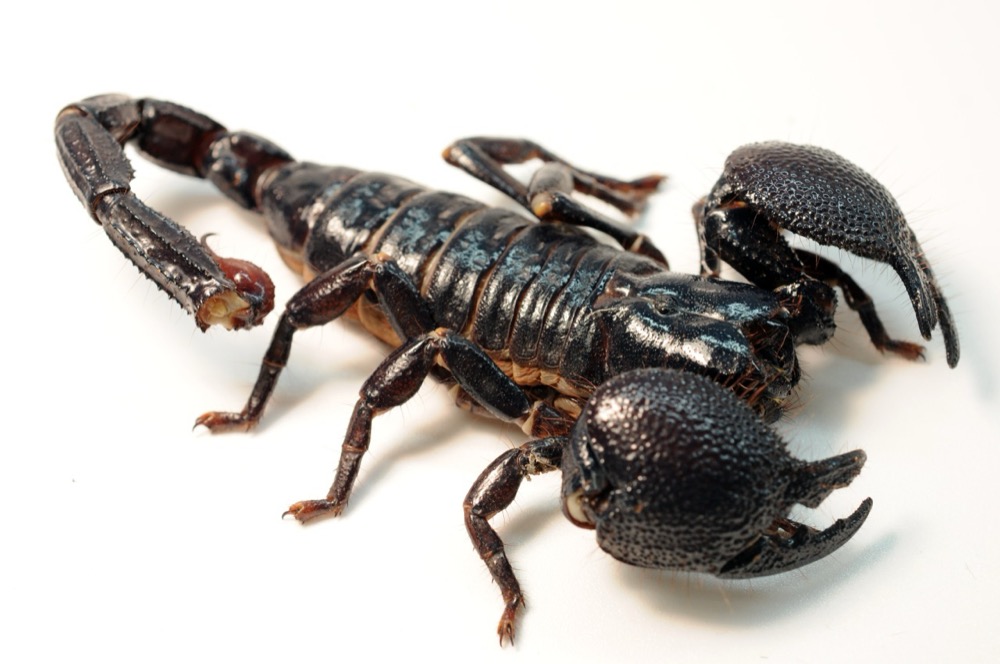
Emperor Scorpion
Pandinus imperator
Care level
Beginner
Lifespan
6 to 8 years
Adult size
Body length about 15 to 20 cm including the tail and pincers
One of the largest scorpions in the world and, despite its fearsome looks, one of the most docile and beginner-friendly. This glossy black West African forest species is far more likely to pinch with its huge claws than to sting, and its venom is mild, roughly comparable to a bee sting for most people. It needs warmth, high humidity and a place to burrow, and is protected under CITES Appendix II, so it should be bought captive-bred.
Housing & setup
House one adult in a warm, humid terrestrial enclosure of about 40 x 30 x 30 cm with a secure lid and good but not drying ventilation. Provide at least 10 to 15 cm of moist coco fibre and soil substrate so it can dig the burrows it naturally lives in, plus cork bark, a hide and a shallow water dish. Keep the layout low and stable, since a heavy scorpion that climbs and falls can be injured. A larger floor footprint is better than a tall enclosure.
Diet & feeding
Carnivore fed on gut-loaded live insects such as crickets, dubia roaches and locusts, with the occasional larger item for an adult. Feed juveniles a couple of times a week and adults roughly once a week, adjusting to appetite and always removing uneaten prey, which can bother the scorpion, especially near a molt. Emperor scorpions can fast for periods, which is normal. Provide clean, dechlorinated water in a shallow dish at all times.
Temperature, light & environment
Keep warm at about 25 to 30 degrees Celsius with a thermostat-controlled heat source, ideally at the side rather than directly under the burrowing substrate, and never let it cook in summer heat. Maintain high humidity of about 75 to 80 percent using moist substrate, occasional misting and a water dish, while keeping enough airflow to prevent stagnant, mouldy conditions. They are nocturnal and need no UV or bright light for daily care; a normal dim day and night cycle is best, kept out of direct sun.
Company & handling
Usually kept singly, which is always safest. Emperor scorpions are unusually tolerant and can sometimes be kept in groups given ample space, humidity and food, but crowding or hunger leads to fighting and cannibalism, so beginners should keep one per enclosure. Handling is discouraged: although docile, a scorpion can pinch hard or sting, and dropping one can kill it, so move it with a soft brush or catch cup rather than by hand.
Enrichment & exercise
Provide deep, moist substrate for the burrowing and excavation that is central to its natural life, plus hides and cork bark to shelter under by day. Live prey satisfies its ambush-hunting instinct. A stable, humid, undisturbed burrow system is the main thing this species needs to thrive, so resist frequent digging or rearranging.
Common health problems
Dehydration and low-humidity stress
Signs: Sluggishness, a shrunken or wrinkled body, reluctance to move, difficulty molting
Prevention: Keep humidity at 75 to 80 percent with moist substrate and always provide a shallow water dish
Dysecdysis (bad molt)
Signs: Stuck in the old cuticle, trapped or deformed limbs, a soft body left exposed
Prevention: Maintain high humidity and deep substrate, stop feeding before a molt, and never disturb a molting scorpion
Dyskinetic syndrome (DKS)
Signs: Tremors, jerky uncoordinated movements, twitching, trouble righting itself or feeding
Prevention: Avoid all pesticide and flea-product exposure, use clean uncontaminated feeders and substrate, and keep the enclosure clean
Mycosis (fungal infection)
Signs: Black or white spots or fuzzy patches on the body, seen in enclosures kept too wet with poor airflow
Prevention: Balance high humidity with real ventilation, spot-clean waste and uneaten prey, and never let the enclosure become stagnant and soggy
See a vet urgently if...
- !Jerky tremors or twitching with an inability to right itself (possible DKS)
- !Stuck or trapped part-way through a molt
- !Leaking fluid from a wound or after a fall
- !Fuzzy or discoloured patches on the body (possible fungal infection)
- !Prolonged refusal to eat with a visibly shrunken, wrinkled body
In Macau
Macau's warm, humid climate suits this tropical scorpion's 75 to 80 percent humidity needs well, but summer heat is still a risk, so use a thermostat and keep the enclosure out of direct sun and below about 30 degrees Celsius. Pandinus imperator is CITES Appendix II protected, so buy only captive-bred animals, ideally with paperwork, and be aware that moving CITES species across borders needs permits and that keeping venomous invertebrates is restricted or banned in some countries.
Like other scorpions, the emperor glows an eerie blue-green under ultraviolet light because of fluorescent compounds in its cuticle, and mothers are famously devoted, carrying their pale newborn scorplings around on their backs until the young are ready to fend for themselves.
Questions about your exotic pet?
Our team sees small mammals, birds, reptiles and fish. Book a wellness check or a species consult.
Book an exotic consultRelated care sheets
General guidance reviewed by the Royal Veterinary Center team. Not a substitute for a veterinary examination. Always confirm species-specific and legal requirements for Macau.