Invertebrates
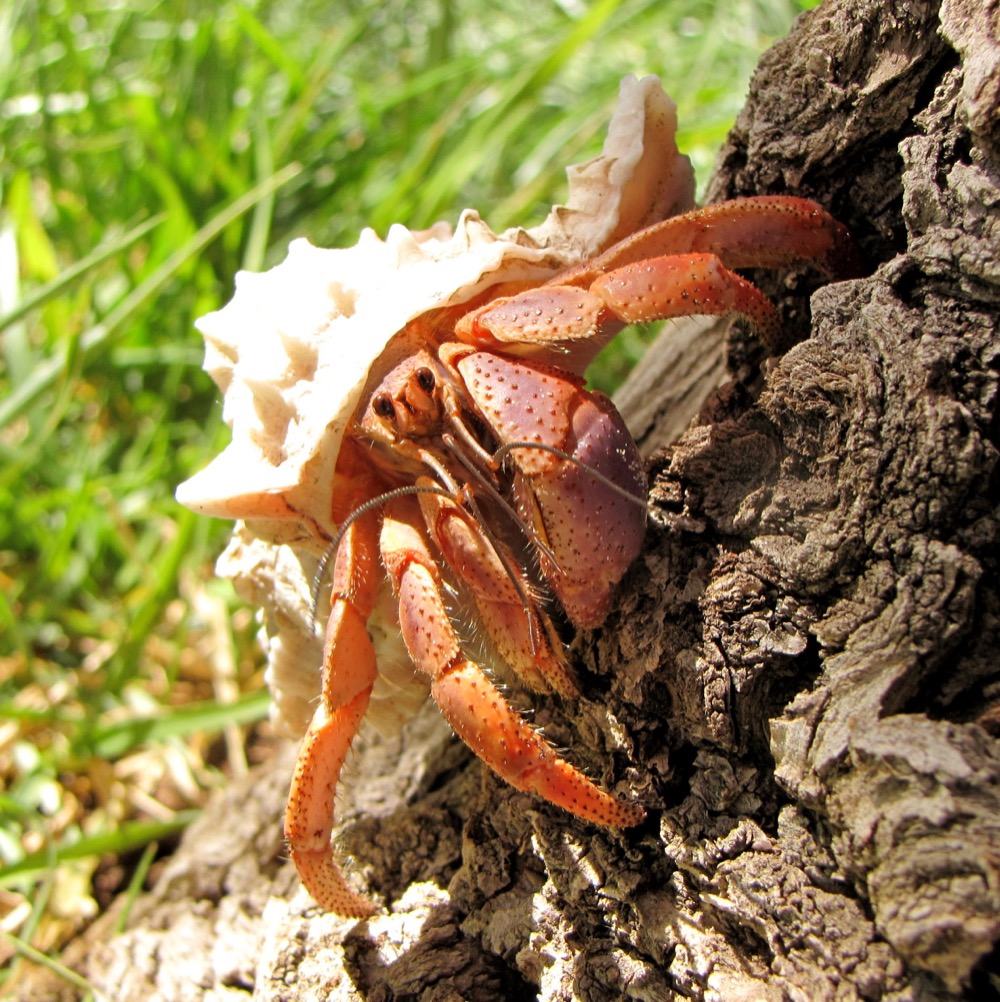
Land Hermit Crab (Purple Pincher)
Coenobita clypeatus
Care level
Intermediate
Lifespan
Potentially 20 to 30 years or more with correct care, though many die within months of poor husbandry
Adult size
Body length up to about 10 cm, usually much smaller depending on the shell worn
Often sold as a cheap throwaway pet, the land hermit crab is actually a long-lived, highly social land crab that is genuinely demanding to keep well. It carries a borrowed snail shell to protect its soft abdomen, must have high heat and humidity to breathe through modified gills, and needs deep sand to bury in and molt safely. Almost every hermit crab in the trade is wild-collected because they rarely breed in captivity, so responsible keeping means giving these wild animals the best possible long life.
Housing & setup
Provide a large, sealed glass tank (around 40 litres is a sensible minimum for a small group, more is better) that holds heat and humidity, with a secure lid. Fill it with at least 15 cm of moist sand and coco fibre mixed to a firm sandcastle consistency that holds a burrow, deeper for larger crabs, since they must dig down and seal themselves in to molt. Include climbing branches and cork bark, hiding places, and a cluster of spare shells. Avoid wire cages, which cannot hold humidity, and painted decor near the water.
Diet & feeding
Omnivorous scavengers that eat a varied diet of fresh fruit and vegetables, leafy greens, and protein sources such as bloodworm, egg or fish, plus calcium and natural foods like cuttlebone, crushed oyster shell and dried leaf litter. Avoid commercial hermit crab pellets that contain preservatives like copper sulphate and ethoxyquin, which are widely blamed for harm. Offer fresh food daily and remove spoiled food promptly. Both fresh and salt water must always be available for drinking and bathing.
Temperature, light & environment
Keep the tank warm at about 24 to 29 degrees Celsius and humid at 75 to 85 percent, measured with a thermometer and hygrometer, as low humidity slowly suffocates them and low heat makes them sluggish and unwell. Warm the tank with a thermostat-controlled heat source and hold humidity with the moist substrate, misting and good sealing. Provide two pools deep enough to submerge in: one of dechlorinated fresh water and one of marine saltwater made with proper aquarium sea salt, never table salt. Give a natural day and night light cycle.
Company & handling
Highly social, unlike most pet invertebrates: wild hermit crabs live in large groups, so always keep at least two or three together rather than one alone, as isolation causes stress. They do squabble over the best shells, so reduce conflict by keeping the group well fed and supplying plenty of spare shells. Handling should be gentle and brief; support the crab, never pull it from its shell, and let it grip you at its own pace.
Enrichment & exercise
Offer lots to climb, dig and explore: branches, cork, coconut huts, leaf litter to forage through, and a varied rotating menu to encourage natural scavenging. Above all, provide many spare shells of the right shape and opening size, using natural unpainted shells, because choosing and swapping shells is a core natural behaviour and a poorly fitting shell is a serious welfare problem. Burrowing in deep sand is itself important enrichment and security.
Common health problems
Dehydration and gill damage
Signs: Lethargy, a crab leaving its shell, dryness, sluggish or laboured movement, a sulphur smell
Prevention: Keep humidity at 75 to 85 percent and heat correct, and always provide both fresh and salt bathing water deep enough to submerge in
Molting problems and death
Signs: A crab that burrows and never resurfaces, incomplete limb regrowth, or being dug up soft and helpless
Prevention: Provide at least 15 cm of firm moist sand, never dig up or disturb a buried molting crab, and isolate a molter from tank mates
Shell fighting and eviction
Signs: A crab out of its shell or wearing another crab's shell, missing limbs, a naked stressed crab
Prevention: Keep many correctly sized spare shells available, provide enough space and food, and avoid overcrowding
Post-purchase stress syndrome
Signs: Leg and claw drop, hiding without eating, lethargy and a foul smell in the weeks after buying
Prevention: Set up a correct warm, humid tank before buying, keep handling minimal at first, and buy from a shop that houses crabs properly
See a vet urgently if...
- !A crab out of its shell for more than a short time and not returning to one
- !Limbs or claws dropping off (a common sign of severe stress or illness)
- !A persistent rotten or sulphur smell, which can mean a crab has died
- !A molting crab dug up or attacked before its new exoskeleton has hardened
- !Prolonged lethargy with no eating, drinking or bathing
In Macau
Macau's hot, humid subtropical climate is genuinely well suited to these tropical crabs and can make the target 75 to 85 percent humidity easier to hold than in dry climates, but you must still air-condition to stop the tank overheating above about 29 degrees Celsius in summer. Remember that hermit crabs are wild-collected rather than captive-bred, so buying them supports wild take and you owe them the longest, best life in return. Some countries restrict keeping or collecting them, so international readers should check local rules.
Land hermit crabs are not loners at all: in the wild they gather in the hundreds and form orderly vacancy chains, lining up from largest to smallest so that when one crab upgrades to a bigger shell, each crab in the queue moves into the one just vacated.
Questions about your exotic pet?
Our team sees small mammals, birds, reptiles and fish. Book a wellness check or a species consult.
Book an exotic consultRelated care sheets
General guidance reviewed by the Royal Veterinary Center team. Not a substitute for a veterinary examination. Always confirm species-specific and legal requirements for Macau.