Invertebrates
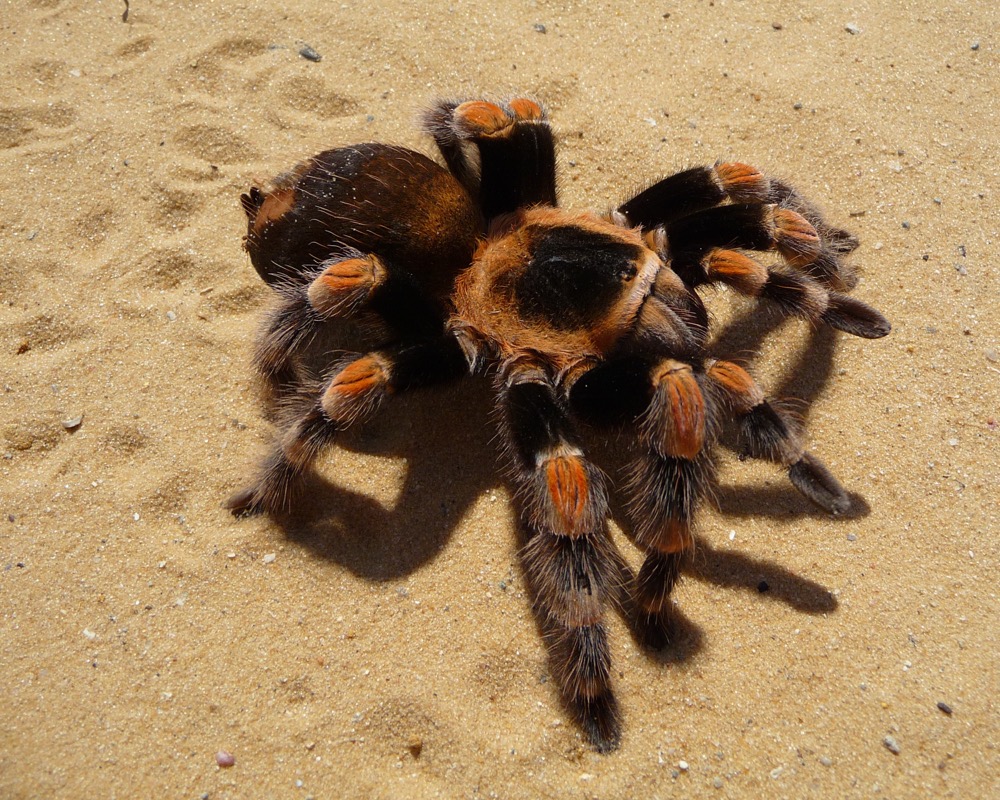
Mexican Red Knee Tarantula
Brachypelma hamorii
Care level
Beginner
Lifespan
Females 25 to 30 years, males 5 to 10 years
Adult size
Leg span about 12 to 15 cm
The iconic black-and-orange tarantula of films and posters, and one of the best-loved beginner species. It is a docile, slow-moving, ground-dwelling New World spider from the dry Pacific forests of Mexico, and a well-kept female can live for three decades, making it a genuine long-term commitment. Wild collection for the pet trade once threatened it, so it is protected under CITES Appendix II and should only be bought captive-bred. Like other New World species it flicks urticating hairs when stressed.
Housing & setup
House one adult in a low, wide terrestrial enclosure of about 30 x 30 x 20 cm with secure ventilation and an escape-proof lid. Keep the internal height low and provide 8 to 12 cm of dry coco fibre and soil substrate to burrow in, because a fall from height can split the abdomen and be fatal. Furnish with a half-buried cork bark hide, a shallow water dish, and a few sturdy anchor points for web; avoid tall decor and anything it can climb and then drop from.
Diet & feeding
Insectivore fed on gut-loaded crickets, dubia roaches or locusts sized to the spider's body or smaller. Feed a growing spider once or twice a week and an adult every one to two weeks, and remove any uncaught prey within 24 hours so it cannot nibble a resting or pre-molt spider. Fasting for weeks before a molt is completely normal. Keep clean, dechlorinated water in a shallow dish at all times, refilled regularly.
Temperature, light & environment
Keep at about 22 to 27 degrees Celsius, achievable at room temperature in most homes or with a thermostat-controlled low-wattage heat source placed at the side, never a heat mat under deep substrate. This is an arid-leaning species, so aim for moderate humidity of around 55 to 65 percent with good airflow, and let one corner be lightly dampened rather than keeping the whole enclosure wet. It is nocturnal, so no special lighting is needed beyond a natural day and night cycle out of direct sunlight.
Company & handling
Solitary and never to be cohoused; two tarantulas together will fight or eat one another. Red knees tolerate slow, careful, low handling better than most, but they do not need it and a startled spider will flick clouds of urticating hairs that badly irritate eyes and skin, so keep it away from your face and wash your hands afterwards. Most keepers enjoy them as a display animal.
Enrichment & exercise
Provide a naturalistic, stable layout with deep substrate for burrowing, a hide to retreat into, and anchor points for web-laying so it can express normal ambush and denning behaviour. Feeding live prey satisfies its predatory instinct. Keep changes to the enclosure minimal, as a secure, undisturbed home is what a calm terrestrial tarantula values most.
Common health problems
Dehydration
Signs: Wrinkled or deflated abdomen, sluggishness, legs curling inward, hunching over the water dish
Prevention: Keep a shallow water dish topped up at all times and lightly moisten one corner of the substrate
Dysecdysis (bad molt)
Signs: Stuck part-way out of the old skin, trapped legs, a torn abdomen, or a lost limb
Prevention: Maintain adequate humidity, stop feeding well before a molt, and never touch a tarantula lying on its back, which is how it molts
Fall trauma and abdominal rupture
Signs: Leaking fluid, a cracked or split abdomen, collapse after a fall
Prevention: Keep the enclosure low with deep soft substrate and avoid tall tanks and risky handling
Mould and mite infestation
Signs: Grey or white fuzz on substrate or leftover food, tiny moving mites on the spider or dish, a musty smell
Prevention: Remove uneaten prey and waste promptly, keep the enclosure well ventilated and not soggy, and use a clean water dish
See a vet urgently if...
- !Stuck or trapped mid-molt for many hours
- !Leaking clear or bluish haemolymph from a wound or after a fall
- !A deeply shrivelled abdomen with prolonged refusal to eat or drink
- !Legs curled tightly beneath the body (the death curl) with weakness
- !A cracked, dented or leaking abdomen after a fall
In Macau
The red knee is an arid-forest species, so Macau's high humidity means you should favour strong ventilation and keep the substrate mostly dry with just one damp corner, watching for mould in summer. Heat above about 28 degrees Celsius is riskier than cool, so keep it out of direct sun. Critically, Brachypelma hamorii is CITES Appendix II protected: buy only captive-bred animals from a reputable seller, ideally with paperwork, and be aware that international movement of CITES species needs permits and that some countries restrict tarantula keeping.
This is the tarantula that made spiders famous on screen, appearing in countless films and adverts, and a single female can live past thirty years, comfortably outliving a pet dog several times over.
Questions about your exotic pet?
Our team sees small mammals, birds, reptiles and fish. Book a wellness check or a species consult.
Book an exotic consultRelated care sheets
General guidance reviewed by the Royal Veterinary Center team. Not a substitute for a veterinary examination. Always confirm species-specific and legal requirements for Macau.