Invertebrates
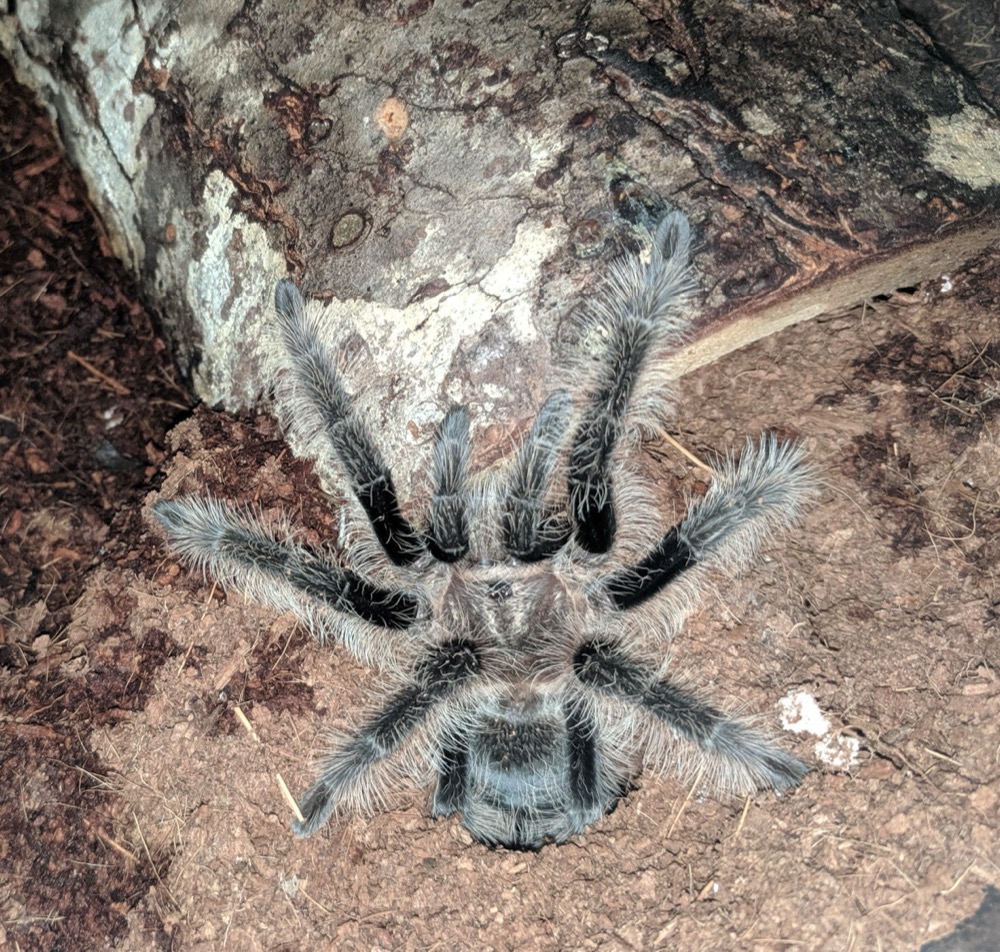
Curly Hair Tarantula
Tliltocatl albopilosus
Care level
Beginner
Lifespan
Females 10 to 20 years, males 4 to 6 years
Adult size
Leg span about 13 to 15 cm
Widely considered the single most forgiving beginner tarantula: a hardy, calm, ground-dwelling New World species from Central America, covered in long curling bronze-tipped bristles that give it a woolly sheen. It grows steadily, eats reliably, and tolerates a wide range of conditions, which makes it very hard to go wrong with. Like all New World tarantulas it uses urticating hairs rather than potent venom for defence.
Housing & setup
A single adult does well in a low, wide terrestrial enclosure of about 30 x 30 x 20 cm with secure ventilation and a locking lid. Provide a generous 10 to 15 cm of coco fibre and soil substrate for burrowing, and keep the internal height low so a climbing spider cannot fall far and rupture its abdomen. Add a cork bark hide, a shallow water dish and a couple of anchor points for web. This species enjoys burrowing, so deeper substrate is better than tall decor.
Diet & feeding
Insectivore fed on gut-loaded crickets, dubia roaches, locusts or similar, sized to the spider's body or smaller. Feed a spiderling or juvenile two or three times a week and an adult every one to two weeks, always removing uneaten prey within a day. Curly hairs are enthusiastic feeders but will still fast before a molt, which is normal. Keep a shallow dish of clean, dechlorinated water available at all times.
Temperature, light & environment
Keep at about 24 to 28 degrees Celsius, comfortable at room temperature in most homes; use a side-mounted low-wattage heat source on a thermostat only if a room runs cold, never a heat mat beneath deep substrate. This species tolerates slightly higher humidity than the desert tarantulas, around 65 to 70 percent, but still needs good ventilation to avoid stagnant, mouldy air, so lightly dampen part of the substrate and let it partly dry between waterings. It is nocturnal, needing only a normal light and dark cycle out of direct sun.
Company & handling
Solitary; never keep two together, as tarantulas fight and cannibalise. The curly hair is among the most placid tarantulas and rarely defensive, but it can still flick urticating hairs if pushed, so handle rarely, slowly and low, keep it away from your face, and wash your hands afterwards. It makes an excellent, easy-going display animal.
Enrichment & exercise
Give it deep substrate to dig and remodel, a hide, and web anchor points so it can construct burrows and ambush spots, which is its natural behaviour. Offering live prey lets it hunt. As with all tarantulas, a stable undisturbed enclosure beats frequent rearranging, so set up a good home and largely leave it be.
Common health problems
Dehydration
Signs: Shrivelled or wrinkled abdomen, weakness, inward-curling legs, hunching by the water dish
Prevention: Keep clean water in a shallow dish at all times and lightly moisten part of the substrate
Dysecdysis (bad molt)
Signs: Stuck in the old skin, trapped legs, a torn abdomen, or a limb left behind
Prevention: Keep humidity adequate, do not feed near a molt, and never disturb a tarantula on its back, which is the molting position
Fall trauma and abdominal rupture
Signs: Leaking fluid, a split or dented abdomen, collapse after a fall
Prevention: Keep the enclosure low with deep soft substrate and avoid tall tanks or handling over hard surfaces
Mould and mite infestation
Signs: White or grey fuzz on substrate or leftover food, tiny mites on the spider or dish, a musty smell
Prevention: Remove uneaten prey and waste, keep ventilation high, avoid a soggy enclosure and use a clean water dish
See a vet urgently if...
- !Stuck or trapped mid-molt for many hours
- !Leaking clear or bluish haemolymph from a wound or after a fall
- !A badly shrivelled abdomen with prolonged refusal to eat or drink
- !Legs curled tightly under the body (the death curl) with weakness
- !A cracked, dented or leaking abdomen after a fall
In Macau
The curly hair actually copes with Macau's humidity better than the desert tarantulas, which makes it a sensible local first choice, but you must still keep ventilation high and avoid a stagnant, soggy enclosure that breeds mould and mites, and keep it below about 28 degrees Celsius and out of direct summer sun. It is not CITES-listed and captive-bred animals are widely available, though international readers should note that some countries still restrict or require permits for keeping tarantulas.
The curly hair is named for the long bristles that curl and catch the light with a bronze woolly sheen, and it is so tolerant of beginner mistakes that experienced keepers routinely recommend it as the best first tarantula of all.
Questions about your exotic pet?
Our team sees small mammals, birds, reptiles and fish. Book a wellness check or a species consult.
Book an exotic consultRelated care sheets
General guidance reviewed by the Royal Veterinary Center team. Not a substitute for a veterinary examination. Always confirm species-specific and legal requirements for Macau.