Reptiles & Amphibians
Red-Eyed Tree Frog
Agalychnis callidryas
Care level
Intermediate
Lifespan
5 to 10 years
Adult size
5 to 7.5 cm, females larger than males
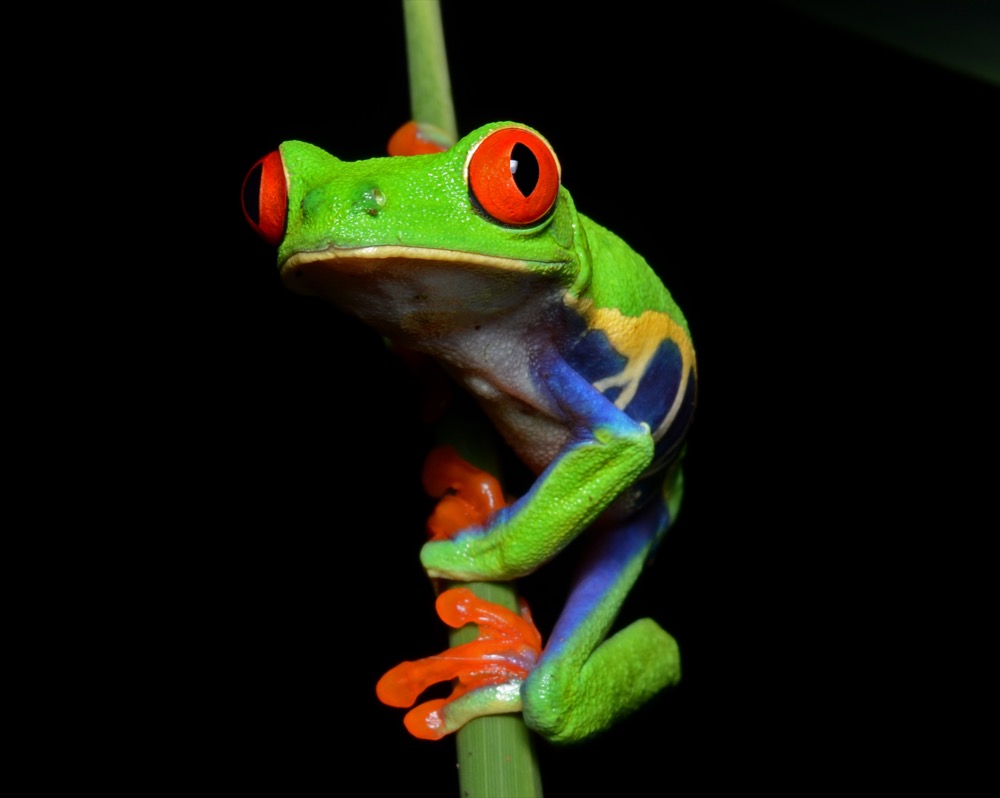
An iconic Central American rainforest frog with vivid green skin, blue-and-yellow flanks, orange feet and startling red eyes, one of the most photographed amphibians in the world. Red-eyed tree frogs are nocturnal, arboreal and delicate, sleeping tucked under leaves by day and becoming active at night. They are a beautiful, rewarding display species for a keeper willing to maintain a tall, humid, planted vivarium, but their fragile skin means they are for looking at, not handling.
Housing & setup
An arboreal species that needs height and dense planting: a small group is comfortable in a tall, well-planted vivarium of at least 45 x 45 x 60 cm, taller being better. Furnish heavily with live plants such as pothos, bromeliads and broad-leaved foliage, plus vines and branches at many heights, giving the frogs broad leaves to sleep on and climb across. Use a moisture-retaining substrate such as a bioactive soil mix over drainage, with leaf litter and moss, and provide a clean, dechlorinated shallow water area. A humid, living, vertical space is essential.
Diet & feeding
An insectivore fed at night. Offer a varied diet of appropriately sized gut-loaded insects such as crickets, small locusts, dubia roaches, flies and the occasional waxworm as a treat. Dust feeders with calcium at most feeds and a multivitamin once or twice weekly. Feed juveniles daily and adults every two to three days, offering food after lights-out when the frogs are active. Because they hunt by sight of movement, live insects allowed to climb the plants encourage natural nocturnal foraging.
Temperature, light & environment
Keep a daytime temperature of about 24 to 28 C with an important cooler night drop to around 18 to 24 C, avoiding hot basking lamps that would dry the skin. Maintain very high humidity of around 60 to 90 percent by day, rising toward 100 percent at night, using misting (ideally automated) and live plants, with good ventilation to avoid stagnation. A low-output UVB tube giving a basking UVI of about 1.0 to 2.0 is beneficial for these frogs. As amphibians absorb water and chemicals through the skin, only ever use dechlorinated water. Run a 12-hour light cycle.
Company & handling
Social enough to be kept in same-sized groups, which is common and often preferred, provided the vivarium is large and well planted with ample resting and feeding space so no frog is outcompeted. Always house similarly sized frogs together to avoid one eating another. They are fragile display animals and should not be handled routinely, as their permeable skin is easily harmed by the salts and oils on human hands; handle only with clean wet hands for essential moves.
Enrichment & exercise
A rich, living, arboreal environment is the enrichment: dense foliage, broad leaves to sleep and climb on, vines and branches at varied heights, and a misting cycle that mimics rainforest rhythms. Live plants, gentle water features and hunting live moving prey after dark all support natural behaviour. A tall, bioactive, well-planted vivarium that lets the frogs climb, hide and forage is far more valuable than any handling.
Common health problems
Metabolic bone disease (MBD)
Signs: Bent or rubbery limbs, difficulty climbing and gripping, weakness, tremors, poor jumping
Prevention: Dust feeders with calcium and D3, gut-load insects well, and provide low-level UVB and a varied diet
Chemical burns and skin infection (red-leg)
Signs: Reddened underside and thighs, raw or discoloured skin, lethargy, loss of appetite
Prevention: Use only dechlorinated water, keep the vivarium clean, avoid bare-handed handling, and maintain good hygiene
Dehydration and poor skin condition
Signs: Dull, dry or wrinkled skin, sunken eyes, lethargy, reduced activity at night
Prevention: Maintain high humidity with regular misting, provide clean water, and ensure good ventilation without drying out the enclosure
Bacterial and fungal infection
Signs: Cloudy skin patches, sores, swelling, bloating, unusual lethargy or loss of colour
Prevention: Keep water and substrate clean, quarantine new frogs, maintain correct temperature and humidity, and avoid overcrowding
See a vet urgently if...
- !Bent or rubbery limbs and difficulty climbing (MBD)
- !Reddened raw underside and thighs (red-leg or chemical burn)
- !Dull, wrinkled or dry skin with sunken eyes (dehydration)
- !Bloating, sores or cloudy skin patches (infection)
- !Refusing food for more than one to two weeks with lethargy
In Macau
Red-eyed tree frogs are rainforest animals, so Macau's warm, humid climate suits them well, but summer heat can still push a closed vivarium too high, so keep daytime temperatures around 24 to 28 C and ensure a genuine cooler night drop. Their sensitive skin makes water quality critical: always use dechlorinated water, as Macau tap water is chlorinated, and keep the vivarium clean and well ventilated. If a UVB tube is used, replace it every 6 to 12 months. Choose captive-bred frogs, which are hardier and more ethical than wild-caught imports.
The red-eyed tree frog's shocking red eyes are thought to be a startle defence: when disturbed while sleeping it flashes them open along with its bright blue and orange flanks, briefly dazzling a predator so the frog can leap to safety.
Questions about your exotic pet?
Our team sees small mammals, birds, reptiles and fish. Book a wellness check or a species consult.
Book an exotic consultRelated care sheets
General guidance reviewed by the Royal Veterinary Center team. Not a substitute for a veterinary examination. Always confirm species-specific and legal requirements for Macau.