Reptiles & Amphibians
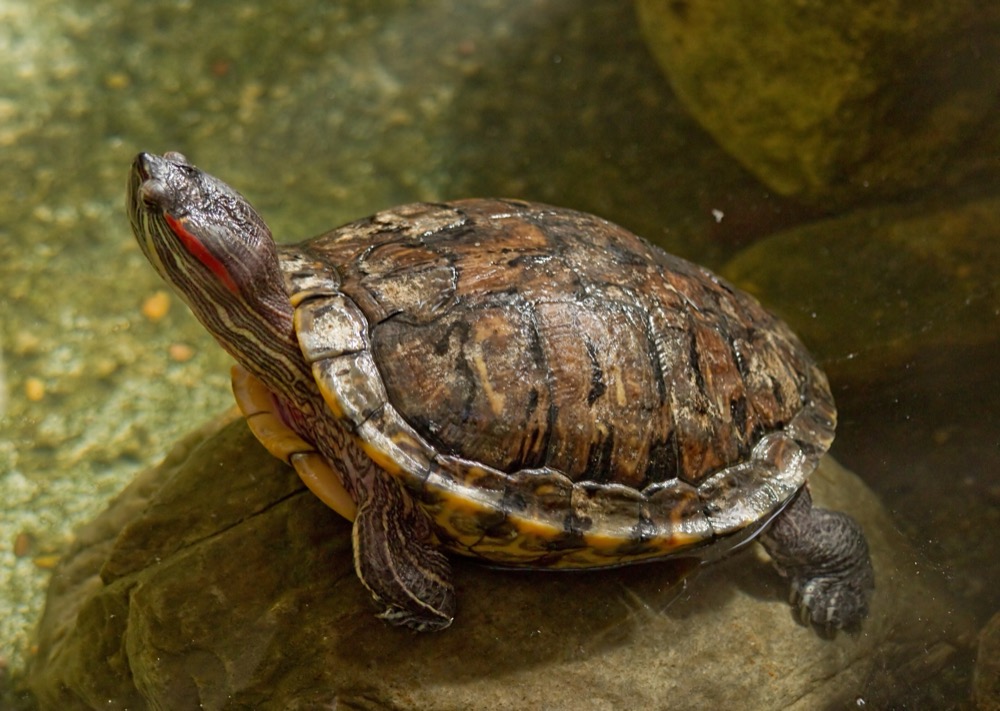
Red-Eared Slider
Trachemys scripta elegans
Care level
Intermediate
Lifespan
20 to 30 years, sometimes 40
Adult size
Males 15 to 20 cm, females up to 30 cm shell length
A semi-aquatic freshwater turtle named for the red stripe behind each eye, and one of the most kept and most surrendered reptiles worldwide. Tiny hatchlings grow into large, messy, long-lived adults that need a big filtered aquatic setup and a warm dry basking area. They are one of the most invasive species globally, so must never be released.
Housing & setup
Adults need a large aquatic enclosure following roughly 40 litres of water per centimetre of shell, meaning a big female needs on the order of 400 litres or more, with water deep enough to swim and turn over. Provide powerful filtration (over-rated for the tank size) because sliders are heavy waste producers, plus a large dry basking platform they can fully climb onto and dry off on. Keep water clean with regular changes and a good filter; a bare bottom or large smooth river stones are easiest to keep hygienic. Ensure a secure basking dock directly under the heat and UVB lamps.
Diet & feeding
Omnivore whose balance shifts with age. Juveniles are more carnivorous and eat more protein, while adults shift toward plant matter; base the diet on a quality aquatic turtle pellet plus leafy greens and aquatic plants such as dandelion, collard, water lettuce and duckweed. Offer protein such as earthworms, insects and occasional lean fish or shrimp, using feeder fish sparingly because they carry parasites and thiaminase. Provide a cuttlebone for calcium, feed juveniles daily and adults every two to three days, and avoid overfeeding.
Temperature, light & environment
This diurnal turtle needs both warm water and a hot basking spot with strong UVB. Keep water at 24 to 27 C using a guarded aquarium heater (cooler for healthy adults, warmer for hatchlings), and provide a dry basking surface of 29 to 35 C directly under a heat lamp. UVB is essential for shell and bone health: fit a proper UVB tube over the basking area (nothing blocking it, as glass and plastic filter UVB) giving a basking UVI around 2.0 to 4.0. Run heat, basking and UVB on a 12-hour cycle, turning heat and light off at night.
Company & handling
Best kept alone or in carefully matched groups with ample space. Males harass females and each other and can bite limbs and tails, so cohousing needs a very large setup and close monitoring. They are not cuddly pets and dislike frequent handling, which stresses them and risks Salmonella transmission, so interact mainly through feeding and observation.
Enrichment & exercise
Provide varied swimming depth, submerged logs and plants to explore, and a spacious basking dock, plus scatter or float food to encourage natural foraging. Live aquatic plants, current from the filter and occasional supervised access to a larger tub add environmental variety for these curious, active turtles.
Common health problems
Shell rot (ulcerative shell disease)
Signs: Soft, pitted, discoloured or flaking shell areas, foul smell, weeping lesions
Prevention: Keep water clean and well filtered, provide a proper dry-off basking area, and ensure correct UVB and temperatures
Metabolic bone disease and soft shell
Signs: Soft or pyramided shell, deformed growth, weak jaw, lethargy
Prevention: Provide strong UVB replaced on schedule, a calcium source such as cuttlebone, and a balanced diet not overloaded with protein
Respiratory infection
Signs: Lopsided or buoyant floating, open-mouth breathing, mucus, wheezing, lethargy, not diving
Prevention: Keep water and basking temperatures correct, avoid cold water, and maintain clean conditions
Vitamin A deficiency and eye swelling
Signs: Swollen or shut eyes, puffy lids, reduced feeding
Prevention: Feed a varied diet with leafy greens and quality pellets rather than a protein-only or feeder-fish-only diet
See a vet urgently if...
- !Floating lopsided or unable to dive (respiratory infection)
- !Soft, foul-smelling or weeping shell areas (shell rot)
- !Swollen, shut eyes and refusing food
- !Soft shell or deformed growth (MBD)
- !Not eating for one to two weeks in a warm, well-lit setup
In Macau
Macau's warm climate suits sliders and can allow outdoor pond housing in the warmer months, but summer heat can overheat a small indoor tank, so watch water temperature stays near 24 to 27 C. Replace UVB bulbs every 6 to 12 months, and critically, red-eared sliders are highly invasive and it is illegal in many places to release them; never free a pet turtle into Macau's waterways, rehome it responsibly instead.
Red-eared sliders can absorb some oxygen through the lining of their mouth and cloaca, which helps them stay submerged and survive cooler periods underwater.
Questions about your exotic pet?
Our team sees small mammals, birds, reptiles and fish. Book a wellness check or a species consult.
Book an exotic consultRelated care sheets
General guidance reviewed by the Royal Veterinary Center team. Not a substitute for a veterinary examination. Always confirm species-specific and legal requirements for Macau.