Birds
Rainbow Lorikeet
Trichoglossus moluccanus
Care level
Advanced
Lifespan
20 to 30 years with good care
Adult size
About 30 cm from head to tail tip
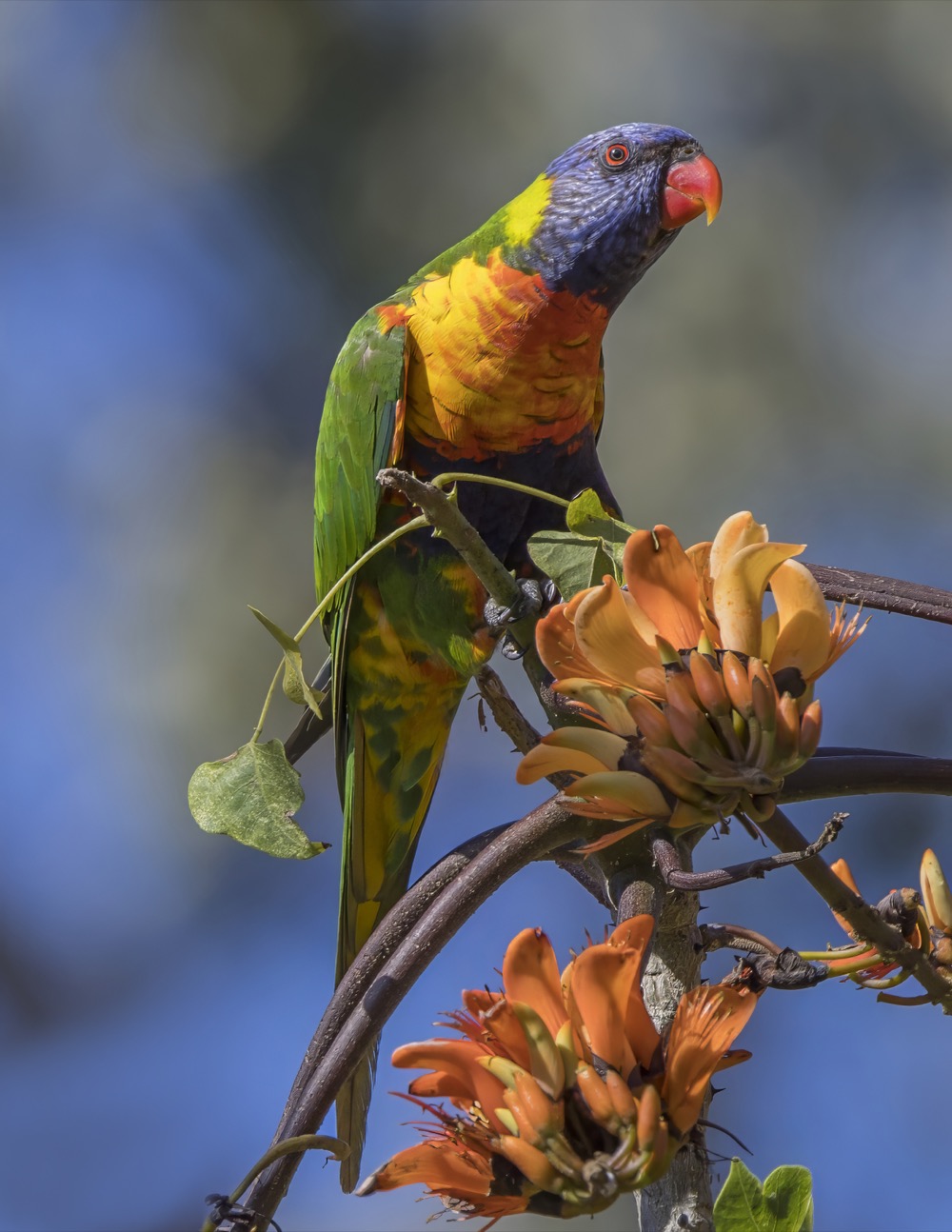
The Rainbow Lorikeet is a dazzling, energetic Australian parrot with a blue head, green wings and an orange-and-yellow chest, and a brush-tipped tongue built for nectar. They are active, comical and affectionate, but their specialised liquid diet and the messy, squirting droppings that come with it make them one of the more demanding birds to keep clean. They suit a dedicated owner happy to prepare fresh nectar daily and clean up frequently.
Housing & setup
Provide a long, wide flight cage of at least 90 x 60 x 90 cm, and larger or an aviary is much better, as lorikeets are extremely active fliers. Bar spacing of about 1.6 to 2 cm suits them. Because their droppings are projected as liquid, choose easy-clean surfaces, position the cage away from walls and soft furnishings, and expect to clean daily. Include natural-wood perches, swings, ladders and plenty of toys.
Diet & feeding
Lorikeets are nectarivores and must be fed a proper commercial lory nectar or dry lorikeet mix, made up fresh and renewed at least twice daily as it spoils quickly in warm weather. Supplement with fresh fruit such as apple, pear, melon and grapes chopped small, plus some flowers and vegetables. A dry-lory-diet-plus-fruit approach reduces mess compared with wet nectar. Do not feed a seed-based parrot diet, which does not suit their gut. Avocado, chocolate, caffeine, alcohol, onion and salty foods are toxic and must never be given.
Temperature, light & environment
Keep them at a stable 18 to 28 C, away from draughts, direct sun and kitchen fumes. Provide natural or full-spectrum light and 10 to 12 hours of quiet, dark sleep nightly. Their liquid droppings mean fresh nectar and cage surfaces must be kept scrupulously clean to prevent bacterial and fungal growth, which is even more important in the heat. Non-stick (PTFE or Teflon) cookware and scented products emit fumes lethal to birds, so keep the cage far from the kitchen. Daily supervised flight is important for this active species.
Company & handling
Lorikeets are lively, social and playful, bonding closely with their people and enjoying interactive games. They can be loud, with sharp chattering and shrieks, and they are busy, boisterous birds that need lots of stimulation. Bored lorikeets become noisy and destructive, so they need engaged owners and plenty of activity. They can also be territorial and nippy in breeding condition.
Enrichment & exercise
Provide swings, ropes, ladders, foraging toys and shreddables, and offer flowers, foliage and safe branches to forage through, which mirrors their natural nectar-hunting. Rotate toys to keep their busy minds engaged. Bathing opportunities are appreciated. Daily active flight and play are essential exercise, and training games give a positive outlet for their high energy.
Common health problems
Nutritional and diet-related disease
Signs: Poor feather quality, obesity or weakness and digestive upset when fed an incorrect seed-based or overly sugary diet.
Prevention: Feed a proper commercial lory diet renewed fresh at least twice daily with appropriate fruit, and avoid seed-based parrot food and excess sugar.
Bacterial and fungal infections from spoiled nectar
Signs: Fluffed posture, diarrhoea, vomiting, lethargy and sour-smelling droppings, often from stale nectar in warm conditions.
Prevention: Make nectar fresh, discard old food promptly, and clean bowls and cage surfaces thoroughly every day, especially in the heat.
Lorikeet paralysis syndrome and toxicity
Signs: Sudden inability to fly, perch or blink, weakness and paralysis, which is an emergency requiring immediate care.
Prevention: Feed a correct balanced lory diet, avoid mouldy or fermented food and garden toxins, and seek urgent avian veterinary help for any weakness.
Psittacosis (chlamydiosis)
Signs: Fluffed posture, lethargy, nasal or eye discharge, lime-green droppings and laboured breathing.
Prevention: Quarantine and vet-test new birds and keep housing clean and ventilated; note this disease can spread to people.
See a vet urgently if...
- !Sitting fluffed on the cage floor instead of perching, an emergency
- !Tail bobbing at rest or open-mouth, laboured breathing
- !Sudden inability to fly, perch or blink, suggesting paralysis or toxicity
- !Not eating, vomiting or sour, abnormal droppings
- !Sudden silence, drooping wings or collapse
In Macau
Rainbow Lorikeets are not CITES listed, but as a native Australian species their export is tightly controlled, so buy only captive-bred birds with legal provenance. Their liquid droppings and constant cleaning needs are especially demanding in Macau's heat and humidity, where spoiled nectar breeds bacteria fast, so hygiene must be excellent. Their chatter carries in apartments, and non-stick cookware fumes are lethal, so keep the cage away from the kitchen and quarantine plus vet-check any new bird.
Lorikeets have a brush-tipped tongue covered in tiny hair-like papillae that mop up nectar and pollen from flowers, a feeding adaptation unique among the parrots and the reason their diet is so different from every other pet parrot.
Questions about your exotic pet?
Our team sees small mammals, birds, reptiles and fish. Book a wellness check or a species consult.
Book an exotic consultRelated care sheets
General guidance reviewed by the Royal Veterinary Center team. Not a substitute for a veterinary examination. Always confirm species-specific and legal requirements for Macau.