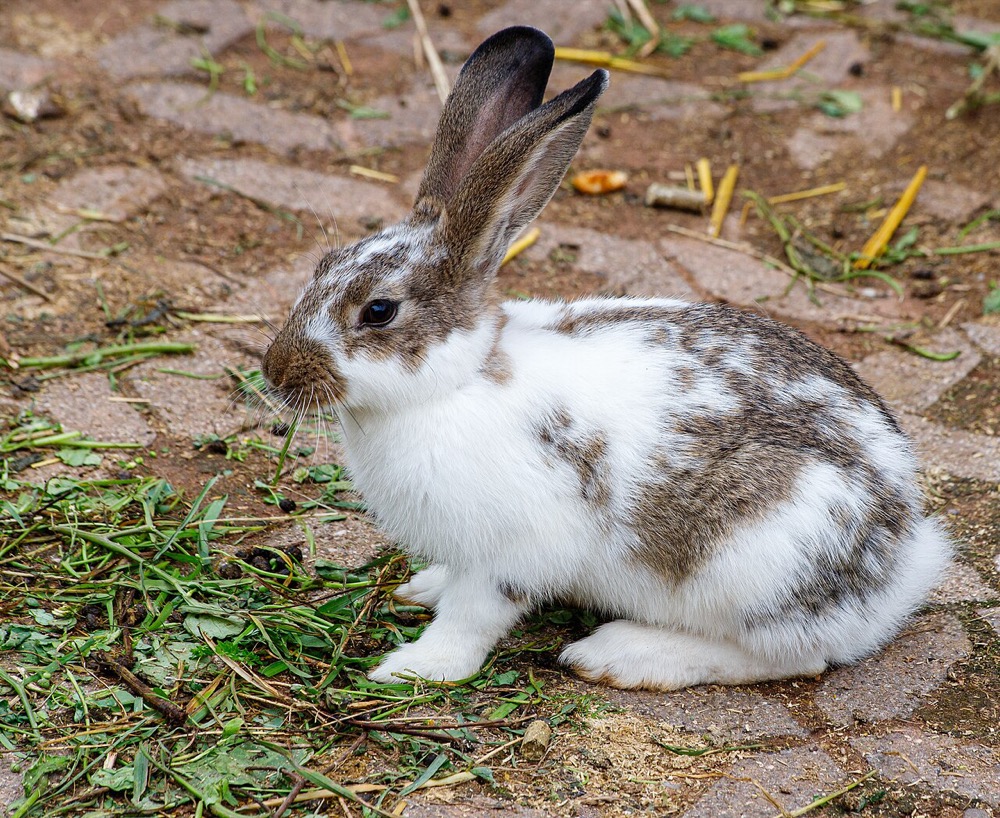
Small Mammals
Rabbit
Oryctolagus cuniculus
Care level
Intermediate
Lifespan
8 to 12 years
Adult size
1 to 2.5 kg (varies widely by breed, giants exceed 5 kg)
Rabbits are intelligent, affectionate companions that thrive on space, company and routine. They are often underestimated as simple starter pets, but they need careful dental and digestive care and a genuine vet who treats exotics. A well kept house rabbit can be litter trained and delightfully interactive.
Housing & setup
Rabbits need a large, connected living space, not a small hutch: the RSPCA and Rabbit Welfare Association recommend a minimum of 3 m by 2 m of floor and 1 m high for a bonded pair, available at all times. Provide a hidey house, a litter tray with paper based litter, and a solid non slip floor to protect their hocks. Line resting areas with soft bedding or dust free straw, and keep wire floors and small cages out of the plan entirely. House rabbits do very well free ranging in a bunny proofed room with hazards like cables blocked off.
Diet & feeding
Unlimited good quality grass hay should make up about 85 percent of the diet and is essential for both gut movement and grinding down constantly growing teeth. Add a handful of leafy greens daily and only a small measured portion of pellets (about one tablespoon per kg of body weight). Fresh water must always be available, ideally from a bowl. Avoid muesli mixes, sugary treats, fruit in excess, and any sudden diet change, all of which can trigger dangerous gut slowdown.
Temperature, light & environment
Rabbits are comfortable at roughly 10 to 20 degrees Celsius and are far more at risk from heat than cold: temperatures above about 25 degrees Celsius can cause fatal heat stress, especially with high humidity. Give shade, good ventilation, and frozen water bottles or air conditioning in warm weather. They are crepuscular, most active at dawn and dusk, and need a natural light and dark cycle with a quiet, secure place to rest.
Company & handling
Rabbits are highly social and suffer if kept alone: the ideal is a neutered male and neutered female bonded pair. Bonding must be done gradually and neutering prevents fighting, unwanted litters and, in females, common uterine cancer. Most rabbits dislike being picked up, so build trust at floor level and never lift by the ears or scruff.
Enrichment & exercise
Provide daily exercise space to run, binky and stand upright, plus tunnels, willow chew toys, cardboard, digging boxes and forage scattered in hay. Rotate novel items to prevent boredom, and offer puzzle feeders. Chewing is a genuine need that also keeps teeth healthy, so always supply safe untreated wood and hay.
Common health problems
Gastrointestinal stasis
Signs: Not eating, few or no droppings, hunched posture, quiet or grinding teeth in pain
Prevention: Unlimited hay, daily greens, exercise, minimal pellets and prompt vet care as this is a true emergency
Dental disease and molar spurs
Signs: Drooling, dropping food, weight loss, wet chin, reduced appetite, eye discharge
Prevention: Constant hay and chewing material to wear teeth evenly, plus regular exotic vet dental checks
Flystrike (myiasis)
Signs: Maggots around a dirty or wet rear, sudden lethargy, foul smell, open wounds
Prevention: Keep the rear clean and dry, check under the tail twice daily in warm months and prevent obesity or diarrhoea
E. cuniculi
Signs: Head tilt, loss of balance, hind limb weakness, urinary problems, cataracts
Prevention: Buy from reputable sources, keep stress low, and treat early with a vet prescribed course when suspected
See a vet urgently if...
- !Not eating for more than 12 hours
- !No droppings or much smaller droppings for 12 hours
- !Laboured or open mouth breathing
- !Sudden head tilt, seizures or inability to stand
- !Maggots or a wet, soiled rear end
In Macau
Macau summers are hot and humid, which is the single biggest danger to rabbits, so an air conditioned indoor space is close to essential from May to October. Flats can suit a free range house rabbit provided cables and gaps are secured, and an exotics capable vet is lined up before you adopt.
A happy, excited rabbit performs a joyful twisting leap called a binky, flicking its heels in mid air for no reason other than pure delight.
Questions about your exotic pet?
Our team sees small mammals, birds, reptiles and fish. Book a wellness check or a species consult.
Book an exotic consultRelated care sheets
General guidance reviewed by the Royal Veterinary Center team. Not a substitute for a veterinary examination. Always confirm species-specific and legal requirements for Macau.