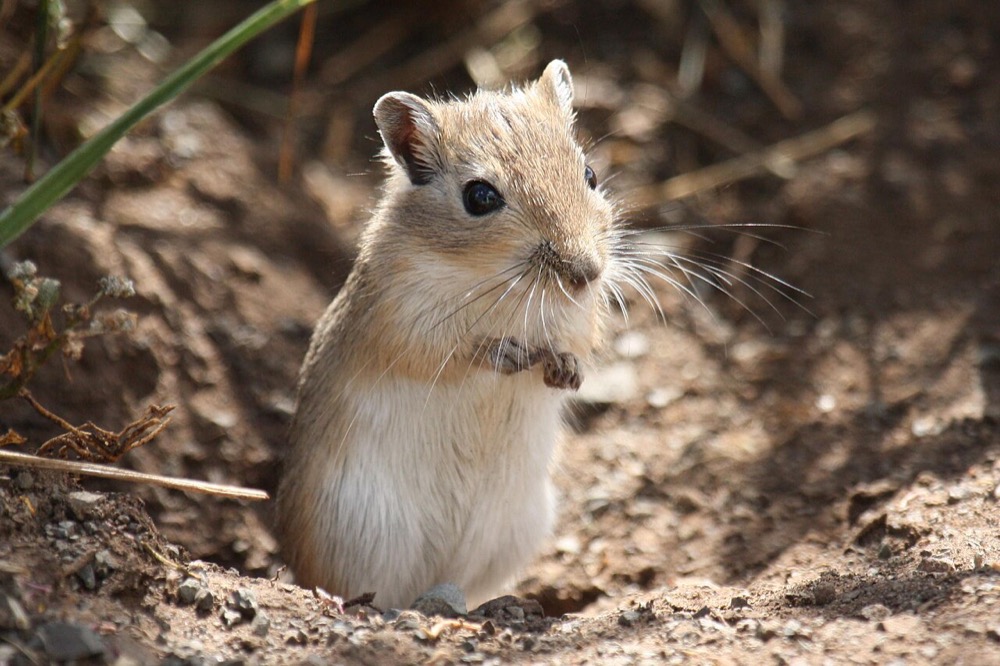
Small Mammals
Gerbil
Meriones unguiculatus
Care level
Beginner
Lifespan
3 to 4 years
Adult size
60 to 110 g
Mongolian gerbils are lively, curious desert rodents that are active during the day as well as night, making them more watchable than many small pets. They are clean, nearly odourless and passionate diggers who build elaborate tunnel systems. Sociable and generally easy to tame, they make an engaging, low smell companion.
Housing & setup
A gerbilarium with a very deep bedding layer is ideal: use a tank or bin cage at least 75 by 40 cm with 25 to 40 cm of paper and hay based bedding so they can dig stable burrows. Wire cages alone are unsuitable because gerbils need depth, not height, and kicked bedding makes a mess. Add a solid wheel of at least 20 cm, chew toys, a sand bath and a hide, and use aspen or paper bedding rather than pine or cedar.
Diet & feeding
Feed a good quality gerbil or hamster seed and grain mix as the staple, supplemented with small amounts of fresh vegetables and occasional protein such as a mealworm. Provide constant fresh water from a bottle. Offer plenty of hay and gnawing material to wear down teeth. Feed measured daily portions to avoid selective feeding and obesity, and avoid sugary or fatty treats, with sunflower seeds given only sparingly.
Temperature, light & environment
As a desert species gerbils tolerate warmth better than damp, and do well at about 18 to 24 degrees Celsius with low humidity and good ventilation. Avoid direct sun, radiators and draughts, and keep bedding dry. They are diurnal to crepuscular, active in short bursts through the day and night, so natural room lighting suits them.
Company & handling
Gerbils are highly social and should be kept in same sex pairs or small groups, ideally littermates introduced young. A lone gerbil can become withdrawn. Fighting can erupt in adults, and once a pair falls out (called declanning) they usually cannot be safely reunited, so any new introduction of adults must use the careful split cage method. They generally enjoy gentle handling, but never grab or lift by the tail as the skin can slough off.
Enrichment & exercise
Deep bedding for tunnelling is the single most important enrichment for gerbils, along with a large wheel. Provide cardboard tubes, wooden chews, hay, seed heads, a sand bath and safe clutter to gnaw and rearrange. They will happily shred and rebuild their environment, so replenish chewables regularly.
Common health problems
Tail slip and tail injury
Signs: Loss of tail skin, a bare or lost tail tip, bleeding after rough handling
Prevention: Never pick up or restrain by the tail, always support the body and handle gently
Scent gland tumours
Signs: A growing lump or sore on the belly scent gland, ulceration or bleeding
Prevention: Regular belly checks, especially in older males, and prompt veterinary assessment and removal
Epileptiform seizures
Signs: Brief episodes of twitching, stiffness or freezing, usually after stress or a new environment
Prevention: Minimise sudden stress and rough handling, acclimatise gently, as most mild episodes resolve on their own
Overgrown teeth and dental disease
Signs: Drooling, weight loss, dropping food, difficulty eating
Prevention: Constant hay and hard chew items to wear teeth, with vet checks and trims if needed
See a vet urgently if...
- !Not eating or drinking for more than 12 hours
- !Laboured breathing or repeated sneezing with discharge
- !A prolonged or repeated seizure
- !Serious fight wounds or a gerbil being persistently attacked
- !A rapidly growing or bleeding lump
In Macau
Gerbils cope with warmth better than most small pets but still need protection from Macau's high summer humidity, so keep bedding dry, ventilation good and the enclosure out of direct sun. Deep tank style enclosures and aspen bedding may need to be ordered online, as local shops often stock only shallow wire cages.
Gerbils stamp their back feet rapidly to sound an alarm or during excitement, a drumming signal inherited from their wild desert relatives who thump to warn the colony.
Questions about your exotic pet?
Our team sees small mammals, birds, reptiles and fish. Book a wellness check or a species consult.
Book an exotic consultRelated care sheets
General guidance reviewed by the Royal Veterinary Center team. Not a substitute for a veterinary examination. Always confirm species-specific and legal requirements for Macau.