Birds
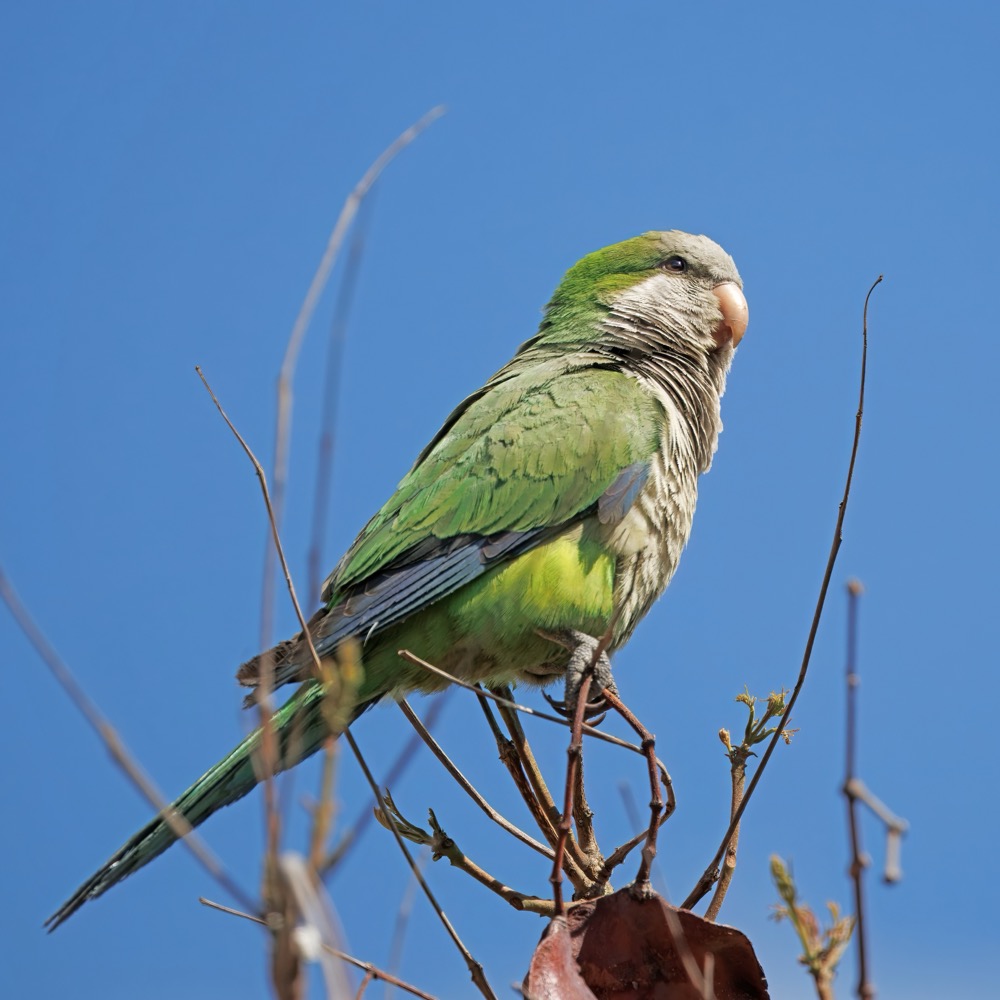
Quaker Parrot (Monk Parakeet)
Myiopsitta monachus
Care level
Intermediate
Lifespan
20 to 30 years with good care
Adult size
About 29 cm from head to tail tip
The Quaker, or Monk Parakeet, is a hardy, bold and clownish little parrot famous for being one of the best small talkers, often rivalling larger species for clarity. It is the only parrot that builds elaborate stick nests, and captive birds keep this instinct alive by weaving and rearranging materials. Quakers are confident and full of personality, which makes them entertaining but also prone to territorial and hormonal behaviour if boundaries are not set early.
Housing & setup
Provide a cage of at least 60 x 60 x 75 cm for one bird, larger if possible, with horizontal bars for climbing and bar spacing around 1.6 to 2 cm. Give plenty of natural-wood perches, ladders and chewable toys, plus weaving material such as palm and soft wood to satisfy their nest-building drive. Quakers can be territorial about their cage, so let them come out to you rather than reaching in abruptly, and keep the cage in a sociable room.
Diet & feeding
Feed a base of formulated pellets (about 60 to 70 percent) with a smaller portion of seed, plus daily fresh vegetables, dark leafy greens and small amounts of fruit. Quakers readily become overweight and develop fatty liver on a seed-heavy diet, so keep fatty seeds and nuts as occasional treats only. Provide a cuttlebone or mineral block for calcium. Never offer avocado, chocolate, caffeine, alcohol, onion or salty foods, all of which are toxic to birds.
Temperature, light & environment
Keep them at a comfortable 18 to 28 C, away from draughts, direct sun and kitchen fumes. Provide natural or full-spectrum light and 10 to 12 hours of quiet, dark sleep each night. Non-stick (PTFE or Teflon) cookware, air fryers, self-cleaning ovens and scented candles release fumes that kill birds within minutes, so keep the cage far from the kitchen. Allow daily supervised out-of-cage time in a bird-proofed room.
Company & handling
Quakers are highly social and bond strongly with their owners, thriving on interaction and conversation. They can be loud, with sharp, repetitive contact calls and chatter that carries, so they are noisier than budgies and may test close apartment neighbours. Without consistent handling and clear routine they can become territorial, nippy and prone to hormonal aggression, especially around their cage or a favourite person. Early, gentle socialisation keeps them friendly.
Enrichment & exercise
Offer abundant foraging toys, shreddable and weavable materials, ladders and puzzle feeders, rotating them often to fight boredom. Their love of building means they enjoy interlacing sticks and palm strips into the cage bars. Trick and speech training channels their sharp minds and reduces problem behaviour. Daily flight and climbing keep them fit and help prevent obesity.
Common health problems
Fatty liver disease (hepatic lipidosis)
Signs: Obesity, overgrown or flaky beak, poor feather quality, lethargy and green-tinged droppings, most often in seed-fed birds.
Prevention: Feed a balanced pellet-based diet rather than all seed, limit fatty seeds and nuts, and encourage daily flight and exercise.
Feather plucking and self-mutilation
Signs: Bald patches on the chest and legs, over-preening and chewed feathers, often triggered by boredom, stress or hormones.
Prevention: Provide rich enrichment and foraging, adequate sleep and social time, and have an avian vet rule out disease.
Hormonal and territorial aggression
Signs: Sudden biting, lunging and cage-guarding, nest-building frenzy and overbonding to one person or object.
Prevention: Limit daylight to 10 to 12 hours, remove nest-like hiding spots, avoid petting the back and tail, and keep interactions calm and consistent.
Psittacosis (chlamydiosis)
Signs: Fluffed appearance, lethargy, nasal or eye discharge, lime-green droppings and difficulty breathing.
Prevention: Quarantine and vet-test new birds and keep housing clean and ventilated; note this disease can spread to people.
See a vet urgently if...
- !Sitting fluffed and puffed on the cage floor rather than perching, an emergency
- !Tail bobbing at rest or open-mouth, laboured breathing
- !Not eating, repeated vomiting or sudden weight loss
- !Sudden silence, drooping wings or inability to grip the perch
- !Bleeding, a stuck egg or straining with a wide stance
In Macau
Quaker parrots are legal to keep as pets in Macau. International readers should note they are banned or restricted as an agricultural pest in several countries and US states, because escaped birds form destructive feral colonies. In Macau's heat and humidity, keep housing cool, dry and ventilated, and be mindful that their carrying calls may disturb close apartment neighbours. Never run non-stick cookware near them, and quarantine plus vet-check any new bird.
Quakers are the only parrots that build their own roofed stick nests instead of using tree hollows, weaving large communal apartment blocks of twigs, and pet Quakers keep weaving strips into their cages for the same instinctive reason.
Questions about your exotic pet?
Our team sees small mammals, birds, reptiles and fish. Book a wellness check or a species consult.
Book an exotic consultRelated care sheets
General guidance reviewed by the Royal Veterinary Center team. Not a substitute for a veterinary examination. Always confirm species-specific and legal requirements for Macau.