Invertebrates
Ghost Mantis
Phyllocrania paradoxa
Care level
Intermediate
Lifespan
About 6 months to 1 year, with adults living only a few months
Adult size
Body length about 4.5 to 5 cm
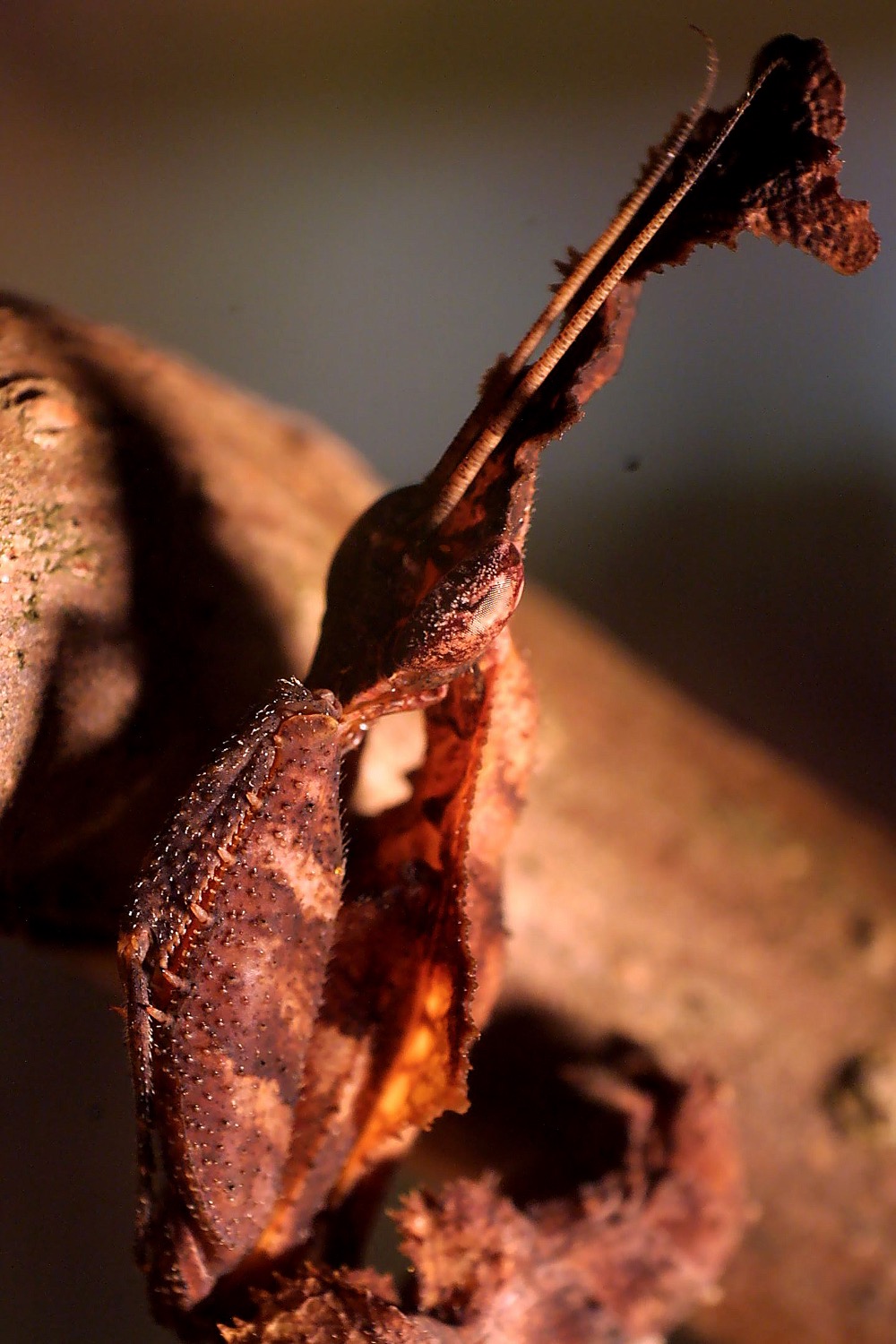
A small, spectacular leaf-mimicking praying mantis from Africa and Madagascar, shaped and coloured like a dead, tattered leaf complete with a curling crown. Ghost mantises are a popular first mantis because they are hardy for their kind and notably less cannibalistic than most, though they are still delicate, short-lived predators. They need vertical space to molt safely and a steady supply of small live insects, and like all mantises they live fast, with adults surviving only a matter of months.
Housing & setup
House one in a well-ventilated enclosure that is clearly taller than it is wide, at least about three times the mantis's body length in height, so it has room to hang and shed. A 20 x 20 x 30 cm mesh or ventilated terrarium suits an adult. Furnish with twigs, artificial or real foliage and a mesh or rough ceiling it can grip and hang upside down from, which is essential for molting. Keep the floor soft. Good airflow matters as much as decor to prevent mould.
Diet & feeding
Strict live-insect predator. Feed appropriately small feeders: fruit flies for tiny nymphs, graduating to house flies, small crickets, blue bottle flies and similar as it grows, always no larger than about the length of the mantis's body. Ghost mantises particularly favour flying prey. Feed every one to two days for nymphs and every few days for adults, and crucially remove all uneaten feeders before and during a molt, as a loose cricket can chew and kill a soft, defenceless mantis. Mist lightly so it can drink droplets.
Temperature, light & environment
Keep at about 22 to 28 degrees Celsius with a natural slight night-time drop, using a gentle thermostat-controlled heat source if a room runs cool, and avoid overheating. Maintain moderate humidity of around 50 to 60 percent by lightly misting every day or two and letting it dry between, which supports clean molts without soaking the enclosure. Strong ventilation is vital, as stagnant damp air causes fatal mould and failed molts. They need no special lighting, just a normal day and night cycle out of direct sun.
Company & handling
Best kept alone, one per enclosure, as the safe default. Ghost mantises are among the least cannibalistic mantises and are sometimes raised communally with very heavy planting, ample space and constant food, but beginners should not risk it, since a hungry mantis will still eat a smaller one. Handling should be gentle and rare; let it walk onto your hand rather than gripping it, and keep it low, as a fall can injure or kill this fragile insect.
Enrichment & exercise
Provide a densely furnished vertical space with twigs and leaves to climb, perch and ambush from, which lets it express its natural sit-and-wait hunting and leaf-mimic camouflage. Live, moving prey is the key behavioural enrichment, triggering its striking predatory reflexes. Ensure there is always a secure high grip point and clear space beneath it for the vulnerable moment of molting.
Common health problems
Bad molt (mismoult)
Signs: Twisted, curled or missing limbs after shedding, being stuck in the old skin, or falling mid-molt
Prevention: Give ample vertical height and a rough ceiling to hang from, keep humidity correct, remove all feeders, and never disturb a molting mantis
Dehydration
Signs: A shrivelled abdomen, lethargy, darkening, reluctance to move or feed
Prevention: Mist lightly every day or two so it can drink droplets, without soaking the enclosure or blocking airflow
Injury from feeder insects
Signs: Wounds, missing limbs, or a mantis being eaten while soft after a molt
Prevention: Offer correctly sized feeders, gut-load and remove them promptly, and never leave live prey in during a molt
Fall injury and haemolymph loss
Signs: Leaking fluid, inability to climb or grip, a limp hanging posture after a fall
Prevention: Keep the enclosure low-risk with secure grip points, handle rarely and low, and ensure clear space below climbing perches
See a vet urgently if...
- !Deformed, curled or missing limbs after a molt (a mismoult)
- !Falling during a molt or hanging limp and unable to complete the shed
- !Leaking fluid from the body after a fall or injury
- !A shrivelled abdomen with refusal to drink or feed
- !Unable to climb, grip or right itself
In Macau
Macau's warmth suits ghost mantises, but the high summer humidity can push past their preferred moderate level and cause fatal failed molts, so prioritise strong ventilation, mist sparingly and keep the enclosure out of direct sun and from overheating. Because adults live only a few months, plan for a short but rewarding pet. Note too that mantises are considered invasive or are regulated in some countries and can need permits to keep or import, so international readers should always check local law.
The ghost mantis is one of nature's finest impersonators, its body shaped into a ragged dead leaf right down to a curling crown and leaf-vein patterns, and it even sways gently as it walks to mimic a real leaf trembling in the breeze.
Questions about your exotic pet?
Our team sees small mammals, birds, reptiles and fish. Book a wellness check or a species consult.
Book an exotic consultRelated care sheets
General guidance reviewed by the Royal Veterinary Center team. Not a substitute for a veterinary examination. Always confirm species-specific and legal requirements for Macau.