Reptiles & Amphibians
Panther Chameleon
Furcifer pardalis
Care level
Advanced
Lifespan
Males 5 to 7 years, females 3 to 5 years
Adult size
Males 40 to 52 cm, females 25 to 33 cm including tail
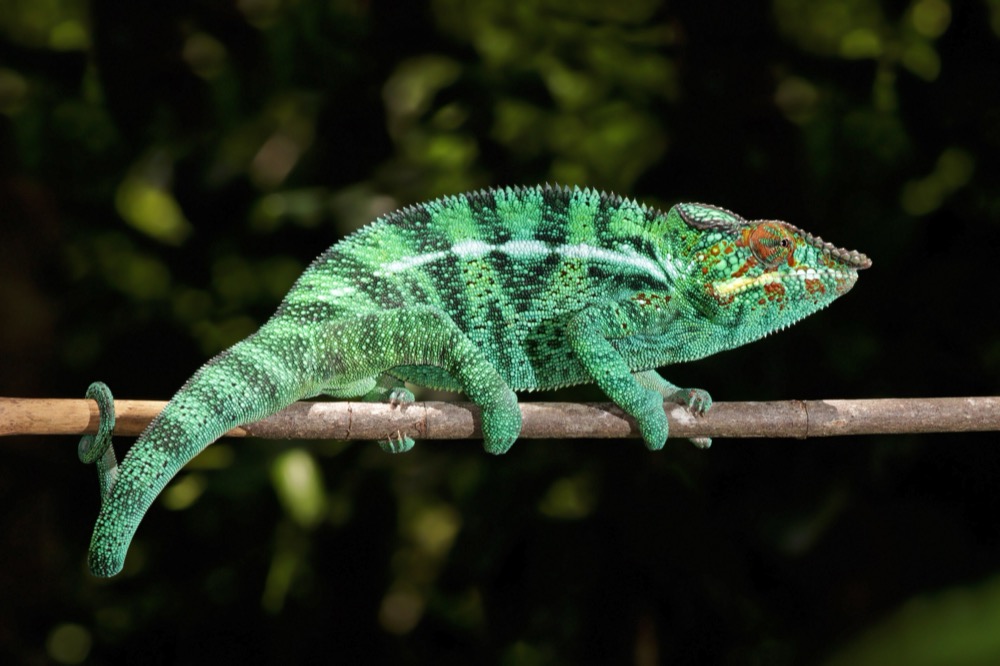
A large, spectacularly coloured chameleon from Madagascar whose males display vivid blues, reds, greens and oranges that vary by locality. Panthers are demanding specialists: they need a tall, screen-sided cage, precise UVB and heat gradients, moving water to drink, and near-total solitude. They are a stunning display animal for an experienced keeper, but their stress-prone nature and specific care make them unsuitable for beginners.
Housing & setup
Panthers need a tall, well-ventilated screen or mesh cage, at least 60 x 60 x 120 cm for an adult male, to prevent the stagnant air that causes respiratory disease. Fill it with dense live plants such as ficus, pothos and schefflera plus a network of horizontal and diagonal branches of varying thickness so the chameleon can climb, bask and hide at chosen heights. Heavy planting also holds humidity and provides drinking surfaces. Avoid glass tanks, which trap stale humid air, and keep the enclosure in a calm, low-traffic spot as these are easily stressed animals.
Diet & feeding
An insectivore fed a varied diet of gut-loaded insects such as crickets, dubia roaches, locusts, silkworms, hornworms and black soldier fly larvae. Dust feeders with a plain calcium (no D3) at most feeds, a calcium with D3 lightly once or twice a month, and a multivitamin once or twice a month, adjusting to your UVB setup. Feed juveniles daily and adults every other day, offering a few insects at a time. Gut-loading and correct supplementation are critical to prevent metabolic bone disease in this fast-growing species.
Temperature, light & environment
Provide a basking spot of about 28 to 32 C at the top for an adult male (cooler for females and juveniles), with the cage cooling to around 22 to 24 C lower down, and a genuine night drop to about 18 to 22 C. UVB is essential: use a T5 tube giving a basking-branch UVI of about 3.0 (Ferguson Zone 3). Keep daytime humidity around 50 to 60 percent, rising to 75 to 100 percent at night, using misting and live plants. Crucially, chameleons only drink moving water, so provide long automated misting sessions and a dripper, never expecting them to use a bowl.
Company & handling
Strictly solitary. Panther chameleons are intensely territorial and the mere sight of another chameleon causes chronic stress, colour-darkening and decline, so they must be housed one per cage with no visual contact between animals. They are display animals, not handling pets: frequent handling stresses them, so limit contact to essential health checks and let them come onto the hand voluntarily where possible.
Enrichment & exercise
The enrichment for a chameleon is a rich, living environment: dense foliage, a varied branch network at many angles and heights, and gradients of light, heat and humidity to choose from. Live plants, basking and shade options, and hunting live moving prey all express natural behaviour. A well-planted, thoughtfully arranged cage that lets the chameleon self-select its microclimate is far more valuable than any handling.
Common health problems
Metabolic bone disease (MBD)
Signs: Rubbery or swollen jaw, bowed or bent limbs, weak grip, tremors, difficulty climbing
Prevention: Provide correct T5 UVB replaced on schedule, careful calcium and vitamin supplementation, and gut-loaded feeders
Dehydration and kidney disease
Signs: Sunken eyes, orange or thick urates, lethargy, wrinkled skin, reduced appetite
Prevention: Provide long misting sessions and a dripper for moving water to drink, and maintain correct humidity
Egg binding (dystocia) in females
Signs: Restlessness, digging without laying, straining, swelling, lethargy and decline in a gravid female
Prevention: Provide a suitable laying bin, correct nutrition and calcium, avoid over-conditioning, and seek prompt vet care
Respiratory infection
Signs: Open-mouth breathing, popping or wheezing sounds, mucus, puffing the throat, lethargy
Prevention: Use a well-ventilated screen cage, avoid stagnant humidity, and keep temperatures correct
See a vet urgently if...
- !Rubbery or swollen jaw and bowed limbs (MBD)
- !Sunken eyes and thick orange urates (dehydration or kidney disease)
- !A gravid female straining or digging without laying (egg binding)
- !Open-mouth breathing with mucus or popping sounds (respiratory infection)
- !Persistent dark stress colouration, closed eyes by day or refusing food
In Macau
Macau's warmth and humidity can suit a panther chameleon, but the key danger is stagnant, overly humid air in a poorly ventilated cage, so a screen enclosure and good airflow are essential to prevent respiratory disease. Summer heat can overheat the basking zone, so monitor temperatures and ensure a cooler retreat and a real night drop. Replace the UVB tube every 6 to 12 months. Panther chameleons are listed on CITES Appendix II, so buy only legally sourced, ideally captive-bred animals with paperwork.
Panther chameleons do not change colour mainly for camouflage: their dramatic colour shifts are driven by mood, temperature and communication, produced by nanocrystals in the skin that they actively tune to reflect different wavelengths of light.
Questions about your exotic pet?
Our team sees small mammals, birds, reptiles and fish. Book a wellness check or a species consult.
Book an exotic consultRelated care sheets
General guidance reviewed by the Royal Veterinary Center team. Not a substitute for a veterinary examination. Always confirm species-specific and legal requirements for Macau.