Reptiles & Amphibians
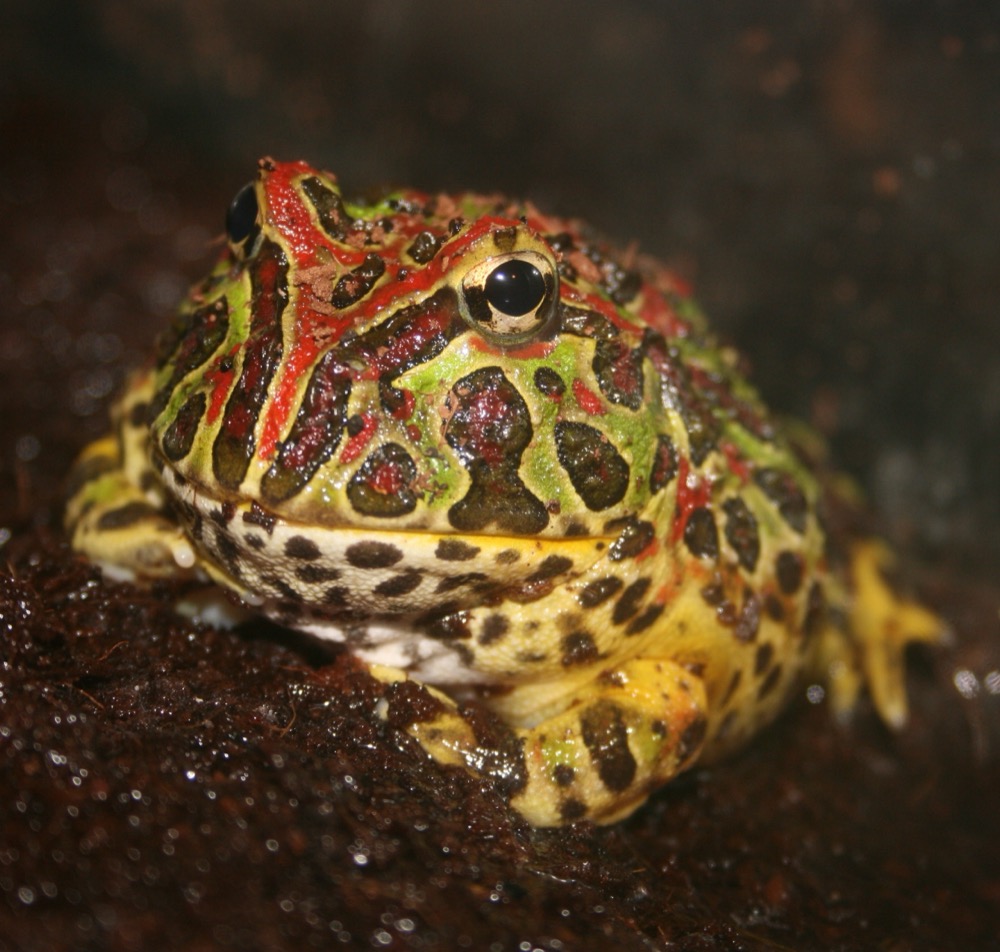
Pacman Frog (Ornate Horned Frog)
Ceratophrys ornata
Care level
Beginner
Lifespan
6 to 10 years, sometimes longer
Adult size
Females 10 to 18 cm, males smaller
A rotund, brightly patterned South American frog nicknamed for its enormous mouth and its resemblance to the arcade character, essentially a mouth with legs. Pacman frogs are sedentary sit-and-wait ambush predators that spend most of their lives half-buried, waiting to lunge at anything that moves. They are undemanding and inexpensive to house, but their delicate, absorbent skin and strong bite mean they are strictly a display animal, not one to handle.
Housing & setup
Because they barely move, a single adult is comfortable in a fairly modest enclosure of about 45 x 45 x 30 cm; floor space matters more than height. The most important feature is a deep, moist, soft substrate such as coco fibre, a topsoil mix or bioactive soil at least 8 to 10 cm deep so the frog can burrow in up to its eyes. Add sphagnum moss, a couple of low hides and a large, shallow water dish the frog can sit in, using only clean dechlorinated water. Keep the setup simple, clean and easy to maintain.
Diet & feeding
A voracious carnivore with a huge appetite and an even bigger mouth. Feed a varied diet of appropriately sized gut-loaded insects such as crickets, dubia roaches and earthworms, with occasional larger prey like the odd pinky mouse for adults, though insects and worms should form the bulk. Dust feeders with calcium at most feeds and a multivitamin occasionally. Feed juveniles every one to two days and adults every 4 to 7 days, taking care not to overfeed, as pacman frogs become obese easily. Never offer prey wider than the space between the eyes.
Temperature, light & environment
Keep a stable temperature of about 24 to 28 C by day with a mild night drop to roughly 22 to 24 C, using a thermostatted low-level heat source and avoiding hot basking lamps that dry the skin. Maintain high humidity of around 60 to 80 percent by keeping the substrate damp but not waterlogged and misting as needed. UVB is not required, though a very low-output tube can be offered. As amphibians absorb water and chemicals through the skin, only ever use dechlorinated water, and keep the enclosure clean to protect that sensitive skin.
Company & handling
Strictly solitary. Pacman frogs are cannibalistic and will readily try to eat any tank mate, including another pacman frog, so they must always be housed alone. They are not social and need no company. They must not be handled routinely: their permeable skin is harmed by the salts and oils on human hands, and they can deliver a surprisingly strong bite, so interact only with clean wet hands for essential moves and otherwise simply observe.
Enrichment & exercise
Enrichment for this ambush predator is subtle: a deep soft substrate to burrow into, gentle humidity gradients, moss and hides, and live moving prey to trigger natural hunting strikes. Varying feeder types and letting the frog ambush prey from its buried position express normal behaviour. A clean, moist, naturalistic setup that lets it bury and wait is all this sit-and-wait specialist needs.
Common health problems
Metabolic bone disease (MBD)
Signs: Soft or bendy jaw and limbs, difficulty sitting upright, weakness, tremors, reluctance to feed
Prevention: Dust feeders with calcium and vitamin D3, gut-load insects well, and offer a varied diet
Obesity
Signs: An excessively bloated body, difficulty moving, laboured breathing, lethargy
Prevention: Feed an appropriate amount on a sensible schedule and avoid frequent large fatty prey
Chemical burns and skin infection (red-leg)
Signs: Reddened underside and legs, raw or discoloured skin, lethargy, loss of appetite
Prevention: Use only dechlorinated water, keep the enclosure clean, avoid handling with bare hands, and maintain good hygiene
Impaction
Signs: Bloating, straining, no droppings, loss of appetite after feeding on or near loose substrate
Prevention: Feed correctly sized prey, avoid feeding on loose gritty substrate, and maintain correct warmth and hydration
See a vet urgently if...
- !Soft or bendy jaw and limbs (MBD)
- !Reddened raw underside and legs (red-leg or chemical burn)
- !Bloating with straining and no droppings (impaction)
- !Refusing food for several weeks with weight loss
- !Sitting with laboured breathing or unable to bury or right itself
In Macau
Pacman frogs need warm, humid conditions, so Macau's climate suits them, but summer heat can push a closed enclosure too high, so keep temperatures around 24 to 28 C and use air conditioning if the room gets hot. Their sensitive skin makes water quality critical: always use dechlorinated water and keep the substrate clean, as Macau tap water is chlorinated. UVB is optional, but if a bulb is used replace it every 6 to 12 months. Choose captive-bred frogs, which are widely available and hardier than wild stock.
Pacman frogs are so aggressively food-driven that they will attempt to swallow prey almost as large as themselves, and their bite is strong enough that a hungry frog may latch firmly onto a passing finger, mistaking it for a meal.
Questions about your exotic pet?
Our team sees small mammals, birds, reptiles and fish. Book a wellness check or a species consult.
Book an exotic consultRelated care sheets
General guidance reviewed by the Royal Veterinary Center team. Not a substitute for a veterinary examination. Always confirm species-specific and legal requirements for Macau.