Birds
Meyer's Parrot
Poicephalus meyeri
Care level
Intermediate
Lifespan
20 to 35 years with good care
Adult size
21 cm, stocky with a short tail
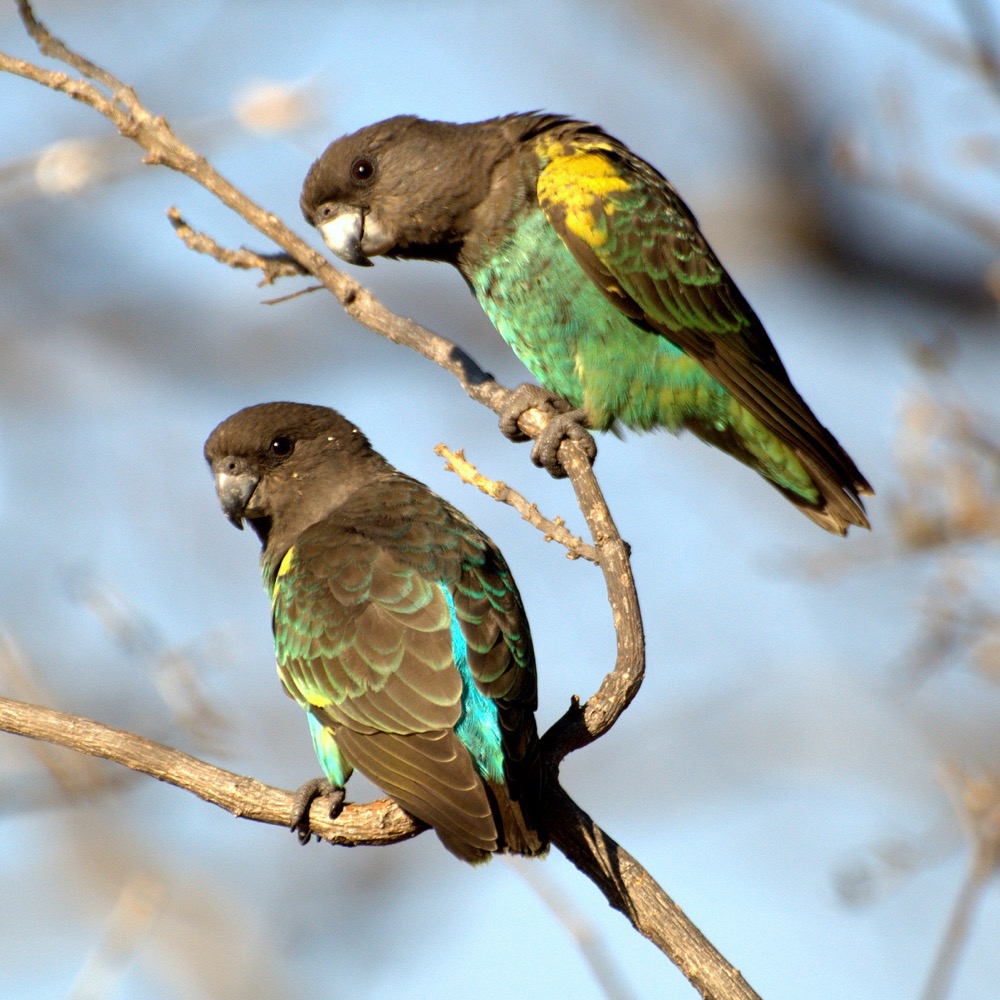
Meyer's Parrot is a small, gentle African parrot with brown and grey plumage brightened by turquoise and yellow, and a calm, playful, undemanding temperament. Like its close relative the Senegal, it is quiet enough for apartment life and makes a wonderful companion for people who want an intelligent parrot without the noise of larger species. They are curious and enjoy foraging and puzzles, forming steady bonds with attentive owners.
Housing & setup
Provide a cage of at least 50 x 50 x 60 cm for one bird, larger if possible, with bar spacing around 1.25 to 1.6 cm. Include several natural-wood perches of varying diameter, ladders and plenty of chewable and foraging toys, as Meyer's are keen chewers. Keep open space for movement and place the cage in a sociable but calm room so the bird feels included without being overwhelmed.
Diet & feeding
Feed a base of formulated pellets (about 60 to 70 percent) with a smaller portion of seed, plus daily fresh vegetables, dark leafy greens and small amounts of fruit. As a Poicephalus parrot, Meyer's is prone to vitamin A deficiency on seed-heavy diets, so include vitamin-A-rich foods such as sweet potato, carrot and dark greens. Provide a cuttlebone or mineral block for calcium. Avocado, chocolate, caffeine, alcohol, onion and salty foods are toxic and must never be given.
Temperature, light & environment
Keep them at a stable 18 to 28 C, away from draughts, direct sun and kitchen fumes. Provide natural or full-spectrum light and 10 to 12 hours of quiet, dark sleep nightly. Non-stick (PTFE or Teflon) cookware, air fryers, self-cleaning ovens and scented candles emit fumes that are rapidly fatal to birds, so keep the cage far from the kitchen. Give daily supervised out-of-cage time in a bird-proofed room.
Company & handling
Meyer's parrots are gentle, playful and steady, bonding closely with their owners while remaining more independent and less clingy than many parrots. They are among the quietest parrots, with soft chatter rather than screaming, which makes them excellent for flats. They can be a little shy at first and tend to prefer one or two trusted people, so gentle, consistent handling from more than one family member helps keep them sociable.
Enrichment & exercise
Offer foraging toys, shreddable wood and paper, puzzle feeders and foot toys, rotating them to keep interest, as Meyer's love to forage and problem-solve. Chewing keeps the beak healthy, and daily flight and climbing provide exercise. Short, positive training sessions suit their clever, gentle nature and build confidence.
Common health problems
Hypovitaminosis A (vitamin A deficiency)
Signs: Blocked or crusty nostrils, sneezing, white mouth spots, poor feather colour and recurring respiratory infections.
Prevention: Feed pellets and vitamin-A-rich vegetables such as sweet potato, carrot and dark greens rather than an all-seed diet.
Feather plucking
Signs: Bald patches, chewed feathers and over-preening, often from boredom, stress or insufficient handling.
Prevention: Provide daily interaction and foraging enrichment, ensure good sleep, and have an avian vet rule out disease.
Aspergillosis (fungal respiratory disease)
Signs: Laboured or open-mouth breathing, tail bobbing, voice change, lethargy and weight loss, worsened by damp conditions.
Prevention: Keep housing dry, clean and well ventilated, avoid mouldy food or bedding, and seek prompt avian care for any breathing change.
Psittacosis (chlamydiosis)
Signs: Fluffed posture, lethargy, nasal or eye discharge, lime-green droppings and laboured breathing.
Prevention: Quarantine and vet-test new birds and keep housing clean and ventilated; note this disease can spread to people.
See a vet urgently if...
- !Sitting fluffed on the cage floor instead of perching, an emergency
- !Tail bobbing at rest or open-mouth, laboured breathing
- !Not eating, vomiting or sudden weight loss
- !Sudden silence, drooping wings or inability to grip the perch
- !Bleeding or a broken blood feather
In Macau
Meyer's parrots are CITES Appendix II, so a bird needs legal paperwork; buy only from a documented, reputable source. Their quiet, gentle nature makes them well suited to Macau apartments, but keep housing cool, dry and ventilated against the heat and humidity to reduce fungal respiratory disease. Never run non-stick cookware or scented products near the bird, and quarantine plus vet-check any new arrival.
Meyer's parrots are quietly clever foragers, and in the wild they range across the woodlands of central and southern Africa in small flocks, using their strong beaks to crack open seeds, figs and even farm crops.
Questions about your exotic pet?
Our team sees small mammals, birds, reptiles and fish. Book a wellness check or a species consult.
Book an exotic consultRelated care sheets
General guidance reviewed by the Royal Veterinary Center team. Not a substitute for a veterinary examination. Always confirm species-specific and legal requirements for Macau.