Reptiles & Amphibians
Kenyan Sand Boa
Gongylophis colubrinus
Care level
Beginner
Lifespan
15 to 20 years, sometimes more
Adult size
Males around 40 cm, females 60 to 90 cm
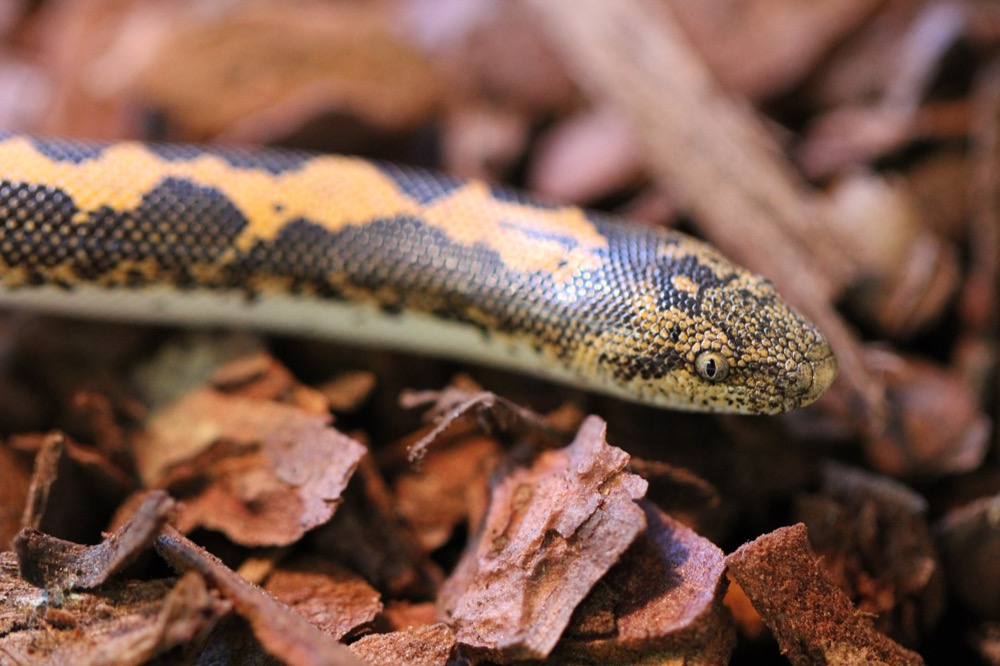
A small, stout, burrowing boa from the arid grasslands of East Africa, with a blunt tail, tiny eyes set high on the head and a habit of lying buried with just the face exposed to ambush prey. Sand boas are docile, hardy and undemanding, spending most of their time hidden in the substrate, which makes them a rewarding low-maintenance snake for keepers who enjoy a fossorial species. Females are noticeably larger than males.
Housing & setup
A single adult does well in a secure, front-opening enclosure of at least 90 x 45 x 30 cm; height is unimportant as they rarely climb. The key feature is a deep, dry, diggable substrate such as aspen, a topsoil and sand mix or fine coco chips at least 8 to 15 cm deep so the boa can burrow completely, which is its main natural behaviour. Add a hide or two on the surface, a low basking area and a small water bowl. A secure lid matters, but so does providing enough loose substrate to disappear into.
Diet & feeding
A carnivore fed whole rodents. Offer an appropriately sized frozen-then-thawed mouse (about the width of the snake's body) rather than live prey. Feed juveniles every 5 to 7 days and adults every 10 to 14 days, adjusting to keep good body condition, as sand boas gain weight easily. Being ambush predators, they often strike from beneath the substrate, so offer prey with tongs at the surface and avoid loose substrate being swallowed. Always thaw and warm prey thoroughly.
Temperature, light & environment
Provide a warm basking zone of 32 to 35 C at one end and a cool end of 24 to 27 C, with a night drop to about 22 C; control all heat with a thermostat, using an overhead source or a carefully regulated mat given their burrowing habit. UVB is not required but a low-output tube can benefit welfare. Keep this arid species dry at around 30 to 50 percent humidity with good ventilation, providing a slightly damp hide only during shedding. Run a 12-hour light cycle. Chronic damp quickly causes scale rot in sand boas.
Company & handling
Best kept singly. While sand boas are sometimes cohoused, solitary housing avoids feeding competition, accidental cannibalism and the difficulty of monitoring a hidden animal's health, and is safest overall. They are placid and tolerate gentle, occasional handling, but as a fossorial species they are most comfortable buried, so keep handling short and support the body fully.
Enrichment & exercise
The most important enrichment is a deep, loose substrate the boa can burrow and hunt within, mimicking its natural buried lifestyle. Add surface hides, a low warm basking spot and occasional rearranging of the terrain, and offer prey so it can ambush from below. Watching a sand boa surface, strike and vanish again is the reward for providing proper diggable depth.
Common health problems
Scale rot (from damp substrate)
Signs: Discoloured, blistered or raw belly scales, foul smell, reddened skin
Prevention: Keep the substrate dry and well ventilated, spot-clean promptly, and confine moisture to a shedding hide
Obesity
Signs: A bloated, rounded body, visible fat, reluctance to move, difficulty burrowing
Prevention: Feed appropriately sized prey on a sensible schedule and avoid oversized or too-frequent meals
Respiratory infection
Signs: Open-mouth breathing, wheezing, mucus or bubbles at the mouth, holding the head up
Prevention: Maintain correct warm temperatures, keep the environment dry, and provide good ventilation
Substrate impaction
Signs: Straining, no droppings, swollen body, loss of appetite after feeding buried
Prevention: Offer prey with tongs at the surface, keep the warm end hot enough to digest, and ensure hydration
See a vet urgently if...
- !Discoloured, blistered or raw belly scales (scale rot)
- !Open-mouth breathing or mucus (respiratory infection)
- !Refusing several consecutive meals with weight loss
- !Straining with no droppings after feeding (impaction)
- !Marked obesity or inability to burrow normally
In Macau
As an arid-habitat burrower, the Kenyan sand boa is most at risk from Macau's humidity, so keep the substrate dry and well ventilated and watch closely for scale rot during the wet season. Summer heat can overheat a closed enclosure, so keep the cool end near 25 C with a thermostat. Replace any UVB bulb every 6 to 12 months, and choose captive-bred animals, which are common, hardy and available in several colour morphs.
Sand boas are ambush specialists that lie buried with only their eyes and nostrils exposed, then explode upward to seize passing prey and drag it back under the sand to constrict it out of sight.
Questions about your exotic pet?
Our team sees small mammals, birds, reptiles and fish. Book a wellness check or a species consult.
Book an exotic consultRelated care sheets
General guidance reviewed by the Royal Veterinary Center team. Not a substitute for a veterinary examination. Always confirm species-specific and legal requirements for Macau.