Reptiles & Amphibians
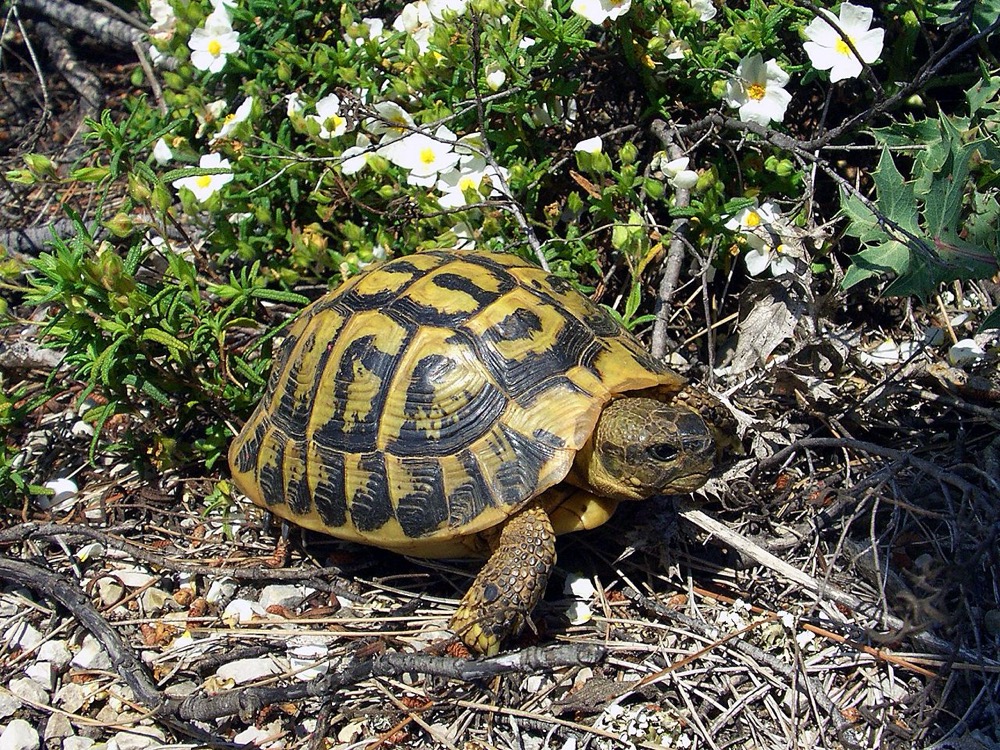
Hermann's Tortoise
Testudo hermanni
Care level
Intermediate
Lifespan
50 to 90 years
Adult size
Western 15 to 20 cm, Eastern up to 28 cm
A small, hardy Mediterranean tortoise and one of the best species for a committed keeper, though it is a genuine multi-decade, potentially lifelong commitment. They are grazing herbivores adapted to warm, seasonally dry scrubland and do best with access to real sunlight and space to roam. Correct high-fibre diet and strong UVB are the keys to a smooth, healthy shell.
Housing & setup
Adults need a large, escape-proof enclosure, ideally an open-topped tortoise table or, best of all, a secure outdoor pen at least 2 to 2.5 square metres for one animal (bigger is better). Outdoor pens should have walls sunk into the ground and a solid barrier because tortoises dig and climb; provide a deep, dig-friendly substrate such as a topsoil and sand mix. Include a shaded cool hide, a basking area, edible plantings for grazing, and a shallow water dish for soaking and drinking. Avoid cramped glass tanks with poor airflow, which cause stress and respiratory issues.
Diet & feeding
Strict herbivore needing a high-fibre, low-protein, calcium-rich diet of weeds and leafy greens. Feed a varied mix of dandelion, plantain, clover, sow thistle, mallow, hibiscus and other broadleaf weeds and flowers, plus edible garden plants, and provide grasses and hay for fibre. Avoid fruit, high-protein foods and shop salad staples like lettuce and spinach as regular items. Dust food with calcium (with D3 if UVB is limited) and always provide a cuttlebone; graze-feed most days with the occasional light fast.
Temperature, light & environment
A diurnal basker from a sunny climate. Provide a basking spot of 35 to 40 C, a cooler end and ambient of 24 to 29 C, and allow a natural night drop toward 18 to 22 C. Strong UVB is essential for shell and bone health: use a high-output UVB source giving a basking UVI of about 3.0 to 4.0 (Ferguson Zone 3 to 4), or better still natural unfiltered sunshine. Keep humidity moderate around 40 to 60 percent (higher, near 50 to 70 percent, for hatchlings to prevent pyramiding), on a 12 to 14 hour photoperiod. Healthy adults may brumate in cool months under guided, vet-informed conditions.
Company & handling
Best kept singly, especially indoors. Males harass and ram females and each other, and mixing can cause stress, injury and bullying at food, so cohousing needs large outdoor space and careful monitoring. Tortoises tolerate gentle handling and soaking but are not social with people; minimise handling and let them roam and graze.
Enrichment & exercise
Provide a large, varied space with grazing plants, digging substrate, basking and shade zones, logs and gentle slopes to explore. Real outdoor time in sunlight, foraging for scattered weeds, and seasonal variation all support natural behaviour and good welfare.
Common health problems
Metabolic bone disease and shell pyramiding
Signs: Soft or lumpy pyramided shell, bendy limbs, deformed beak, weakness
Prevention: Provide strong UVB or sunlight, calcium supplementation, correct humidity for young tortoises, and a high-fibre low-protein diet
Respiratory infection
Signs: Runny or bubbly nose, open-mouth breathing, wheezing, puffy eyes, lethargy
Prevention: Keep the enclosure warm and well ventilated, avoid cold damp conditions, and maintain a proper basking zone
Shell rot
Signs: Soft, pitted, foul-smelling or discoloured shell patches, weeping areas
Prevention: Keep the substrate clean and not chronically wet, provide a dry basking area, and treat shell injuries promptly
Intestinal parasites and impaction
Signs: Runny or worm-visible droppings, weight loss, straining, bloating, poor appetite
Prevention: Quarantine new tortoises with a faecal test, keep hygiene high, avoid indigestible substrates, and ensure hydration and gut warmth
See a vet urgently if...
- !Runny or bubbly nose with open-mouth breathing (respiratory infection)
- !Soft shell or rubbery limbs (MBD)
- !Not eating for more than a week outside brumation, with lethargy
- !Foul-smelling or weeping shell lesions (shell rot)
- !Straining, or a swollen sunken-eyed listless tortoise (dehydration or blockage)
In Macau
Macau's warm season can suit outdoor grazing, but the very humid summers can overheat pens or promote respiratory and shell problems, so provide shade, ventilation and a moderate 40 to 60 percent humidity. Replace UVB bulbs every 6 to 12 months. Importantly, Hermann's tortoise is CITES-listed and legally protected in many regions, so buy only captive-bred animals with correct documentation.
Hermann's tortoises can live well beyond 50 years and often outlive their owners, so a well-planned care handover is a genuine part of responsible ownership.
Questions about your exotic pet?
Our team sees small mammals, birds, reptiles and fish. Book a wellness check or a species consult.
Book an exotic consultRelated care sheets
General guidance reviewed by the Royal Veterinary Center team. Not a substitute for a veterinary examination. Always confirm species-specific and legal requirements for Macau.