Birds
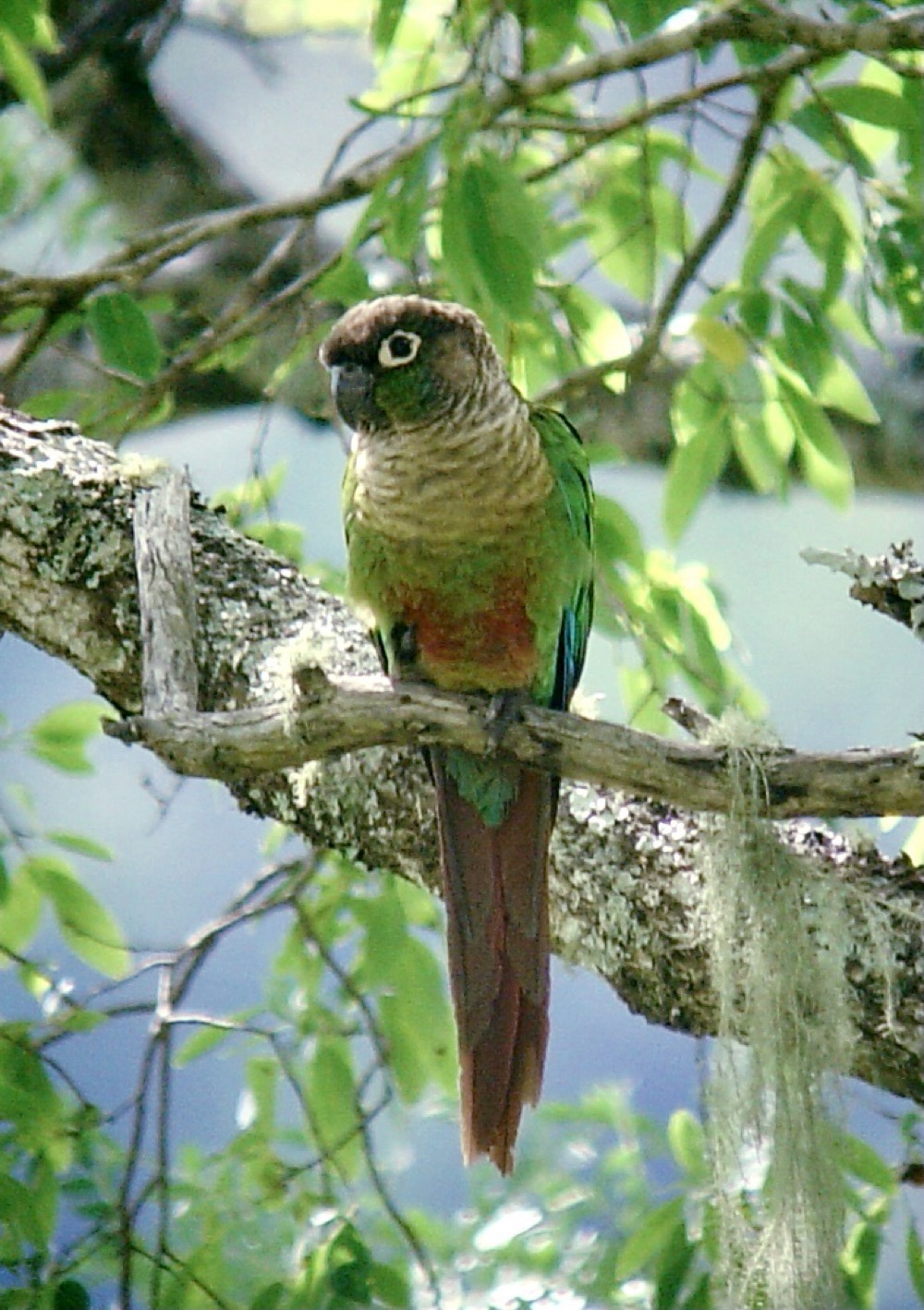
Green-Cheeked Conure
Pyrrhura molinae
Care level
Intermediate
Lifespan
20 to 30 years
Adult size
About 26 cm including the long tail
The green-cheeked conure is a small, playful and comical parrot that packs big-parrot personality into a manageable size and a comparatively quiet voice. They are affectionate, mischievous and love to hang upside down, tuck into pockets and play, forming strong bonds with their people. They need more time, training and enrichment than a finch or budgie, making them a great step up for a committed intermediate owner.
Housing & setup
Provide a sturdy cage of at least 60 x 60 x 90 cm, with more room always better, as these are busy, acrobatic climbers. Bar spacing of about 1.25 to 1.6 cm (half to five-eighths of an inch) is appropriate, and bars should be strong enough to resist chewing. Offer varied natural-wood perches, ropes, ladders and swings at different heights, plus plenty of durable toys. Position the cage in a social part of the home so the bird feels part of the flock.
Diet & feeding
Feed a base of formulated pellets (about 60 to 70 percent) with a small portion of seed, plus daily fresh vegetables, dark leafy greens and modest fruit. Dark orange and green vegetables (carrot, sweet potato, capsicum, kale) supply vitamin A, and a cuttlebone provides calcium. Avoid an all-seed diet, which leads to obesity and vitamin deficiency. Avocado, chocolate, caffeine, alcohol, onion and salty foods are toxic and must never be given.
Temperature, light & environment
Keep at a comfortable 18 to 28 C, away from draughts, direct sun and all kitchen fumes. Provide natural or full-spectrum light and 10 to 12 hours of quiet, dark sleep each night, as sleep-deprived conures become cranky and nippy. Because they are intelligent and energetic, they need several hours of supervised out-of-cage time daily in a bird-proofed room. Good ventilation and dry conditions help prevent fungal respiratory disease.
Company & handling
Green-cheeked conures are flock birds that crave interaction and will become bored, loud or feather-destructive if neglected. They are among the quieter conures, chattering and chirping rather than constantly screaming, which makes them more apartment-tolerant than sun conures. They can be kept singly with plenty of human attention or in pairs. They are clever and can become nippy if hormonal or over-tired, so consistent gentle handling matters.
Enrichment & exercise
Provide abundant foraging toys, puzzle feeders, shreddable wood and paper, ropes and swings, rotating them to prevent boredom. They love to chew, so supply a steady stream of safe destructible items. Trick training, target training and teaching simple behaviours give crucial mental stimulation and strengthen the bond. Daily flight and climbing time out of the cage is important exercise.
Common health problems
Proventricular dilatation disease (PDD)
Signs: Weight loss despite eating, regurgitation, undigested seeds in the droppings, and neurological signs such as tremors, weakness or trouble perching; linked to avian bornavirus.
Prevention: Quarantine and test new birds, minimise stress, avoid contact with birds of unknown status; there is no cure, so early diagnosis and supportive care are key.
Feather plucking
Signs: Bald patches on the chest, legs or under the wings, over-preening and chewed feathers, often from boredom, hormones or anxiety.
Prevention: Provide enrichment, foraging, adequate sleep and companionship, and have an avian vet rule out medical causes such as infection or nutritional disease.
Aspergillosis (fungal respiratory infection)
Signs: Laboured breathing, tail bobbing, changed or lost voice, lethargy and weight loss, often following stress or damp housing.
Prevention: Keep housing clean, dry and well ventilated, avoid mould and damp bedding, and reduce stress; especially relevant in humid climates.
Psittacosis (chlamydiosis)
Signs: Fluffed posture, lethargy, nasal or eye discharge, laboured breathing and lime-green droppings.
Prevention: Quarantine and vet-test new birds and keep housing clean and ventilated; the disease is transmissible to people.
See a vet urgently if...
- !Fluffed up and sitting on the cage floor, not perching
- !Tail bobbing at rest or open-mouth, laboured breathing
- !Regurgitating repeatedly or passing whole undigested seed
- !Not eating, sudden weight loss or an unsteady, wobbly gait
- !Bleeding, a broken blood feather, or sudden collapse
In Macau
Macau's high humidity raises the risk of aspergillosis and other fungal respiratory disease, so keep the cage dry, clean and well ventilated and avoid damp corners. In apartments the green-cheek is one of the quieter conure options, though it can still call loudly at times. Keep well away from non-stick (PTFE) cookware and appliance fumes, which kill birds quickly. Buy from a reputable breeder, request avian bornavirus and PBFD information, and quarantine new birds.
Green-cheeked conures are natural acrobats that love to sleep and play hanging upside down like little bats, and many enjoy being gently rolled onto their backs in the hand, unusual trust for a parrot.
Questions about your exotic pet?
Our team sees small mammals, birds, reptiles and fish. Book a wellness check or a species consult.
Book an exotic consultRelated care sheets
General guidance reviewed by the Royal Veterinary Center team. Not a substitute for a veterinary examination. Always confirm species-specific and legal requirements for Macau.