Birds
Gouldian Finch
Chloebia gouldiae
Care level
Advanced
Lifespan
5 to 8 years with excellent care
Adult size
13 to 14 cm from head to tail tip
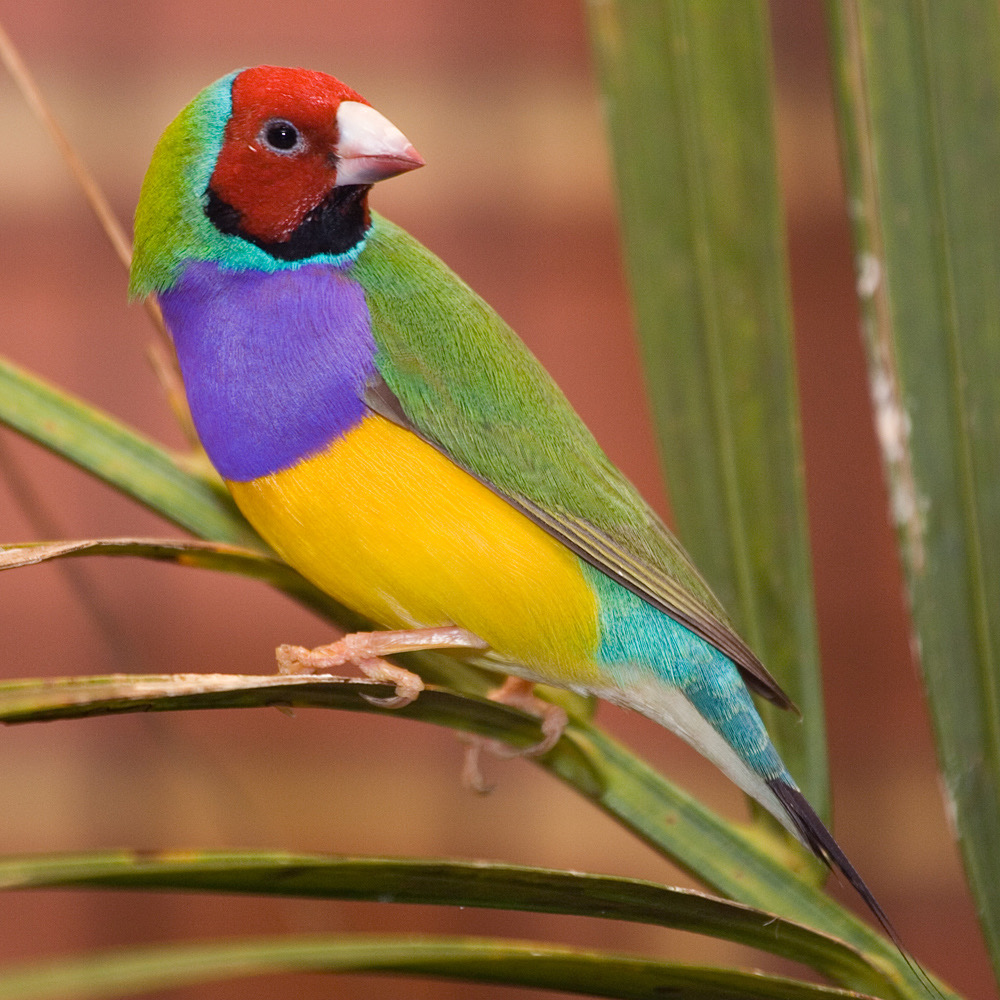
The Gouldian Finch is one of the most spectacularly coloured of all birds, painted in blocks of purple, yellow, green and turquoise with a red, black or yellow face. They are aviary birds to admire rather than tame companions, as they dislike being handled, and they are notably delicate: sensitive to cold, draughts and stress, and prone to air-sac mites. They suit an experienced finch keeper who can provide stable warmth and careful husbandry.
Housing & setup
House them in a spacious flight cage or aviary of at least 90 cm in length so they can fly freely, as flight is their main exercise; taller and longer is always better. Bar spacing must be about 1 cm or less. Keep several finches together in a calm group rather than singly, provide fine natural perches and some cover, and avoid overcrowding. Position the cage in a warm, stable, draught-free spot away from doors and windows.
Diet & feeding
Feed a good-quality finch seed mix as the base, supplemented daily with fresh greens such as spinach, dandelion and chickweed, plus egg food, especially during moult and breeding, and sprouted seed. Provide a cuttlebone, mineral grit and a calcium and vitamin source, as Gouldians are prone to deficiencies. Clean, fresh water for drinking and bathing must always be available. Avocado, chocolate, caffeine and salty or sugary human foods are toxic and must never be given.
Temperature, light & environment
Gouldians are tropical birds that need consistent warmth of about 21 to 24 C and must be protected from draughts, sudden temperature changes and chilling, any of which can quickly become fatal. Keep humidity moderate and avoid damp. Provide natural or full-spectrum light and a regular day-night cycle with quiet, dark nights. Non-stick (PTFE or Teflon) cookware and scented products emit fumes lethal to birds, so keep the cage well away from the kitchen. Minimise stress from noise, movement and disturbance.
Company & handling
Gouldians are social flock finches that must be kept with other finches for wellbeing, and they do best in calm groups of their own or compatible species. They are not hands-on pets and become stressed if handled, so they are for watching and listening rather than cuddling; the males have a soft, pleasant song. Because stress lowers their resistance to disease, a peaceful, stable environment with minimal disturbance is essential.
Enrichment & exercise
Provide ample flight space, as flying is their principal exercise and wellbeing need, along with fine perches at different heights, natural branches and safe greens to pick through. Offer bathing water, which they enjoy and which keeps plumage healthy. A planted or naturalistic aviary with foliage gives security and interest. Keep the group dynamic calm and stable to reduce stress.
Common health problems
Air-sac mites
Signs: Open-mouth or heavy breathing, clicking or wheezing sounds, tail bobbing, loss of song and staining around the nostrils.
Prevention: Quarantine new birds, keep housing clean and stress low, and have an avian vet treat with an appropriate ivermectin-type product; it spreads between birds.
Chilling and stress-related illness
Signs: Fluffed, hunched posture, inactivity, sitting low and sudden decline after a draught, cold snap or disturbance.
Prevention: Maintain steady warmth around 21 to 24 C, eliminate draughts and sudden temperature changes, and minimise stress and handling.
Nutritional deficiency (calcium and vitamins)
Signs: Poor feather colour and moult, weakness, egg binding in hens and general ill thrift on a seed-only diet.
Prevention: Supplement seed with greens, egg food, sprouted seed, cuttlebone and a calcium and vitamin source, especially during moult and breeding.
Air-sac and respiratory infection
Signs: Laboured breathing, fluffed posture, lethargy, discharge and loss of condition, sometimes following chilling or mite damage.
Prevention: Keep housing warm, clean, dry and well ventilated, quarantine new birds, and seek prompt avian care for any breathing change.
See a vet urgently if...
- !Sitting fluffed and hunched on the cage floor, an emergency
- !Open-mouth breathing, clicking sounds or tail bobbing at rest
- !Sudden loss of song and huddling after a draught or cold snap
- !Not eating, rapid weight loss or a hen straining with a stuck egg
- !Any sudden collapse or inability to perch
In Macau
Gouldian Finches are not CITES listed, but as a native Australian species their wild export is banned, so buy only captive-bred birds. Macau's heat is less of a risk than its rapid indoor temperature swings from air-conditioning, which can chill these draught-sensitive finches fatally, so keep them in a stable, warm, draught-free spot. Never run non-stick cookware or scented products near them, keep housing dry to limit air-sac mites and fungal disease, and quarantine plus vet-check any new bird.
Gouldian Finches come in three natural head colours, red, black and yellow, within the same species, and the vivid rainbow plumage that makes them so prized was named by the ornithologist John Gould after his wife Elizabeth.
Questions about your exotic pet?
Our team sees small mammals, birds, reptiles and fish. Book a wellness check or a species consult.
Book an exotic consultRelated care sheets
General guidance reviewed by the Royal Veterinary Center team. Not a substitute for a veterinary examination. Always confirm species-specific and legal requirements for Macau.