Reptiles & Amphibians
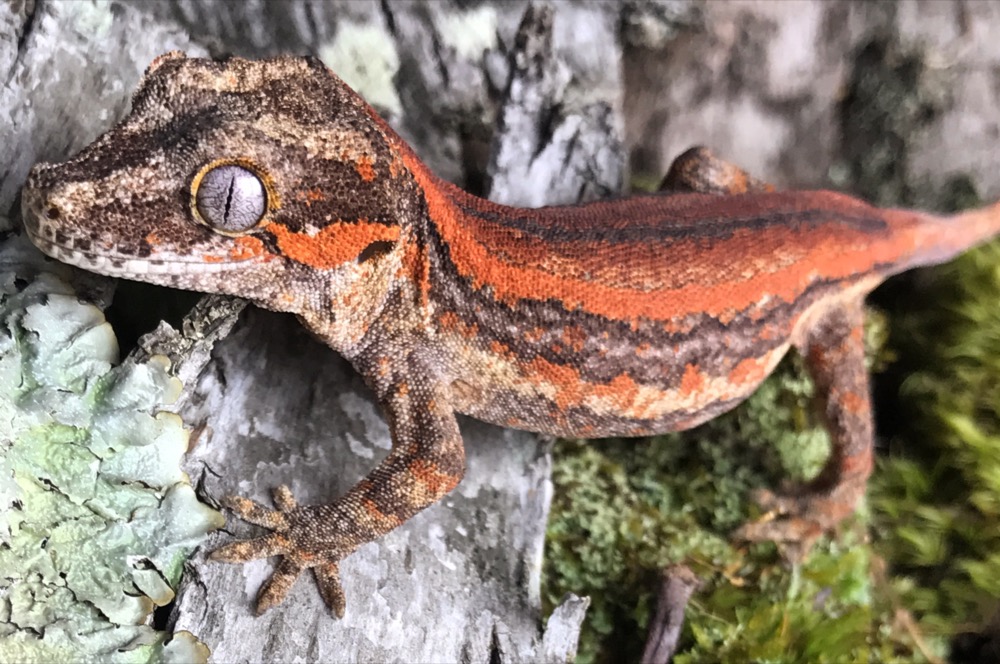
Gargoyle Gecko
Rhacodactylus auriculatus
Care level
Beginner
Lifespan
15 to 20 years
Adult size
20 to 25 cm including tail
A hardy, characterful New Caledonian gecko named for the small horn-like bumps above its eyes. Gargoyles are arboreal, crepuscular and famously easy to feed on a powdered complete diet, which makes them one of the best first geckos. They come in striped, mottled and reticulated patterns and, unlike crested geckos, can partially regrow a dropped tail.
Housing & setup
Being arboreal, they need height more than floor space: a single adult does well in a front-opening or tall glass terrarium of at least 45 x 45 x 60 cm, with bigger preferred. Furnish densely with cork bark, sturdy branches, vines and broad-leaved live or artificial plants so the gecko can climb and hide off the ground. Use a moisture-retaining substrate such as coco husk or a bioactive soil mix that holds gentle humidity, and add a small water dish. A cluttered, planted vertical space lowers stress and encourages natural climbing.
Diet & feeding
Primarily fed a commercial powdered gecko diet such as Pangea, Repashy or Black Panther Zoological, mixed with water to a smooth paste and offered in a shallow ledge dish 2 to 3 times per week. This is a complete food, so no extra supplements are needed with it. Offer appropriately sized, calcium-dusted insects such as crickets or dubia roaches once or twice weekly for extra protein and enrichment. Gargoyles are also known to eat other geckos in the wild, so never house them with smaller lizards.
Temperature, light & environment
This is a cool-running, crepuscular species that dislikes heat. Keep the enclosure at roughly 22 to 26 C by day with a natural night drop into the high teens, and never let it exceed about 28 C, as sustained heat above 30 C can be fatal. Supplemental heat is often unnecessary in a warm home, but if used it must be on a thermostat. UVB is not strictly required on a complete diet but a low-output tube giving a basking UVI of about 1.0 to 2.0 is beneficial. Mist in the evening to raise humidity to around 50 to 70 percent, then allow it to dry out during the day.
Company & handling
Best kept singly. Males are territorial and will fight, and mixed or crowded animals can bite off tails, toes and even eat each other. A single gargoyle is perfectly content alone. They generally tolerate short, gentle handling once settled, though many prefer to be observed rather than held, and they may drop the tail if grabbed or startled.
Enrichment & exercise
Fill the enclosure with a network of branches, cork tubes, vines and foliage at different heights so the gecko can explore vertically and choose its own microclimate. Rotate decor, offer live feeders to hunt, and provide leaf litter and hides for security. A bioactive planted setup gives constant enrichment and lets them express natural climbing and foraging behaviour.
Common health problems
Metabolic bone disease (MBD)
Signs: Wavy or soft jaw, kinked spine or tail, weak grip, tremors, floppy hind legs, reluctance to climb
Prevention: Feed a complete calcium-balanced powdered diet, add low-level UVB, and dust any extra insects with calcium
Dysecdysis (retained shed)
Signs: Stuck skin on toes, tail tip or around the eyes, dull patches, constricted digits
Prevention: Maintain evening humidity around 50 to 70 percent, provide a humid hide and rough climbing surfaces, and check toes after each shed
Heat stress and overheating
Signs: Gaping, lethargy, hiding low and away from warmth, loss of appetite, sudden decline in hot weather
Prevention: Keep temperatures below 28 C, provide ventilation and cool retreats, and use air conditioning during hot spells
Tail loss and stump infection
Signs: Dropped tail, raw or discoloured stump, swelling or discharge at the wound
Prevention: Handle gently and never grab the tail, house singly, and keep the enclosure clean while a stump heals
See a vet urgently if...
- !Soft or wavy jaw, kinked spine or tremors (MBD)
- !Gaping and collapse during hot weather (heat stress)
- !Refusing food for more than two weeks with weight loss
- !A tail stump or wound that is swollen, weeping or foul smelling
- !Sunken eyes, wrinkled skin or marked lethargy (dehydration)
In Macau
The single biggest risk to a gargoyle gecko in Macau is summer heat, since they thrive below 28 C, so an air conditioned room from May to October is close to essential and heat sources may be needed only in winter. Their humidity needs suit the local climate well, but ventilation must be good to avoid stagnant damp. If a UVB tube is used, replace it every 6 to 12 months, and always choose readily available captive-bred animals.
Unlike its cousin the crested gecko, a gargoyle gecko can regenerate a lost tail, though the replacement is usually shorter, stubbier and slightly different in colour to the original.
Questions about your exotic pet?
Our team sees small mammals, birds, reptiles and fish. Book a wellness check or a species consult.
Book an exotic consultRelated care sheets
General guidance reviewed by the Royal Veterinary Center team. Not a substitute for a veterinary examination. Always confirm species-specific and legal requirements for Macau.