Small Mammals
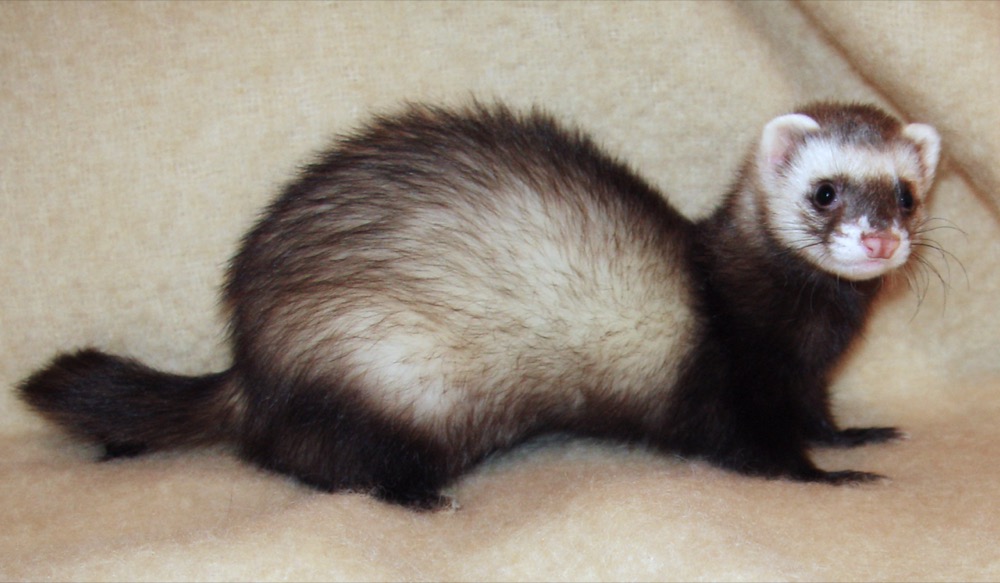
Ferret
Mustela putorius furo
Care level
Advanced
Lifespan
6 to 10 years
Adult size
0.7 to 2 kg (males larger)
Ferrets are playful, mischievous obligate carnivores with boundless curiosity and a talent for finding trouble. They form strong bonds, love to wrestle and explore, and need several hours out of the cage every day. They are a genuine commitment, requiring a meat based diet, vaccinations and vigilance for their many age related diseases.
Housing & setup
House ferrets in a large, tall multi level cage with solid floors, ramps, hammocks and cosy sleep sacks, but they must also have several hours of supervised free roaming daily. Ferret proof any room thoroughly, as they squeeze through gaps of just a few centimetres and chew and swallow soft rubber and foam, a common cause of fatal blockages. Use washable bedding and a litter tray, and keep the enclosure clean since ferrets have a naturally musky scent. Site it in a cool, well ventilated spot out of direct sun.
Diet & feeding
Ferrets are strict obligate carnivores and need a diet high in animal protein and fat with almost no carbohydrate or fibre: feed a quality high meat ferret kibble, a complete raw or whole prey diet, or a combination as your vet advises. Because insulinoma is common, food should be available at all times rather than fed in single large meals. Fresh water must always be available. Avoid dog food, sugary treats, fruit, vegetables and grains, all of which are unsuitable and linked to disease.
Temperature, light & environment
Keep ferrets at about 15 to 24 degrees Celsius, as they are very heat sensitive and can suffer fatal heat stroke above roughly 30 degrees Celsius, especially with humidity. Provide shade, good ventilation and cooling such as air conditioning or frozen bottles in warm weather. They sleep a great deal, up to 18 hours a day, and need quiet, dark resting time and a normal light cycle.
Company & handling
Ferrets are highly social and usually happiest in pairs or small groups of compatible individuals, though a single ferret can thrive with plenty of human interaction. Introductions should be gradual and neutering reduces odour and hormone driven aggression. They are robust and playful with people, enjoy handling and games, and communicate excitement with a bouncing, chattering war dance.
Enrichment & exercise
Ferrets need several hours of active play and exploration daily: provide tunnels, dig boxes filled with rice or ball pit balls, tug toys, and safe household exploration under supervision. They love hide and seek, chasing games and stashing treasures. Rotate toys and offer new safe spaces to satisfy their intense curiosity and energy.
Common health problems
Adrenal disease
Signs: Symmetrical hair loss especially over the tail and back, itchy skin, swollen vulva in spayed females, stronger odour
Prevention: Not fully preventable, but early veterinary diagnosis and treatment (implants or surgery) manage it well
Insulinoma
Signs: Weakness, glazed staring, drooling, pawing at the mouth, wobbliness, collapse or seizures from low blood sugar
Prevention: Feed a high meat low sugar diet, keep food constantly available and seek prompt veterinary care for episodes
Canine distemper
Signs: Fever, crusty discharge from eyes and nose, thickened footpads, loss of appetite, almost always fatal
Prevention: Vaccination is the only protection and is essential, following your vet's schedule
Gastrointestinal foreign body
Signs: Vomiting, not eating, no or few droppings, lethargy, painful abdomen, drooling
Prevention: Rigorous ferret proofing, removing chewable rubber and foam, and prompt surgery if a blockage is suspected
See a vet urgently if...
- !Weakness, staring, seizures or collapse (possible low blood sugar)
- !Not eating, vomiting or no droppings
- !Signs of overheating such as panting, limpness or collapse
- !Laboured breathing
- !Straining, distress or a hard, painful abdomen
In Macau
Ferrets are extremely heat sensitive, so Macau's hot, humid summers make year round air conditioning essential and outdoor keeping unsafe. Ferrets are legal to keep as pets in Macau; line up an exotics vet who stocks distemper vaccine and can manage adrenal and insulinoma disease before committing to one.
An excited ferret does a hilarious, clumsy hopping and chattering routine called the weasel war dance, a sign of pure playful joy rather than aggression.
Questions about your exotic pet?
Our team sees small mammals, birds, reptiles and fish. Book a wellness check or a species consult.
Book an exotic consultRelated care sheets
General guidance reviewed by the Royal Veterinary Center team. Not a substitute for a veterinary examination. Always confirm species-specific and legal requirements for Macau.