Birds
Eclectus Parrot
Eclectus roratus
Care level
Intermediate
Lifespan
30 to 40 years, and up to 50 with excellent care
Adult size
33 to 40 cm from head to tail tip
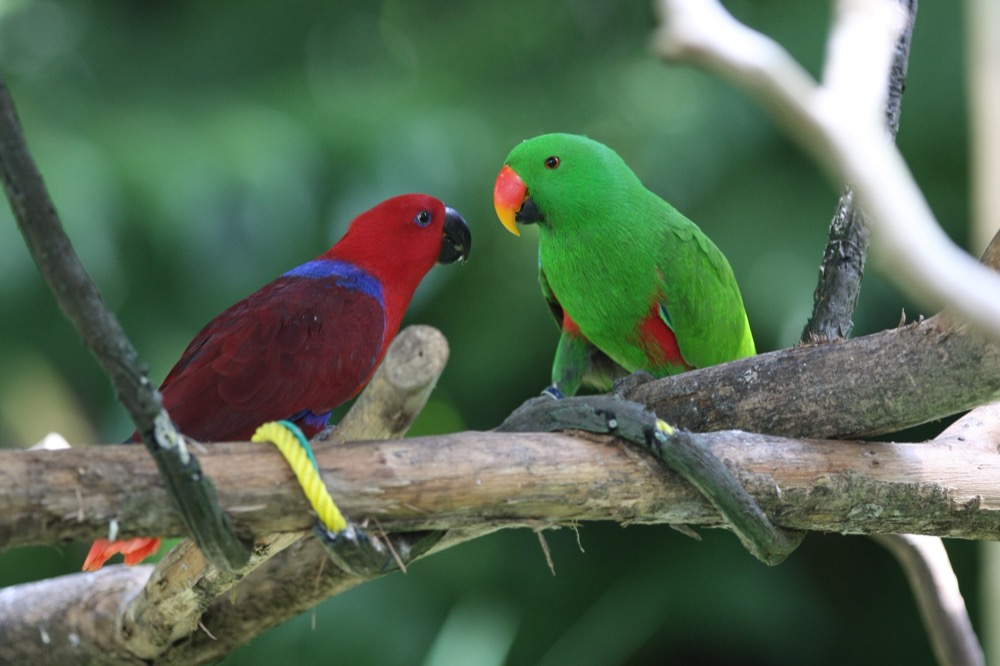
The Eclectus is one of the most strikingly dimorphic parrots: males are brilliant emerald green with a candy-corn beak, while females are deep red and purple, so the two sexes were once thought to be different species. They are calm, gentle and highly intelligent, often good talkers, but they are also sensitive birds whose health hinges on getting their unusual diet right. They suit an owner willing to feed fresh food daily rather than rely on a fortified pellet bowl.
Housing & setup
Provide a large cage of at least 90 x 60 x 120 cm for one bird, with more width preferred, as Eclectus like room to move and stretch their wings. Bar spacing of about 2 to 2.5 cm suits their size. Offer several natural-wood perches of varying diameter and plenty of open space, and keep the cage in a calm, sociable but not chaotic part of the home. Eclectus can be sensitive to overcrowded, cluttered cages, so keep flight space clear.
Diet & feeding
This species needs a naturally high-fibre, low-fat diet built around fresh vegetables, leafy greens and fruit, with only a modest amount of pellet or none at all if fresh food is well balanced. Eclectus have an unusually long digestive tract and absorb nutrients efficiently, which makes them uniquely prone to over-supplementation. Regularly feeding synthetic-vitamin fortified pellets or added supplements can trigger toe-tapping and wing-flipping muscle spasms, feather plucking and screaming. Get vitamin A from natural sources such as dark orange and leafy green vegetables rather than synthetic additives. Never offer avocado, chocolate, caffeine, alcohol, onion or salty foods, all of which are toxic.
Temperature, light & environment
Keep them at a stable room temperature of around 18 to 28 C, out of draughts and direct hot sun. Provide natural or full-spectrum light and 10 to 12 hours of quiet, dark, undisturbed sleep each night. Never run non-stick (PTFE or Teflon) cookware, air fryers, self-cleaning ovens or scented candles anywhere near the bird, as the invisible fumes are lethal to birds within minutes. Give daily supervised out-of-cage time in a bird-proofed room with windows and mirrors covered.
Company & handling
Eclectus are affectionate and bond closely with their people, but they tend to be more laid-back and less physically demanding than cockatoos or macaws. They can be kept singly with plenty of daily interaction. They are moderate in volume, though males have a distinctive contact call and both sexes can learn to talk well. Hens in particular can become territorial and hormonal around a nest-like cavity, so avoid providing dark hiding boxes.
Enrichment & exercise
Offer foraging toys, shreddable palm and wood, and puzzle feeders that let them work for food, which suits their intelligent, methodical nature. Rotate toys to prevent boredom. Chewing keeps the beak healthy, and daily flight or climbing provides important exercise. Calm training sessions and a predictable routine help this sensitive species feel secure.
Common health problems
Toe-tapping and wing-flipping syndrome
Signs: Repetitive tapping of the toes and a flicking or flipping of the wings, sometimes with feather plucking and screaming; linked to dietary imbalance and over-supplementation.
Prevention: Feed a natural high-fibre, low-fat diet of fresh vegetables and fruit, avoid synthetic vitamin and mineral supplements, and have an avian vet review the diet.
Feather destructive behaviour
Signs: Chewed, plucked or missing feathers on the chest and legs, over-preening and bare skin, often driven by diet, boredom or hormones.
Prevention: Provide rich foraging enrichment, correct the diet, ensure adequate sleep, and have an avian vet rule out disease and nutritional causes.
Hypovitaminosis A (vitamin A deficiency)
Signs: Blocked or crusty nostrils, sneezing, poor feather colour, white spots in the mouth and recurring respiratory or sinus infections.
Prevention: Supply vitamin A from natural foods such as sweet potato, carrot, capsicum and dark leafy greens rather than from synthetic supplements.
Psittacosis (chlamydiosis)
Signs: Fluffed posture, lethargy, nasal or eye discharge, lime-green droppings and laboured breathing.
Prevention: Quarantine and vet-test new birds and keep housing clean and well ventilated; note this disease can spread to people.
See a vet urgently if...
- !Sitting fluffed on the cage floor instead of perching, which is an emergency
- !Tail bobbing at rest or open-mouth, laboured breathing
- !Onset of toe-tapping and wing-flipping spasms
- !Not eating, vomiting or sudden weight loss
- !Bleeding, a stuck egg or straining with a wide-legged stance
In Macau
Eclectus are CITES Appendix II, so any bird must have legal paperwork; buy only from a documented, reputable source. Macau's heat and humidity raise the risk of heat stress and mould-related respiratory disease, so keep housing cool, dry and ventilated. In an apartment their moderate voice is manageable, but never use non-stick cookware, air fryers or scented products near them, and arrange an avian vet check plus quarantine for any new bird.
The sexes are so different in colour that early naturalists catalogued the green males and red females as two separate species; Eclectus are also one of the few parrots where females compete fiercely over nest hollows.
Questions about your exotic pet?
Our team sees small mammals, birds, reptiles and fish. Book a wellness check or a species consult.
Book an exotic consultRelated care sheets
General guidance reviewed by the Royal Veterinary Center team. Not a substitute for a veterinary examination. Always confirm species-specific and legal requirements for Macau.