Small Mammals
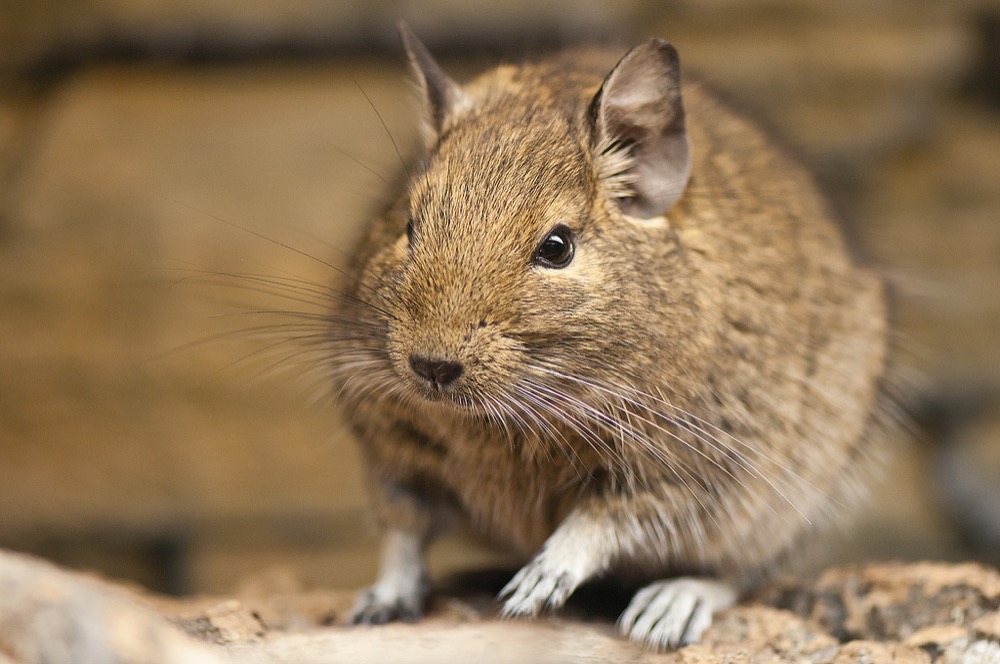
Degu
Octodon degus
Care level
Intermediate
Lifespan
5 to 9 years
Adult size
Body about 25 to 31 cm including the tail, weight 170 to 300 g
Degus are lively, intelligent, diurnal rodents from the scrublands of Chile, which makes them unusual and rewarding because they are awake and interactive during the day. They live in social colonies and communicate with a surprisingly complex range of chirps and calls, so they must be kept with their own kind. Their defining care point is a strict sugar free diet, as degus are highly prone to diabetes.
Housing & setup
Provide a large, tall, multi level cage, at least around 90 cm high with several solid floors, ramps and platforms, since degus love to climb, dig and explore. Use solid flooring rather than wire to prevent sore feet, add a deep digging area, plenty of safe wood to gnaw, hides and a sand or dust bath. Keep the cage out of direct sun in the coolest room, as degus tolerate heat poorly.
Diet & feeding
The core diet is unlimited grass hay plus a measured portion of plain degu or chinchilla pellets that contain no molasses, sugar or dried fruit, with a little fresh leafy greens or safe herbs. The critical rule is strictly no sugar and no fruit, because degus cannot process sugar and even small amounts of fruit, carrot, peas, corn or sweet treats can trigger diabetes and cataracts. Fresh water must always be available and treats should be limited to a pinch of plain hay based or herb items.
Temperature, light & environment
Degus are diurnal, so they are active in daylight and rest at night and need a normal bright day and dark night cycle. Keep them cool at about 15 to 25 degrees Celsius and never let them overheat, as they are sensitive to heat and can suffer heat stroke, made worse by humidity and direct sun. Good ventilation and a shaded, cool position are essential in warm weather.
Company & handling
Degus are highly social and should never be kept alone, thriving in a same sex pair or small group with careful introductions, as a solitary degu becomes lonely, stressed and can self harm. They tame well with gentle, regular daytime handling but must never be picked up or restrained by the tail, since the skin can strip away in a defensive escape response and the tail will not grow back. Support the body fully and let them come to you.
Enrichment & exercise
Degus need to dig, climb, gnaw and forage, so provide a deep dig box, a large solid exercise wheel of at least 30 cm, wooden platforms, tunnels and constant safe wood or pumice to chew. A regular sand or dust bath keeps their coat healthy and is clearly enjoyed. Scatter feeding hay and pellets encourages natural foraging and keeps their busy minds occupied.
Common health problems
Diabetes
Signs: Increased drinking and urination, weight change, cloudy eyes or cataracts, low energy and a poor coat
Prevention: Feed a strict sugar free, fruit free diet of hay and plain low sugar pellets and never offer sweet treats
Dental disease and malocclusion
Signs: Drooling, a wet chin, dropping food, weight loss and reduced appetite
Prevention: Unlimited hay and constant gnawing material to wear the continuously growing teeth, with regular exotic vet checks
Bumblefoot (pododermatitis)
Signs: Red, swollen or scabbed footpads, limping and reluctance to move
Prevention: Use solid flooring instead of wire, keep bedding clean and dry, and avoid obesity
Tail slip and degloving injury
Signs: Skin stripped from the tail, an exposed or lost tail tip, pain and bleeding
Prevention: Never catch or lift a degu by the tail, always support the whole body and handle gently
See a vet urgently if...
- !Drinking and urinating much more with cloudy eyes (possible diabetes)
- !Not eating for more than 12 hours or no droppings
- !Drooling, a wet chin or dropping food
- !Signs of overheating such as lethargy, panting or collapse
- !Sudden weakness, a stripped tail or an injury from a cage mate
In Macau
Degus cope badly with heat, so Macau's hot, humid summers make a cool room and air conditioning below 25 degrees Celsius important for their welfare. Because they are strongly diabetes prone, source a sugar free degu or chinchilla pellet in advance, as suitable food and an exotics vet familiar with degus can be limited locally, and always keep them in at least a same sex pair.
Healthy degus have naturally bright orange front teeth, coloured by a protective iron rich enamel, so pale or white teeth can actually be a warning sign that a degu is unwell.
Questions about your exotic pet?
Our team sees small mammals, birds, reptiles and fish. Book a wellness check or a species consult.
Book an exotic consultRelated care sheets
General guidance reviewed by the Royal Veterinary Center team. Not a substitute for a veterinary examination. Always confirm species-specific and legal requirements for Macau.