Birds
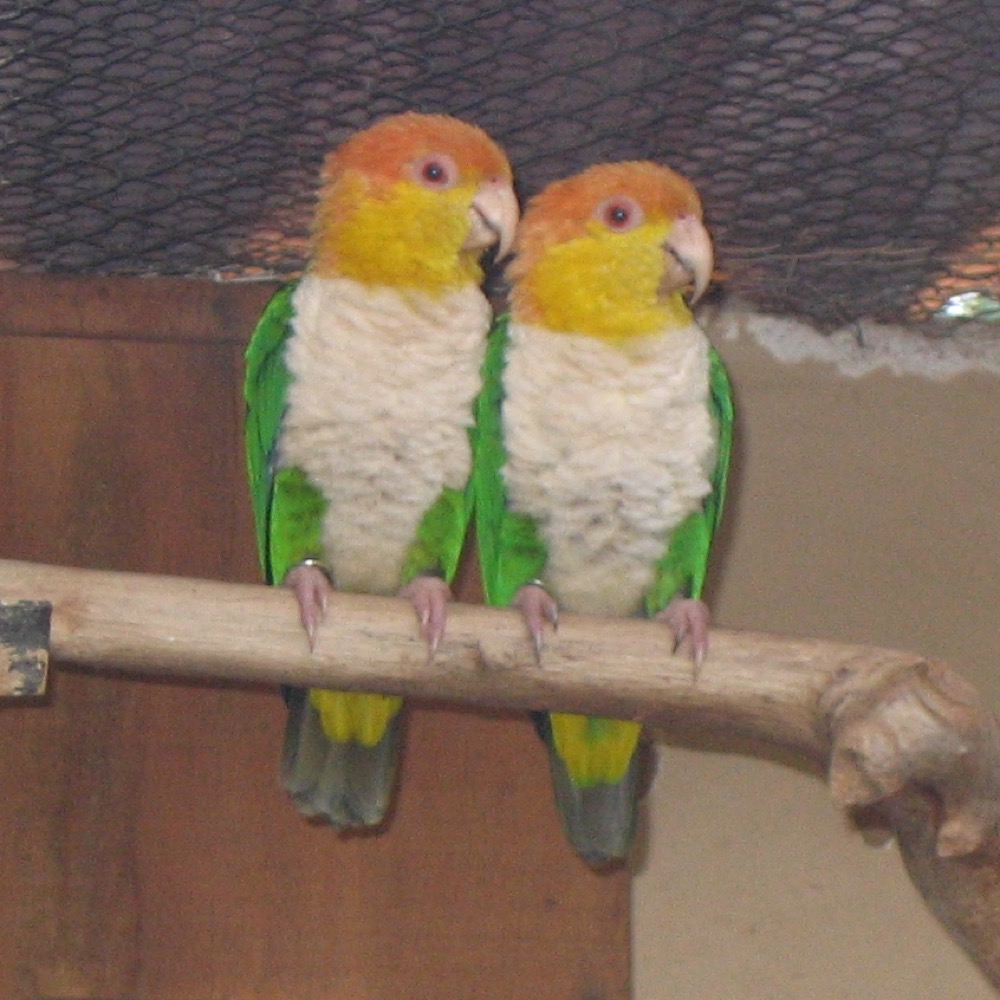
White-bellied Caique
Pionites leucogaster
Care level
Intermediate
Lifespan
30 to 40 years with good care
Adult size
23 cm, stocky with a short tail
The White-bellied Caique is a small, boldly coloured parrot with an orange head, white chest and green wings, famous for being the clown of the parrot world. They are astonishingly energetic, hopping, surfing and wrestling with everything, and they pack a big, sometimes loud personality into a compact body. Playful and entertaining, they can also be nippy and are known to be aggressive toward other birds, so they need an active, attentive owner.
Housing & setup
Provide a cage of at least 60 x 60 x 75 cm for one bird, larger if possible, with bar spacing around 1.6 to 2 cm. Caiques are extremely active, so fill the cage with ladders, ropes, swings, foraging toys and plenty of chewables, and give generous out-of-cage play space. House caiques away from other bird species, as they can be surprisingly aggressive despite their size, and supervise any shared time closely.
Diet & feeding
Feed a base of formulated pellets (about 60 to 70 percent) with a smaller portion of seed, plus daily fresh vegetables, dark leafy greens and small amounts of fruit. Provide vitamin A from natural vegetables and a cuttlebone or mineral block for calcium. Keep fatty seeds and nuts to occasional treats to prevent obesity in this active but food-motivated bird. Avocado, chocolate, caffeine, alcohol, onion and salty foods are toxic and must never be given.
Temperature, light & environment
Keep them at a stable 18 to 28 C, away from draughts, direct sun and kitchen fumes. Provide natural or full-spectrum light and 10 to 12 hours of quiet, dark sleep nightly. Non-stick (PTFE or Teflon) cookware, air fryers, self-cleaning ovens and scented candles emit fumes that are lethal to birds within minutes, so keep the cage far from the kitchen. Caiques need lots of daily supervised out-of-cage time to burn their considerable energy.
Company & handling
Caiques are intensely playful and love physical games, wrestling and being on the move, and they bond closely with their people. They can be loud in bursts and are surprisingly assertive, sometimes nipping when overexcited, and they should not be trusted unsupervised with other birds because they can attack even much larger parrots. Consistent handling and clear limits keep their bold personality manageable and fun.
Enrichment & exercise
Give an abundance of physical toys: ropes, ladders, swings, shreddables, foraging puzzles and things to roll and wrestle, rotating them constantly to match their energy. Caiques love to hop, surf on their backs and burrow, so provide safe materials for this. Daily active play and climbing are essential exercise, and training games give a positive outlet for their busy minds.
Common health problems
Injury from aggression toward other birds
Signs: Bite wounds, missing toes or beak damage on the caique or its cagemates after unsupervised contact with other species.
Prevention: House caiques separately from other birds, supervise all shared time closely, and never leave them loose with smaller or larger species.
Feather plucking
Signs: Bald patches, chewed feathers and over-preening, usually from boredom or insufficient activity in this high-energy bird.
Prevention: Provide abundant enrichment, active daily play and adequate sleep, and have an avian vet rule out disease.
Obesity
Signs: Excess weight, a fatty keel, reduced activity and breathlessness on exertion.
Prevention: Feed a controlled pellet-based diet, limit fatty seeds and nuts, and ensure plenty of daily exercise.
Psittacosis (chlamydiosis)
Signs: Fluffed posture, lethargy, nasal or eye discharge, lime-green droppings and laboured breathing.
Prevention: Quarantine and vet-test new birds and keep housing clean and ventilated; this disease can spread to people.
See a vet urgently if...
- !Sitting fluffed on the cage floor instead of perching, an emergency
- !Tail bobbing at rest or open-mouth, laboured breathing
- !Not eating, vomiting or sudden weight loss
- !Bite wounds or bleeding after contact with another bird
- !Sudden silence, drooping wings or inability to grip the perch
In Macau
White-bellied Caiques are CITES Appendix II, so a bird must have legal paperwork; buy only from a documented, reputable source. In Macau's heat and humidity keep housing cool, dry and ventilated. Their burst-noise and boisterous play can carry in an apartment, so consider neighbours. Never run non-stick cookware near the bird, house them apart from other pet birds, and quarantine plus vet-check any new arrival.
Caiques are nicknamed the clowns of the parrot world for their habit of hopping like tiny kangaroos, surfing on their backs and burrowing into fabric, and many enjoy an unusual behaviour called anting or bathing in leaves and toys.
Questions about your exotic pet?
Our team sees small mammals, birds, reptiles and fish. Book a wellness check or a species consult.
Book an exotic consultRelated care sheets
General guidance reviewed by the Royal Veterinary Center team. Not a substitute for a veterinary examination. Always confirm species-specific and legal requirements for Macau.