Reptiles & Amphibians
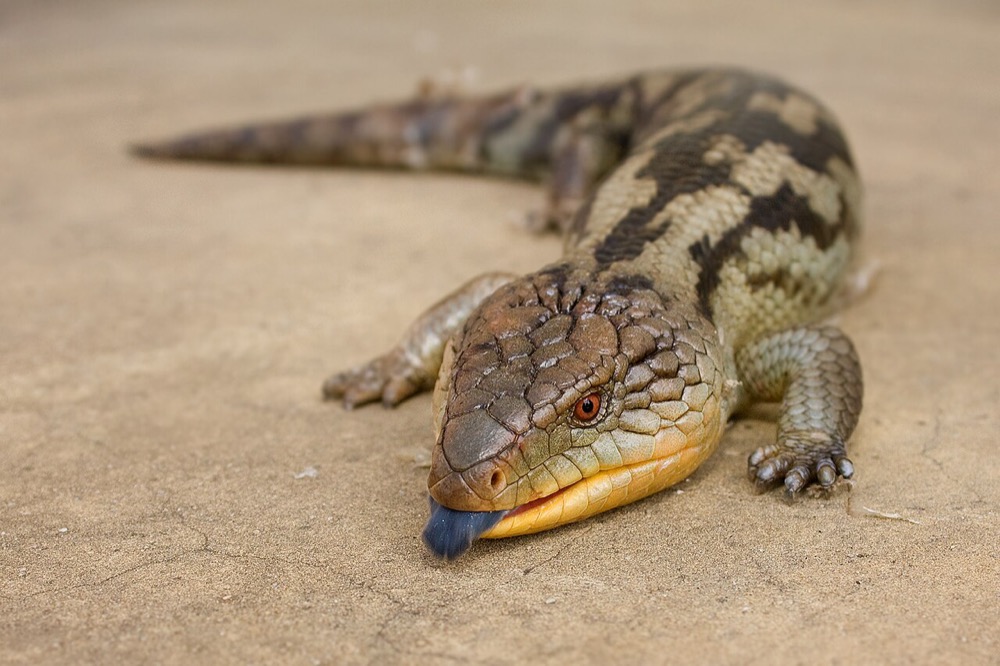
Blue-Tongued Skink
Tiliqua scincoides
Care level
Intermediate
Lifespan
15 to 20 years, sometimes up to 30
Adult size
45 to 60 cm including tail
A large, ground-dwelling Australasian skink famous for the bright blue tongue it flashes to startle predators. They are curious, robust, often quite tame omnivores that make excellent intermediate pets. Because they are heavy-bodied floor-dwellers, they need generous floor space, a hot basking zone and a balanced omnivorous diet to avoid obesity.
Housing & setup
An adult needs a spacious, mostly horizontal enclosure with a minimum footprint of about 120 x 60 cm (4 x 2 feet) and preferably larger, since floor space matters more than height. Provide a deep, dig-friendly substrate such as a topsoil and coco mix or bioactive soil so they can burrow, plus a warm hide, a cool hide and sturdy low decor. Include a water bowl large enough to soak in and some cork bark and logs. Good ventilation and a substrate matched to the subspecies humidity needs keep them healthy.
Diet & feeding
Omnivore that should get roughly a balanced 50 percent plant to 50 percent animal diet, as too much protein leads to obesity. Offer leafy greens, vegetables, some fruit and edible flowers alongside protein such as gut-loaded insects, snails, lean cooked meats, high-quality wet dog food in moderation, and the occasional egg. Dust with calcium and a multivitamin appropriately. Feed juveniles more often (every day or two) and adults roughly two to three times per week, adjusting to keep a lean, muscular body.
Temperature, light & environment
A diurnal basker needing a clear gradient. Provide a basking surface of 35 to 40 C, an ambient warm side of 24 to 29 C, and a cool end around 22 to 24 C, with a night drop toward 18 to 22 C. UVB is important for these diurnal lizards: fit a UVB tube giving a basking UVI of about 3.0 to 4.0 (Ferguson Zone 3), positioned so the skink cannot get too close. Humidity depends on the type: Australian and northern skinks do well at 40 to 60 percent, while Indonesian skinks need a more humid 60 to 80 percent; run a 12-hour light cycle.
Company & handling
Solitary. Blue-tongued skinks are best kept one per enclosure, as they can be territorial and cohousing leads to competition, stress, biting and food guarding. Many become notably tame and tolerate calm, supported handling well, making them one of the more interactive lizards, but always support the body and avoid grabbing.
Enrichment & exercise
Provide digging substrate, multiple hides, logs, leaf litter and a large floor to roam and forage across, and scatter or hide food to encourage natural searching. Rearranging decor, offering novel safe foods and providing basking and burrowing options all keep these inquisitive skinks stimulated.
Common health problems
Obesity
Signs: Fat rolls, a broad flattened body, loss of muscle tone, sluggishness, difficulty moving
Prevention: Feed a balanced roughly 50/50 plant-to-animal diet, avoid too much fatty protein and dog food, and keep portions moderate
Metabolic bone disease (MBD)
Signs: Soft or swollen jaw, bowed limbs, tremors, weakness, difficulty walking
Prevention: Provide proper UVB replaced on schedule, a hot basking zone, and calcium supplementation with balanced greens
Respiratory infection
Signs: Open-mouth breathing, wheezing or clicking, mucus or bubbles, lethargy
Prevention: Keep temperatures correct, match humidity to the subspecies, avoid cold damp conditions, and ensure ventilation
Impaction
Signs: Straining, no droppings, bloating, loss of appetite, weakness
Prevention: Keep the basking zone hot enough to digest, feed appropriately sized food, avoid loose ingestible substrates, and ensure hydration
See a vet urgently if...
- !Open-mouth breathing with mucus or wheezing (respiratory infection)
- !Soft or swollen jaw and bendy limbs (MBD)
- !Straining with no droppings and a bloated belly (impaction)
- !Refusing food for more than one to two weeks with lethargy
- !Marked obesity with difficulty moving or breathing
In Macau
Macau's warmth suits blue-tongued skinks, and the humidity often matches Indonesian types well, but summer heat can overheat a closed enclosure, so use thermostats and keep the cool end near 22 to 24 C. Replace UVB bulbs every 6 to 12 months, identify your skink's subspecies to set the right humidity, and choose captive-bred animals over wild-caught imports.
When threatened, a blue-tongued skink puffs up, hisses and sticks out its vivid blue tongue, a startling bluff that mimics a venomous threat even though the skink is harmless.
Questions about your exotic pet?
Our team sees small mammals, birds, reptiles and fish. Book a wellness check or a species consult.
Book an exotic consultRelated care sheets
General guidance reviewed by the Royal Veterinary Center team. Not a substitute for a veterinary examination. Always confirm species-specific and legal requirements for Macau.