Birds
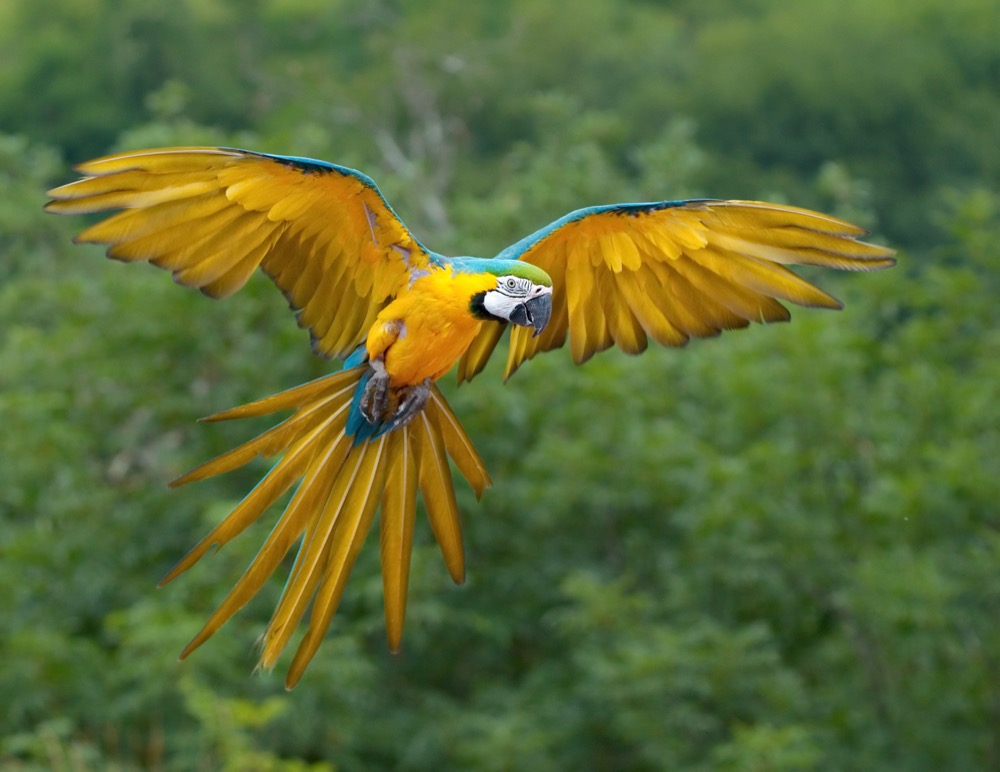
Blue-and-Gold Macaw
Ara ararauna
Care level
Advanced
Lifespan
30 to 50 years, and up to 60 with excellent care
Adult size
76 to 86 cm including the long tail
The Blue-and-Gold Macaw is a magnificent large parrot with brilliant blue upperparts and golden underparts, a strong personality and a voice to match. They are affectionate, intelligent and playful, but they are also very loud, extremely powerful and need enormous space and attention. Owning one is a decades-long commitment comparable to caring for a demanding child, so they suit only experienced, well-resourced owners with tolerant neighbours.
Housing & setup
Provide the largest cage possible, at minimum roughly 90 x 120 x 150 cm, and ideally a dedicated aviary or bird room, with heavy-gauge bars and spacing of around 2.5 to 4 cm to withstand a powerful beak. Use thick, hardwood perches and large, indestructible foraging and chew toys. Macaws need a great deal of out-of-cage time on stands and gyms, so the cage is only part of their living space. Position them in a sociable but robust part of the home.
Diet & feeding
Feed a base of formulated large-parrot pellets with generous fresh vegetables, dark leafy greens and fruit, plus a modest, measured amount of nuts, which macaws need more of than most parrots but which must still be controlled to avoid obesity. Provide vitamin A from natural vegetables and a calcium source. Never offer avocado, chocolate, caffeine, alcohol, onion or salty foods, all of which are toxic to birds.
Temperature, light & environment
Keep them at a stable 18 to 28 C, out of draughts, direct sun and kitchen fumes. Provide natural or full-spectrum light and 10 to 12 hours of quiet, dark sleep nightly. Non-stick (PTFE or Teflon) cookware, air fryers, self-cleaning ovens and scented candles give off fumes that kill birds within minutes, so keep them well clear of the kitchen. Daily supervised out-of-cage exercise and flight or wing-flapping are essential for such a large, active bird.
Company & handling
Macaws are highly social flock animals that bond deeply and need many hours of interaction daily; a neglected macaw quickly becomes destructive, screaming or feather-plucking. They are extremely loud, with calls that can carry for well over a kilometre in the wild and easily disturb an entire apartment block. They are also emotionally sensitive and can be prone to overbonding and hormonal behaviour, so consistent, calm handling by more than one person is ideal.
Enrichment & exercise
Provide large, destructible foraging toys, thick chewable wood and palm, puzzle feeders and foot toys, replacing them often because macaws demolish them. They need big physical challenges and plenty of space to climb and flap. Training and trick work give a vital outlet for their intelligence and strengthen the bond. Rotating novel enrichment daily helps prevent the boredom that leads to screaming and plucking.
Common health problems
Feather plucking and self-mutilation
Signs: Bald patches, chewed or barbered feathers, over-preening and sometimes open wounds, driven by boredom, stress, isolation or hormones.
Prevention: Provide extensive daily interaction, enrichment and exercise, ensure good sleep, and have an avian vet rule out disease.
Obesity and fatty liver disease
Signs: Excess weight, fatty deposits, breathlessness, poor feather quality and lethargy, often from too many nuts and seeds.
Prevention: Feed a balanced pellet-and-vegetable diet with strictly measured nuts, and ensure plenty of daily exercise.
Proventricular dilatation disease (PDD)
Signs: Weight loss despite eating, regurgitation, undigested food in droppings and neurological signs such as weakness or tremors.
Prevention: Quarantine and health-test new birds, avoid exposure to birds of unknown status, and seek prompt avian veterinary diagnosis.
Psittacosis (chlamydiosis)
Signs: Fluffed posture, lethargy, nasal or eye discharge, lime-green droppings and laboured breathing.
Prevention: Quarantine and vet-test new birds and keep housing clean and ventilated; note this disease can spread to people.
See a vet urgently if...
- !Sitting fluffed on the cage floor instead of perching, an emergency
- !Tail bobbing at rest or open-mouth, laboured breathing
- !Not eating, regurgitating or sudden weight loss
- !Sudden silence, drooping wings or inability to grip the perch
- !Bleeding, a broken blood feather or a stuck egg
In Macau
Blue-and-Gold Macaws are CITES Appendix II, so a bird must have full legal documentation; buy only from a reputable, papered source and never an undocumented one. Their sheer volume makes them unsuitable for typical Macau apartments; they realistically need a house or dedicated space with very tolerant neighbours. Keep housing cool, dry and ventilated against the heat, never run non-stick cookware or scented products nearby, and note that a 50-year-plus lifespan is a commitment that will likely outlast many life changes, so plan for their future care.
Blue-and-Gold Macaws can live longer than most dogs and cats several times over, sometimes reaching 60 years, and their loud contact calls are built to carry for well over a kilometre across the rainforest canopy.
Questions about your exotic pet?
Our team sees small mammals, birds, reptiles and fish. Book a wellness check or a species consult.
Book an exotic consultRelated care sheets
General guidance reviewed by the Royal Veterinary Center team. Not a substitute for a veterinary examination. Always confirm species-specific and legal requirements for Macau.