Reptiles & Amphibians
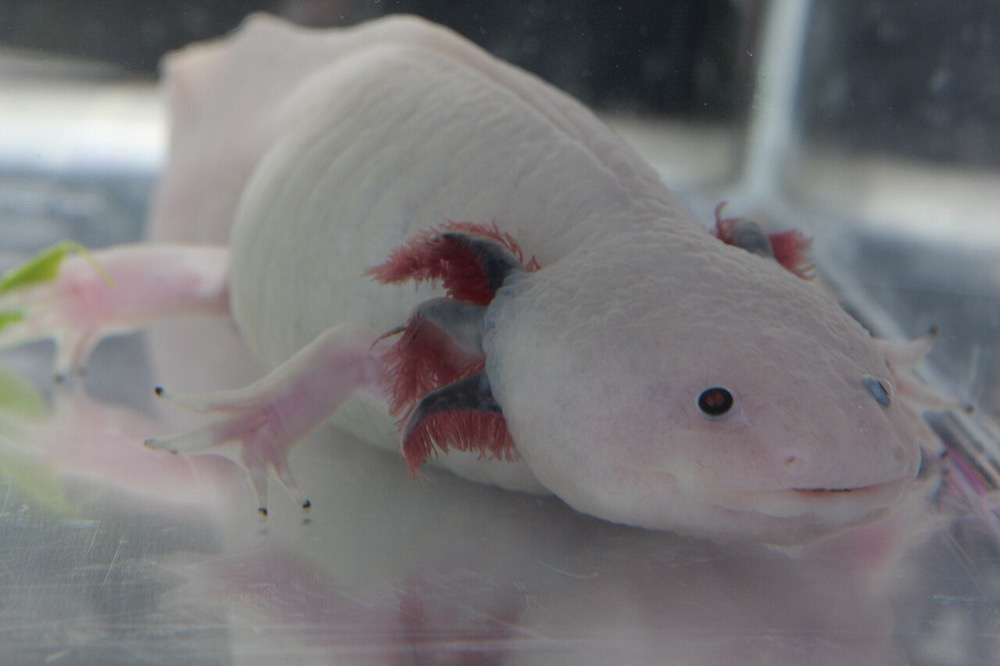
Axolotl
Ambystoma mexicanum
Care level
Intermediate
Lifespan
10 to 15 years
Adult size
20 to 30 cm
A fully aquatic Mexican salamander that keeps its feathery external gills and larval form for life, a trait called neoteny. Critically endangered in the wild but common in captivity, they are gentle, curious and long-lived. The single most important thing to get right is cool, clean, well-cycled water, as they are amphibians, not fish, and cannot tolerate warmth or handling.
Housing & setup
A single adult needs a fully aquatic tank of at least 75 to 110 litres (a 20 to 30 gallon long footprint), with more water giving better temperature and chemistry stability. Cycle the tank fully before adding an axolotl and run gentle filtration with low flow, as strong current stresses them. Use either a bare bottom or fine aquarium sand only; gravel and small stones are a serious impaction risk because axolotls swallow substrate when feeding. Provide shaded hides such as caves, PVC pipes and broad plants, and keep the tank in a cool part of the home away from direct sun.
Diet & feeding
Carnivore fed in the water. The staple is earthworms or nightcrawlers, supplemented with sinking salamander or axolotl pellets, and treats such as bloodworms and blackworms for juveniles. Do not use feeder fish, which carry parasites and disease and, being high in thiaminase, can cause vitamin B1 deficiency; they also risk injuring the gills. Feed juveniles daily and adults every two to three days, removing uneaten food promptly to protect water quality, and never feed anything with a hard shell that could cause impaction.
Temperature, light & environment
Cool water is non-negotiable: keep it at 16 to 18 C, and never let it exceed about 20 to 22 C as heat causes chronic stress, immune suppression and death; use a fan, chiller or cooler room rather than a heater, which is not needed. Axolotls do NOT require UVB or bright light and prefer dim, shaded conditions, so keep lighting low and provide cover. Maintain pristine water chemistry with ammonia and nitrite at 0 ppm, low nitrate, neutral to slightly alkaline pH, and use a dechlorinator; regular partial water changes and testing are essential because ammonia burns their skin and gills.
Company & handling
Best kept alone, and never with fish or other species. Axolotls may bite each other's gills and limbs, and juveniles can be cannibalistic, so cohousing needs equal sizing and ample space, or better, separate tanks. They must not be handled except when necessary with wet clean hands, as their skin is delicate and mostly cartilage; they are for watching, not holding.
Enrichment & exercise
Provide caves, plants, pipes and shaded resting spots to explore and hide in, and a large enough floor to move across. Gentle water flow, live blackworms to hunt for juveniles, and a naturalistic dim planted tank offer environmental variety without stressing this sensitive animal.
Common health problems
Ammonia and nitrite poisoning (chemical burns)
Signs: Frayed, curled or reddened gills, red irritated skin, gasping at the surface, loss of appetite
Prevention: Fully cycle the tank, test water regularly, keep ammonia and nitrite at 0 ppm, and do routine partial water changes
Heat stress
Signs: Gills curling forward, refusing food, lethargy, restlessness, excess slime
Prevention: Keep water at 16 to 18 C using cooling, never a heater, and site the tank away from sun and warm rooms
Impaction from swallowed substrate
Signs: Bloating, floating, not passing waste, loss of appetite, sitting off the bottom
Prevention: Use only fine sand or a bare bottom, never gravel or small stones, and feed in a way that avoids substrate ingestion
Fungal infection (Saprolegnia)
Signs: White cottony fluff on gills, skin or wounds, especially in warm or dirty water
Prevention: Keep water cool and clean, reduce stress and injuries, and address wounds and water-quality problems early
See a vet urgently if...
- !Gills curling forward or shrinking with restlessness (heat stress or poor water)
- !Reddened, frayed gills or red irritated skin (ammonia burn)
- !Cottony white fungus on gills or body
- !Floating, bloating or refusing to feed for many days
- !Water temperature climbing above 22 C (emergency, cool immediately)
In Macau
Macau's hot, humid climate is the biggest challenge for axolotls, because room temperatures in summer easily exceed their safe 16 to 18 C range, so a chiller, cooling fans or a dedicated air-conditioned space is usually essential. No UVB bulb is needed, and buyers should choose captive-bred axolotls (the norm) since wild populations are critically endangered and legally protected.
Axolotls can regenerate not just lost limbs but also parts of the heart, spine and even brain, which is why they are studied intensively in regenerative medicine research.
Questions about your exotic pet?
Our team sees small mammals, birds, reptiles and fish. Book a wellness check or a species consult.
Book an exotic consultRelated care sheets
General guidance reviewed by the Royal Veterinary Center team. Not a substitute for a veterinary examination. Always confirm species-specific and legal requirements for Macau.