Birds
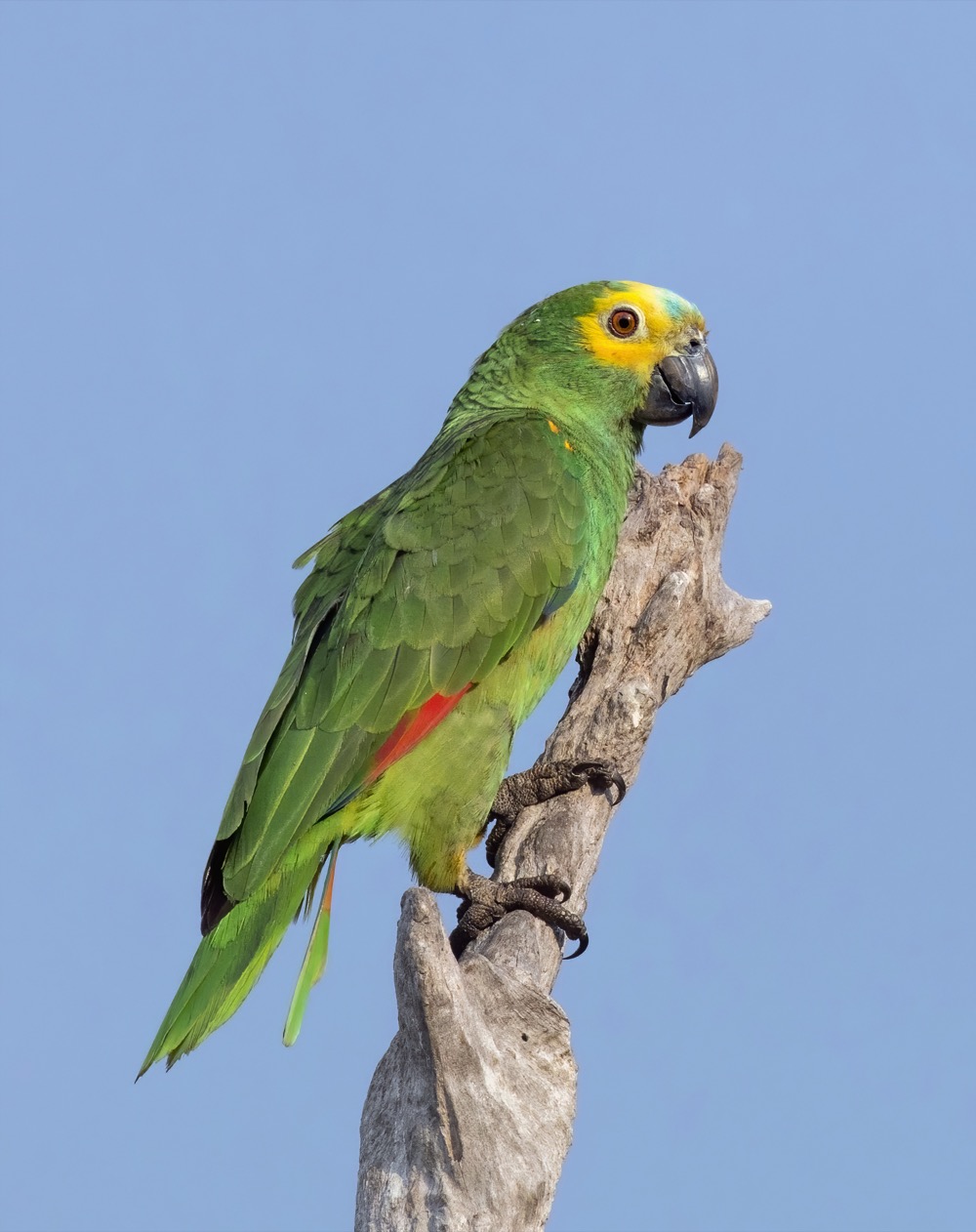
Blue-fronted Amazon Parrot
Amazona aestiva
Care level
Advanced
Lifespan
40 to 60 years, and sometimes longer with excellent care
Adult size
37 cm, stocky and heavy-bodied
The Blue-fronted Amazon is a robust, green parrot with a splash of blue and yellow on the face, celebrated as one of the finest talking and singing parrots. They are outgoing, confident and full of character, but they are also loud and strongly hormonal, and mature males in particular can become aggressive during the breeding season. They are a long-term, decades-long commitment best suited to an experienced owner who can read parrot body language.
Housing & setup
Provide a large, sturdy cage of at least 90 x 60 x 90 cm for one bird, with more room always better, and bar spacing around 2 to 2.5 cm. Use strong natural-wood perches of varying diameter and durable, chewable toys, as Amazons have powerful beaks. Keep open flight space and place the cage in a sociable room. Because they are prone to overbonding to their cage, encourage the bird to step out onto a stand for interaction.
Diet & feeding
Amazons are highly prone to obesity, so feed a controlled, low-fat diet based on formulated pellets (about 60 to 70 percent) with plenty of fresh vegetables and dark leafy greens and only small amounts of fruit. Keep fatty seeds, nuts and human snacks as rare treats. Provide vitamin A from natural vegetables and a cuttlebone for calcium. Never offer avocado, chocolate, caffeine, alcohol, onion or salty foods, all of which are toxic to birds.
Temperature, light & environment
Keep them at a stable 18 to 28 C, out of draughts, direct sun and kitchen fumes. Provide natural or full-spectrum light and 10 to 12 hours of quiet, dark sleep, which also helps curb hormonal behaviour. Non-stick (PTFE or Teflon) cookware, air fryers, self-cleaning ovens and scented candles release fumes that are rapidly fatal to birds, so keep the cage far from the kitchen. Provide daily supervised out-of-cage exercise in a bird-proofed room.
Company & handling
Amazons are social, interactive and enjoy being part of the action, often performing and singing for attention. They are among the louder parrots, with powerful morning and evening screams, so they are a poor fit for thin-walled apartments. Mature birds can go through intense hormonal seasons with mood swings and biting, and they show clear body language such as pinned eyes and fanned tails when overstimulated. Reading these cues and respecting them prevents bites.
Enrichment & exercise
Offer robust foraging toys, shreddable wood, puzzle feeders and foot toys, rotating them to prevent boredom. Amazons love to sing, and many enjoy learning songs and words. Daily flight and climbing are essential to burn energy and prevent obesity. Positive-reinforcement training gives an outlet for their intelligence and helps manage hormonal-season behaviour.
Common health problems
Obesity and fatty liver disease
Signs: Excess weight, a prominent keel with fat pads, breathlessness on exertion, poor feather quality and lethargy.
Prevention: Feed a controlled low-fat pellet-based diet, strictly limit nuts and seeds, and ensure daily flight and exercise.
Hormonal aggression and behavioural problems
Signs: Seasonal biting, lunging, pinned eyes, tail fanning and cage-guarding, most marked in mature males.
Prevention: Provide 10 to 12 hours of darkness, avoid petting the back and tail, remove nest-like spaces, and read and respect warning body language.
Hypovitaminosis A (vitamin A deficiency)
Signs: Crusty nostrils, sneezing, white mouth spots, poor feather colour and recurring respiratory infections.
Prevention: Feed vitamin-A-rich vegetables such as sweet potato, carrot, capsicum and dark greens instead of a seed-only diet.
Psittacosis (chlamydiosis)
Signs: Fluffed posture, lethargy, nasal or eye discharge, lime-green droppings and laboured breathing.
Prevention: Quarantine and vet-test new birds and keep housing clean and ventilated; note this disease can spread to people.
See a vet urgently if...
- !Sitting fluffed on the cage floor instead of perching, an emergency
- !Tail bobbing at rest or open-mouth, laboured breathing
- !Not eating, vomiting or sudden weight loss
- !Sudden silence, drooping wings or inability to grip the perch
- !Bleeding, a broken blood feather or a stuck egg
In Macau
Blue-fronted Amazons are CITES Appendix II, so a bird must have legal documentation; buy only from a reputable, papered source. They are loud, so they are a difficult fit for Macau apartments with close neighbours. Keep housing cool, dry and ventilated against the heat and humidity, never run non-stick cookware or scented products near the bird, and quarantine plus vet-check any new arrival. Their 40-to-60-year lifespan is a lifelong commitment that may outlive the owner, so plan for their long-term care.
Blue-fronted Amazons are gifted vocalists that often sing snatches of songs and mimic voices with remarkable clarity, and in the wild they gather in noisy communal roosts of hundreds of birds each evening.
Questions about your exotic pet?
Our team sees small mammals, birds, reptiles and fish. Book a wellness check or a species consult.
Book an exotic consultRelated care sheets
General guidance reviewed by the Royal Veterinary Center team. Not a substitute for a veterinary examination. Always confirm species-specific and legal requirements for Macau.