Birds
Alexandrine Parakeet
Psittacula eupatria
Care level
Advanced
Lifespan
25 to 40 years with good care
Adult size
56 to 62 cm including the very long tail
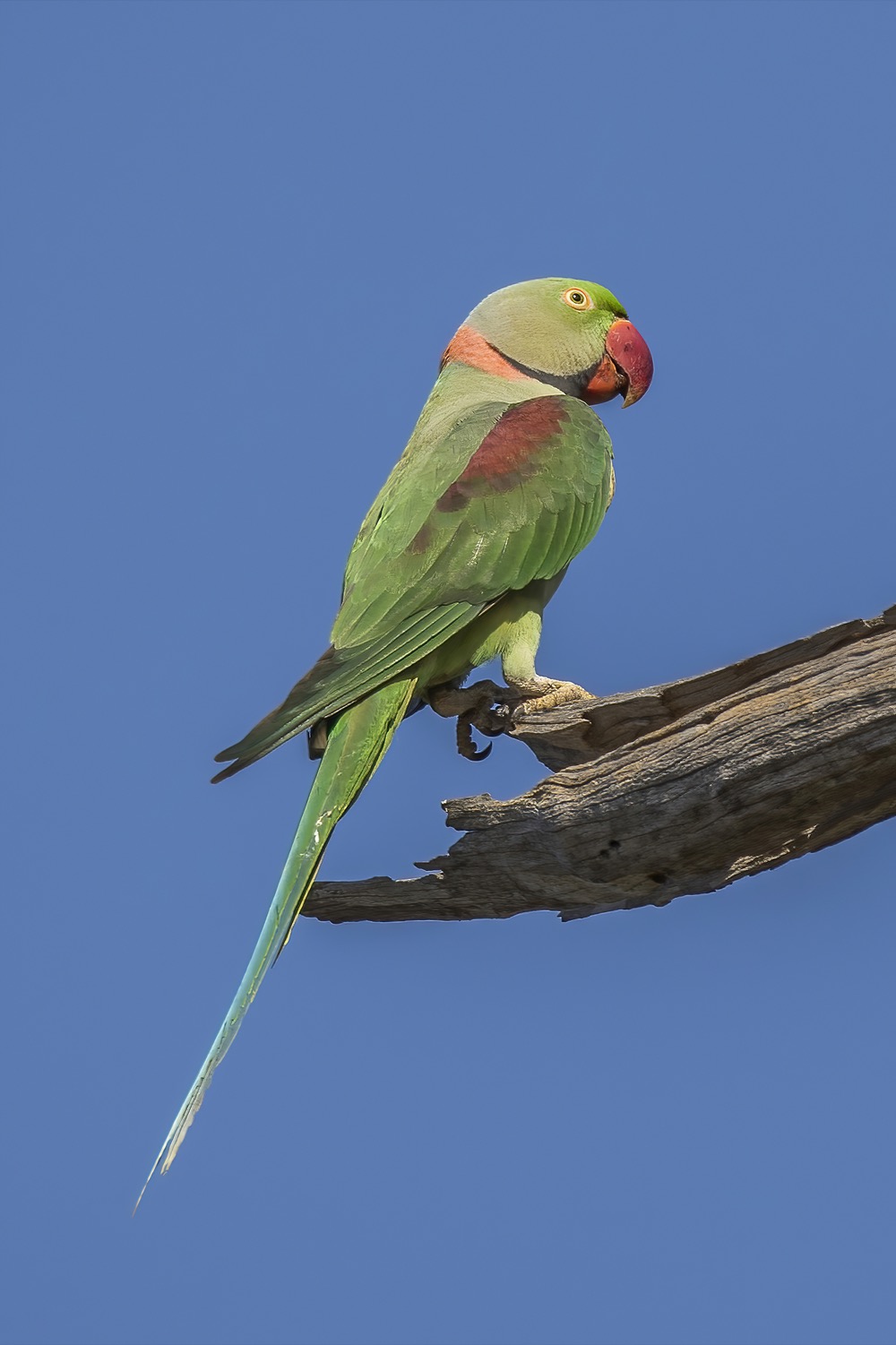
The Alexandrine Parakeet is a large, majestic relative of the Indian Ringneck, with a maroon wing patch, a long sweeping tail and, in mature males, a black-and-rose neck ring. Named after Alexander the Great, who is said to have brought them west, they are intelligent, capable talkers that bond deeply with their owners. Their size, long tail and adolescent hormonal bluffing phase make them a commitment better suited to experienced keepers.
Housing & setup
Because of their length, provide a large, tall cage of at least 90 x 60 x 120 cm for one bird, with more width preferred so the long tail is never cramped or damaged; an aviary is ideal. Bar spacing of about 2 to 2.5 cm suits them. Include sturdy natural-wood perches of varying diameter, keeping the tail clear of surfaces, plus climbing space and durable chewable toys. Place the cage in a sociable room where the bird can join daily life.
Diet & feeding
Feed a base of formulated pellets (about 60 to 70 percent) with a smaller portion of quality seed, plus daily fresh vegetables, dark leafy greens and small amounts of fruit. Include vitamin-A-rich vegetables such as sweet potato, carrot and dark greens, and provide a cuttlebone or mineral block for calcium. Avocado, chocolate, caffeine, alcohol, onion and salty foods are toxic and must never be offered.
Temperature, light & environment
Keep them at a stable 18 to 28 C, away from draughts, direct sun and kitchen fumes. Provide natural or full-spectrum light and 10 to 12 hours of quiet, dark sleep nightly. Non-stick (PTFE or Teflon) cookware, air fryers, self-cleaning ovens and scented candles emit fumes rapidly fatal to birds, so keep the cage far from the kitchen. Daily supervised out-of-cage flight in a bird-proofed room is important for this large, active species.
Company & handling
Alexandrines are intelligent and affectionate and can become excellent talkers, but like Ringnecks they go through an adolescent bluffing phase when a tame bird may briefly become nippy and aloof, requiring patient, consistent handling. They are moderately loud, with far-carrying calls, especially at dawn and dusk. Regular interaction and training keep them tame and confident; neglected birds may become nervous, loud or prone to plucking.
Enrichment & exercise
Provide foraging toys, shreddable materials, ladders, swings and puzzle feeders, rotating them to keep interest. Alexandrines enjoy learning words and whistles, which exercises their sharp minds. Chewing keeps the beak and their strong jaw muscles healthy, and daily flight is important exercise for such a large parakeet. Consistent short training sessions help them through the bluffing phase and strengthen the bond.
Common health problems
Feather plucking and stress-related behaviour
Signs: Bald patches, chewed feathers and over-preening, often from boredom, insufficient handling or hormones.
Prevention: Provide daily interaction, foraging enrichment and adequate sleep, and have an avian vet rule out mites, PBFD and other disease.
Hypovitaminosis A (vitamin A deficiency)
Signs: Crusty nostrils, sneezing, white mouth spots, poor feather colour and recurring respiratory infections.
Prevention: Feed vitamin-A-rich vegetables such as sweet potato, carrot and dark greens instead of a seed-only diet.
Psittacine beak and feather disease (PBFD)
Signs: Abnormal, deformed or lost feathers, beak lesions and a weakened immune system.
Prevention: Quarantine and PBFD-test new birds, avoid contact with birds of unknown health status, and keep housing scrupulously clean.
Psittacosis (chlamydiosis)
Signs: Fluffed posture, lethargy, nasal or eye discharge, lime-green droppings and laboured breathing.
Prevention: Quarantine and vet-test new birds and keep housing clean and ventilated; note this disease can spread to people.
See a vet urgently if...
- !Sitting fluffed on the cage floor instead of perching, an emergency
- !Tail bobbing at rest or open-mouth, laboured breathing
- !Not eating, vomiting or sudden weight loss
- !Sudden silence, drooping wings or inability to grip the perch
- !Bleeding, a broken blood feather or a stuck egg
In Macau
Alexandrine Parakeets are CITES Appendix II and listed as Near Threatened, so a bird must have legal paperwork; buy only captive-bred from a documented, reputable source. Their large size and long tail need a big cage that is hard to fit in a small Macau flat, and their dawn and dusk calls carry to neighbours. Keep housing cool, dry and ventilated against the heat, never run non-stick cookware nearby, and quarantine plus vet-check any new bird.
The Alexandrine Parakeet is named after Alexander the Great, whose armies are credited with bringing these prized talking birds from India to ancient Greece and Europe, making them one of the oldest parrots in human company.
Questions about your exotic pet?
Our team sees small mammals, birds, reptiles and fish. Book a wellness check or a species consult.
Book an exotic consultRelated care sheets
General guidance reviewed by the Royal Veterinary Center team. Not a substitute for a veterinary examination. Always confirm species-specific and legal requirements for Macau.