Reptiles & Amphibians
African Fat-Tailed Gecko
Hemitheconyx caudicinctus
Care level
Beginner
Lifespan
15 to 20 years
Adult size
18 to 23 cm including tail
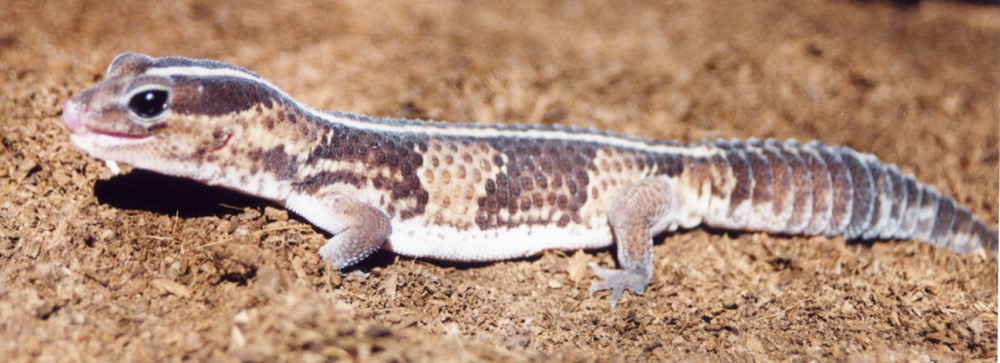
A calm, ground-dwelling West African gecko that looks and behaves much like a leopard gecko but comes from more humid habitats. It stores fat in its thick tail as an energy reserve and is prized for its docile nature and the striking striped morph. A superb beginner lizard, provided its higher humidity and moist-hide needs are respected.
Housing & setup
A terrestrial species that needs floor space over height: a single adult does well in a front-opening enclosure of at least 90 x 45 x 45 cm. Provide a moisture-retaining substrate such as a topsoil and coco mix or bioactive soil that holds gentle humidity and allows shallow digging, and avoid loose sand for young geckos. Give three hides: a warm hide, a cool hide and a moist hide packed with damp sphagnum moss, plus low branches and a shallow water dish. The moist hide is essential for clean shedding.
Diet & feeding
An insectivore fed a varied diet of appropriately sized live insects such as gut-loaded crickets, dubia roaches, black soldier fly larvae and the occasional waxworm as a treat. Dust feeders with calcium at most feeds and a reptile multivitamin once or twice weekly. Feed juveniles daily and adults every two to three days, adjusting to keep a plump but not obese tail. Always provide fresh water and avoid feeding prey larger than the width of the gecko's head.
Temperature, light & environment
Provide a warm end with a gentle belly-heat basking zone of 32 to 35 C and a cool end of 24 to 27 C, dropping to about 21 to 24 C at night; control all heat with a thermostat. Unlike leopard geckos, this species needs higher ambient humidity of around 50 to 70 percent, achieved with a damp substrate layer and the moist hide, which prevents retained shed. UVB is not strictly required with good calcium and D3 supplementation but a low-output tube giving a basking UVI of about 1.0 to 2.0 helps them thrive. Run a 12 to 14 hour light cycle.
Company & handling
Keep one per enclosure. Males fight fiercely and cohabiting animals compete for hides and food, so solitary housing is safest and least stressful. Fat-tailed geckos are among the most placid geckos and usually tolerate slow, gentle handling well once settled, but they can drop their tail if grabbed or frightened, so always support the body and never restrain by the tail.
Enrichment & exercise
Offer a mix of hides, cork bark, low branches and leaf litter so the gecko can explore and choose its own microclimate, plus a digging-friendly substrate. Scatter or tong-feed live insects to encourage natural hunting, and rotate decor occasionally. A lightly planted bioactive setup provides constant low-level enrichment for this otherwise sedentary ground dweller.
Common health problems
Dysecdysis (retained shed)
Signs: Stuck skin on toes and tail tip, retained eye caps, dull constricting bands that can cause toe loss
Prevention: Always provide a moist hide with damp sphagnum, keep ambient humidity around 50 to 70 percent, and check toes after each shed
Metabolic bone disease (MBD)
Signs: Soft or swollen jaw, bent or rubbery limbs, tremors, weak grip, difficulty walking
Prevention: Dust insects with calcium, supplement D3 or provide low-level UVB, and offer a warm digestion zone
Impaction
Signs: Straining, no droppings, swollen belly, loss of appetite, lethargy
Prevention: Keep the warm end hot enough to digest, feed correctly sized prey, avoid loose sand, and ensure good hydration
Tail loss and infection
Signs: Dropped tail, raw or discoloured stump, swelling, sudden loss of fat reserve
Prevention: Handle gently and never grab the tail, house singly, and keep the enclosure clean while a stump heals
See a vet urgently if...
- !Soft or swollen jaw and bendy limbs (MBD)
- !Rapid loss of the fat tail or visible spine (starvation or illness)
- !Straining with no droppings or a swollen belly (impaction)
- !Retained shed constricting the toes or tail tip
- !Refusing food for more than two to three weeks with weight loss
In Macau
Macau's humidity suits fat-tailed geckos better than it does arid leopard geckos, but summer room heat can push a closed enclosure too high, so keep the cool end near 25 C with a thermostat and monitor closely. Ventilation must be good so damp does not turn stagnant, and any UVB tube should be replaced every 6 to 12 months. Captive-bred animals are widely available and far preferable to wild-caught imports, which often carry parasites.
The fat tail is a living larder: it stores fat and water so the gecko can survive lean times, and a healthy, well-fed fat-tailed gecko is judged partly by how plump and rounded its tail looks.
Questions about your exotic pet?
Our team sees small mammals, birds, reptiles and fish. Book a wellness check or a species consult.
Book an exotic consultRelated care sheets
General guidance reviewed by the Royal Veterinary Center team. Not a substitute for a veterinary examination. Always confirm species-specific and legal requirements for Macau.