Fish & Aquatics
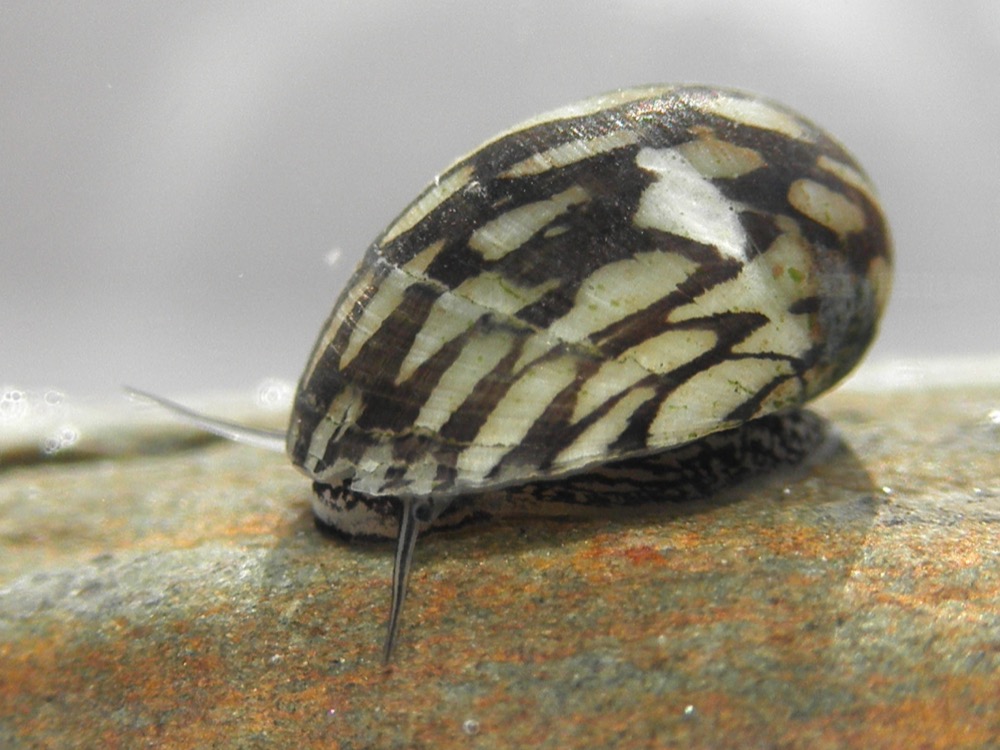
Nerite Snail
Neritina natalensis
Care level
Beginner
Lifespan
1 to 2 years
Adult size
2 to 2.5 cm
Nerite snails are widely regarded as the best algae eating snail for freshwater aquariums, tirelessly grazing even tough algae from glass, rocks and plants without damaging them. Their greatest advantage is that they cannot overpopulate a freshwater tank, because their eggs need brackish water to hatch, so a nerite will clean without ever plaguing the tank with babies. They come in attractive striped and horned varieties and are completely safe with fish, shrimp and plants.
Housing & setup
A nerite suits any cycled, established tank with algae and biofilm to graze, and even a small tank of about 20 litres can support one, scaling up to one snail per 20 to 40 litres to match the food available. They need harder, alkaline water and a calcium source for shell health, plus plenty of algae covered surfaces. Fit a secure lid, as nerites are accomplished climbers that will wander out of an open tank.
Diet & feeding
Nerites graze naturally on algae and biofilm, but in a clean or newly stocked tank there may not be enough to sustain them, so supplement with algae wafers and blanched vegetables such as courgette and spinach. Provide a calcium source such as a cuttlebone or mineral supplement to keep the shell strong. They are grazers rather than scavengers, so they will not clear up leftover protein or waste.
Temperature, light & environment
Keep the water at 22 to 28 degrees Celsius, pH 7.0 to 8.5, and moderately hard to hard with calcium available, because soft, acidic water erodes and pits the shell. The tank must be fully cycled with ammonia at 0 and nitrite at 0, as nerites are very sensitive to ammonia. Dechlorinate tap water, and crucially never use copper based medications or plant fertilisers, which are toxic to snails and other invertebrates.
Company & handling
Nerites are not social in a herd sense but are entirely peaceful and community safe, coexisting with fish, shrimp, plants and each other without trouble. Stock roughly one per 20 to 40 litres so there is enough algae to go round. They will lay small, hard, white eggs like sesame seeds on surfaces and decor, which are harmless and simply will not hatch in freshwater, so no population control is ever needed.
Enrichment & exercise
Plenty of algae and biofilm covered glass, rocks and driftwood keep a nerite busy and well fed, and a mature, established tank suits them far better than a brand new one. Smooth grazing surfaces and gentle flow let them roam and feed naturally across the whole aquarium.
Common health problems
Shell erosion and pitting
Signs: A shell turning white, thin, cracked or pitted, especially at the tip.
Prevention: Keep pH at or above 7 with hard, mineral rich water and provide a calcium source such as cuttlebone.
Starvation
Signs: A shrinking, receding body, inactivity and eventual death in a tank with too little algae.
Prevention: Supplement with algae wafers and blanched vegetables and do not add too many snails for the algae available.
Copper and medication poisoning
Signs: Lethargy, staying retracted in the shell, loss of grip and death, as invertebrates are very copper sensitive.
Prevention: Never use copper based fish medications or plant fertilisers, and treat sick fish in a separate hospital tank.
Ammonia poisoning in an uncycled tank
Signs: Staying shut inside the shell, not moving or grazing, and dropping off surfaces.
Prevention: Only add nerites to a fully cycled, established tank with ammonia and nitrite at 0.
See a vet urgently if...
- !Not moving or grazing and staying retracted for several days
- !A shell turning white, thin, cracked or pitted
- !A foul, rotten smell, which means a snail has died and is fouling the water
- !Sitting upturned on its back, unable to right itself
- !The body hanging limp with the trapdoor gaping open
In Macau
Dechlorinate Macau tap water before use, and never use copper based medications or fertilisers, which are lethal to snails. Macau's naturally harder, alkaline tap water is actually ideal for keeping a nerite's shell strong. Because nerites cannot breed in freshwater, the population stays stable and the small white eggs they leave on surfaces are harmless, and you should watch that the tank does not overheat during hot summers.
A nerite snail will dot tiny white eggs like sesame seeds around the tank, but because the larvae can only develop in brackish, part salty water, they never hatch in a freshwater aquarium, which is exactly why this hard working algae eater can never take over the tank.
Questions about your exotic pet?
Our team sees small mammals, birds, reptiles and fish. Book a wellness check or a species consult.
Book an exotic consultRelated care sheets
General guidance reviewed by the Royal Veterinary Center team. Not a substitute for a veterinary examination. Always confirm species-specific and legal requirements for Macau.