Fish & Aquatics
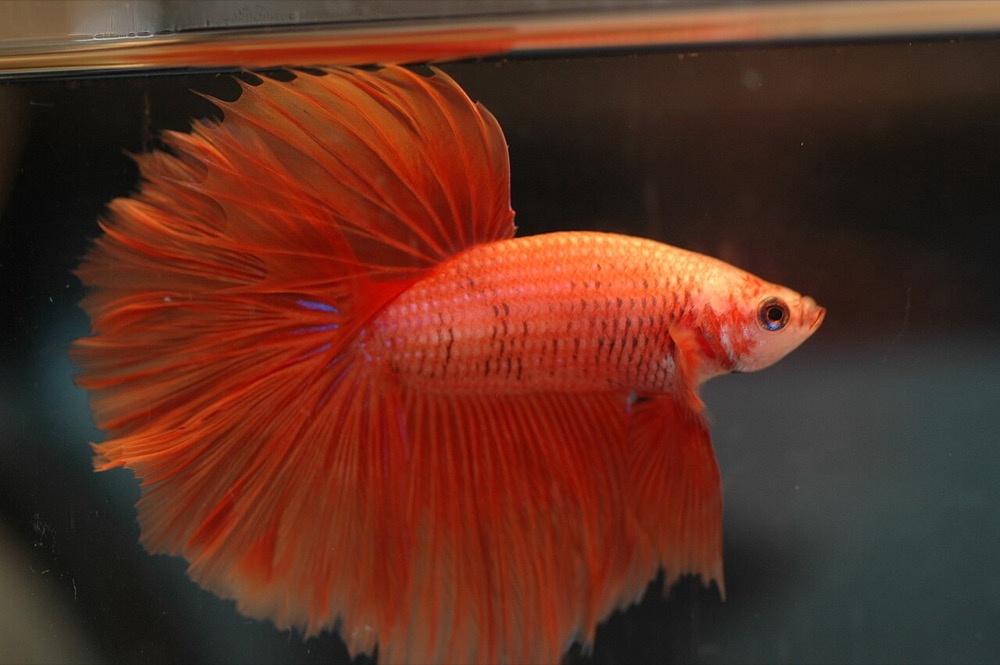
Siamese Fighting Fish (Betta)
Betta splendens
Care level
Beginner
Lifespan
3 to 5 years
Adult size
6 to 7 cm
The betta is a small, intelligent, jewel-coloured tropical fish famous for its flowing fins and bold personality. Despite being sold in tiny cups and marketed for bowls or vases, it is a proper tropical fish that needs a heated, filtered, cycled aquarium to thrive. A well-kept betta is curious, interactive, and often learns to recognise its owner.
Housing & setup
Minimum 19 to 20 litres per betta, and a bowl or vase is never acceptable. The tank must have a heater and a gentle filter, because bettas are tropical and produce waste like any other fish, but they dislike strong current so choose a low-flow or baffled filter. Aquascape with live or silk plants (soft leaves only, no sharp plastic that tears fins), plus a cave or two for resting. Fit a tight lid with no large gaps, as bettas are strong jumpers.
Diet & feeding
Bettas are carnivores and insect eaters, so feed a quality betta-specific pellet as the staple, with occasional frozen or live bloodworms, daphnia, or brine shrimp as treats. Feed only 2 to 4 pellets once or twice daily, an amount they finish in a couple of minutes, and consider one fasting day per week. Overfeeding is the most common mistake and causes bloating, constipation, and fouled water.
Temperature, light & environment
Keep the water at 24 to 27 C (about 76 to 82 F) with a heater, as chilling weakens the immune system. Aim for pH 6.5 to 7.5 and soft to moderately hard water. Most important of all, the tank must be fully cycled with ammonia at 0 and nitrite at 0 and nitrate kept low (under 20 ppm); a new uncycled tank poisons fish. Always treat tap water with a dechlorinator before it touches the tank, and change about 25 percent of the water weekly.
Company & handling
Male bettas are strictly solitary and will fight, often to the death, so never house two males together and never keep a male with a female except briefly for supervised breeding. They can share a peaceful community tank with non-nippy, non-flashy tankmates in a large enough aquarium, but many bettas do best alone. Female sororities are possible but are an advanced, higher-risk setup.
Enrichment & exercise
Provide floating plants and a broad leaf near the surface as resting spots, along with caves and dense planting to explore and hide in. Gentle flow, a dark substrate to show off colour, and the occasional new decoration to investigate all reduce boredom and stress.
Common health problems
Fin rot
Signs: Ragged, receding, or blackened fin edges, sometimes with red inflammation.
Prevention: Keep water pristine and cycled, avoid sharp decor, and maintain stable warm temperature.
Ich (white spot)
Signs: Grains of white salt scattered over body and fins, flashing or rubbing on decor.
Prevention: Quarantine new fish, avoid temperature swings, and keep water quality high.
Swim bladder disorder and constipation
Signs: Struggling to stay upright, floating, sinking, or a swollen belly after eating.
Prevention: Do not overfeed, offer a fasting day, and feed a varied non-dry diet occasionally.
Velvet
Signs: Fine gold or rusty dust sheen on the skin, clamped fins, lethargy, rubbing.
Prevention: Quarantine newcomers, keep water warm and clean, and reduce stress.
See a vet urgently if...
- !Gasping at the surface or laboured breathing
- !Fins clamped tightly to the body for more than a day
- !Refusing food along with lethargy or lying on the bottom
- !White spots, gold dust, or cotton-like growths appearing
- !Belly swelling with scales sticking out like a pinecone
In Macau
Macau tap water is chlorinated and must be dechlorinated before use. Summer heat can push a small tank above 28 C, so keep it out of direct sun and use a clip fan or an air-conditioned room if it overheats. Bettas are widely sold in Macau and Hong Kong aquarium shops and markets, but many arrive in tiny cups, so plan to upgrade them into a proper heated tank at home.
Bettas have a special organ called the labyrinth that lets them gulp air from the surface, so they can survive in oxygen-poor water; males also build floating bubble nests when ready to breed.
Questions about your exotic pet?
Our team sees small mammals, birds, reptiles and fish. Book a wellness check or a species consult.
Book an exotic consultRelated care sheets
General guidance reviewed by the Royal Veterinary Center team. Not a substitute for a veterinary examination. Always confirm species-specific and legal requirements for Macau.