Fish & Aquatics
Neon Tetra
Paracheirodon innesi
Care level
Intermediate
Lifespan
5 to 8 years
Adult size
3 to 4 cm
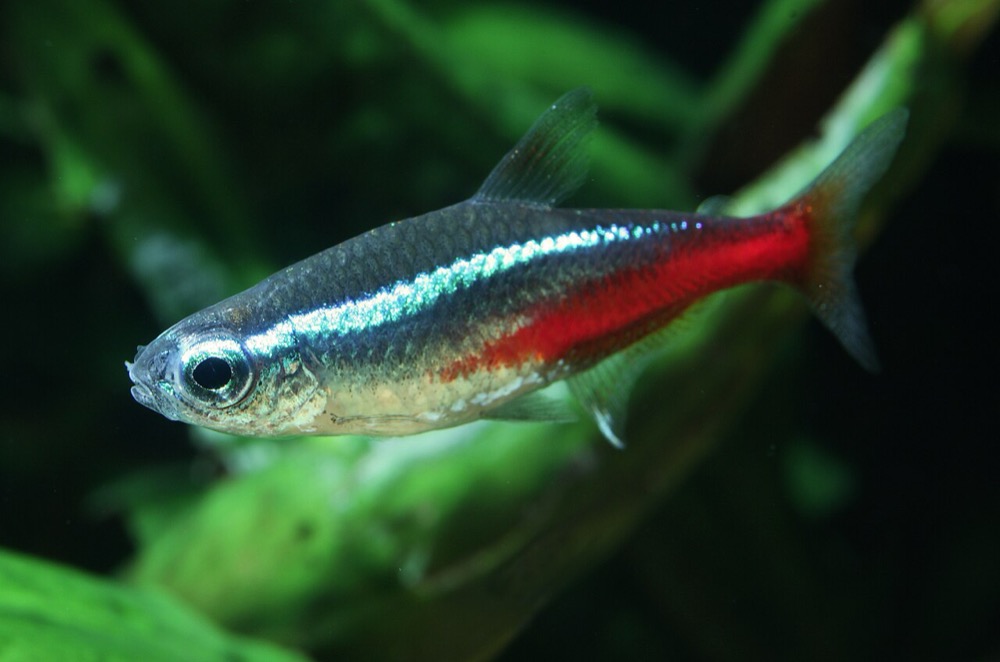
Neon tetras are tiny, peaceful schooling fish famous for the electric blue and red stripe running down their sides. A tight-knit shoal shimmering through a planted tank is one of the classic sights in the hobby. They are inexpensive but genuinely sensitive to water quality, so they belong in a mature, stable, cycled aquarium rather than a brand-new one.
Housing & setup
Provide a minimum of about 60 litres, since these are schooling fish that need groups of at least 6 and ideally 10 to 15. Aquascape with plants, a dark substrate, and subdued lighting to mimic their shaded blackwater origins and bring out their colour. Use a gentle filter for soft flow and fit a lid, as small tetras can jump.
Diet & feeding
Neons are micro-predators and omnivores, so feed small flakes or micro-pellets that fit their tiny mouths, plus frozen or live daphnia, baby brine shrimp, and micro bloodworm. Offer a small pinch once or twice daily that they finish quickly. Overfeeding is easy with such small fish and fouls the water fast.
Temperature, light & environment
Keep the water at 22 to 26 C, soft, and slightly acidic at pH 6.0 to 7.0 with low hardness. Above all the tank must be mature and fully cycled with ammonia at 0 and nitrite at 0 and nitrate low, because neons are very sensitive to the swings of a new tank and should only be added to an established aquarium. Dechlorinate tap water, and change about 25 percent weekly with matched-temperature water.
Company & handling
Neons are obligate schooling fish and must be kept in groups of at least 6, though 10 or more makes them far more confident and colourful. Kept in ones or twos they become stressed, pale, and sickly. They suit a peaceful community of other small fish, but avoid large or aggressive tankmates such as adult angelfish, which see neons as food.
Enrichment & exercise
Plants, floating cover for shade, driftwood with tannins, and a dark substrate all recreate their natural habitat and let their colours shine. Open mid-water swimming space lets the shoal move together.
Common health problems
Ich (white spot)
Signs: White spots over body and fins, flashing, clamped fins.
Prevention: Quarantine new fish, avoid temperature swings, and keep water clean.
Neon tetra disease (Pleistophora)
Signs: Fading colour, a lumpy or crooked spine, restlessness, and difficulty schooling.
Prevention: Buy healthy stock, quarantine, and promptly remove affected fish as there is no reliable cure.
Fin rot
Signs: Ragged or eroding fins.
Prevention: Keep water pristine and cycled and reduce stress and crowding.
Velvet
Signs: Fine gold dust sheen on the body, lethargy, rubbing.
Prevention: Quarantine newcomers and maintain warm, clean, stable water.
See a vet urgently if...
- !Loss of the bright blue or red colour
- !A lump or curve developing in the spine
- !White spots or a gold dusty sheen on the body
- !A fish separating from the shoal and hiding
- !Gasping at the surface or several sudden deaths
In Macau
Dechlorinate Macau tap water and only add neons to a matured, well-established tank, as they react badly to unstable new setups. They are commonly and cheaply sold in local shops. Keep an eye on summer temperatures so the water does not overheat.
The neon tetra's glowing blue stripe is a structural colour created by light-reflecting cells called iridophores rather than pigment, and it can dim or switch off when the fish rests at night.
Questions about your exotic pet?
Our team sees small mammals, birds, reptiles and fish. Book a wellness check or a species consult.
Book an exotic consultRelated care sheets
General guidance reviewed by the Royal Veterinary Center team. Not a substitute for a veterinary examination. Always confirm species-specific and legal requirements for Macau.